Distichodus noboli
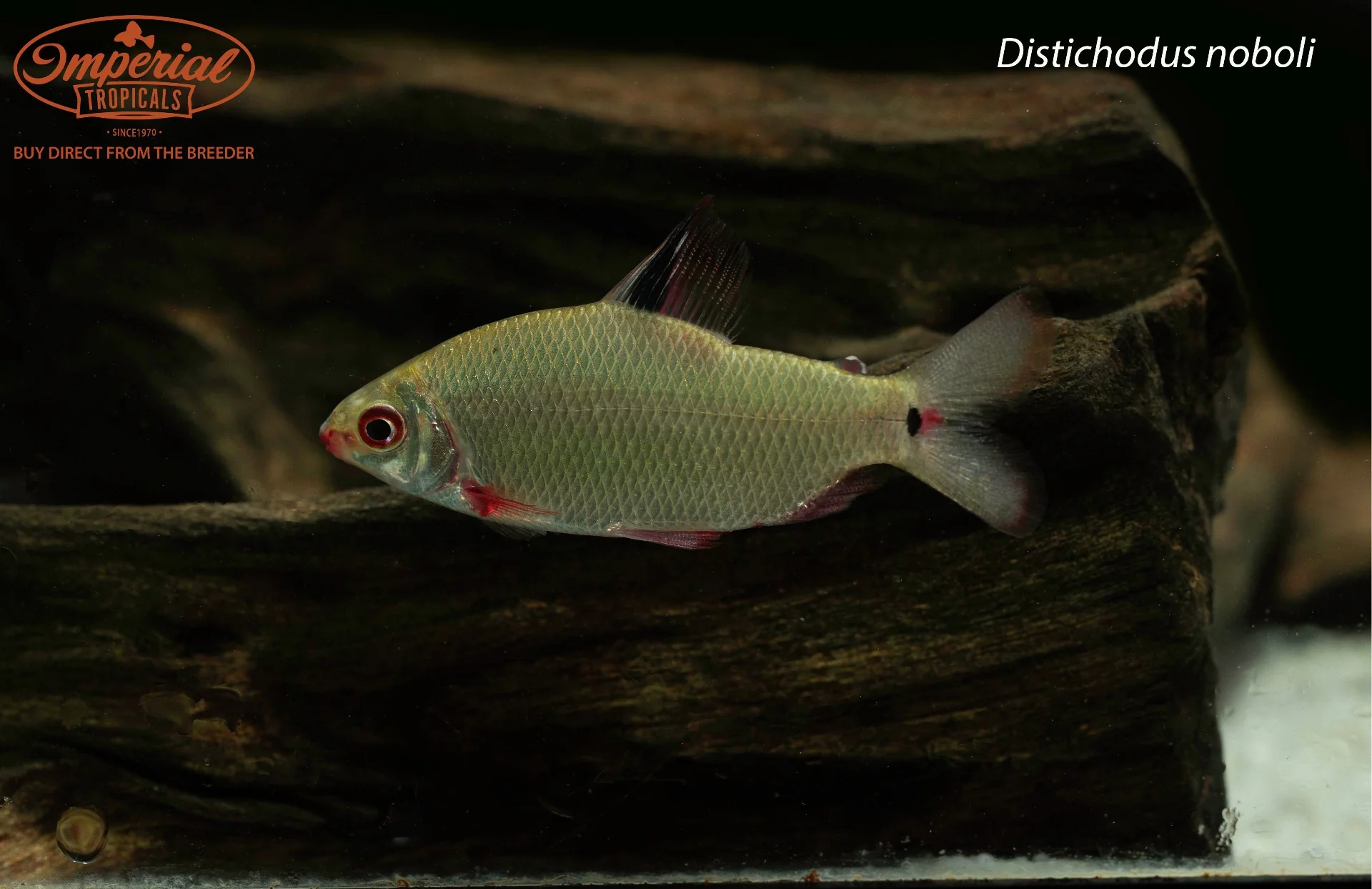
Remarks: Distichodus noboli, also commonly known as the red and black distichodus, is a fairly large African characin commonly seen in swift moving rivers and streams in the Congo. Typically, they have shiny silver bodies that occasionally bear a green sheen. Their ventral, anal, and dorsal fins get bright red accents with the red spot on the dorsal fin being preceded by a large black blotch. The lips of D. noboli also can get this red coloration. When sparring or spawning, three pinkish-red horizontal bands can appear, one on the top, one on the bottom, and one down the middle of the fish’s body. Needless to say, these distichodus are a very striking species.
While most species of distichodus can be very territorial, D. noboli live in large shoals in the wild and benefit from being kept in groups in captivity. Not only will keeping at least 3-4 of these fish together promote natural behaviors and help them feel more comfortable, but it will also reduce the likelihood of them harassing other fish. Long fins cans still be tempting to D. noboli even when they are kept in groups so it is recommended that they not be kept with species bearing long, delicate fins prone to being nipped. Plants should also be avoided as these omnivores love to graze on them. One might be able to keep them with firm plants like Anubias, but there is no guarantee that they won’t also become a meal for this species. Instead, D. noboli should be kept with other West African species such as kribensis and synodontis. With their fairly active swimming style and robust nature, they can even be good dithers for pairs of West African cichlids.
Original: $24.99
-65%$24.99
$8.75Product Information
Product Information
Shipping & Returns
Shipping & Returns
Description
Remarks: Distichodus noboli, also commonly known as the red and black distichodus, is a fairly large African characin commonly seen in swift moving rivers and streams in the Congo. Typically, they have shiny silver bodies that occasionally bear a green sheen. Their ventral, anal, and dorsal fins get bright red accents with the red spot on the dorsal fin being preceded by a large black blotch. The lips of D. noboli also can get this red coloration. When sparring or spawning, three pinkish-red horizontal bands can appear, one on the top, one on the bottom, and one down the middle of the fish’s body. Needless to say, these distichodus are a very striking species.
While most species of distichodus can be very territorial, D. noboli live in large shoals in the wild and benefit from being kept in groups in captivity. Not only will keeping at least 3-4 of these fish together promote natural behaviors and help them feel more comfortable, but it will also reduce the likelihood of them harassing other fish. Long fins cans still be tempting to D. noboli even when they are kept in groups so it is recommended that they not be kept with species bearing long, delicate fins prone to being nipped. Plants should also be avoided as these omnivores love to graze on them. One might be able to keep them with firm plants like Anubias, but there is no guarantee that they won’t also become a meal for this species. Instead, D. noboli should be kept with other West African species such as kribensis and synodontis. With their fairly active swimming style and robust nature, they can even be good dithers for pairs of West African cichlids.