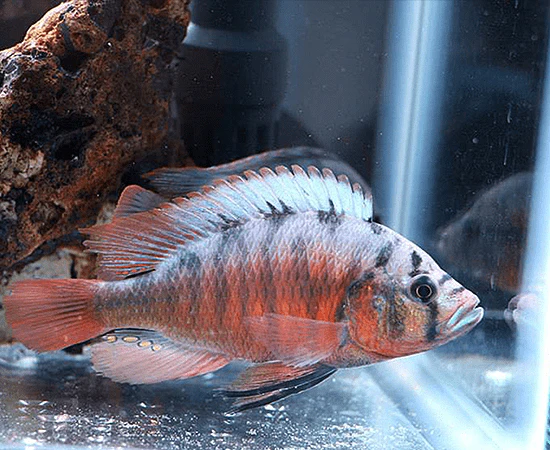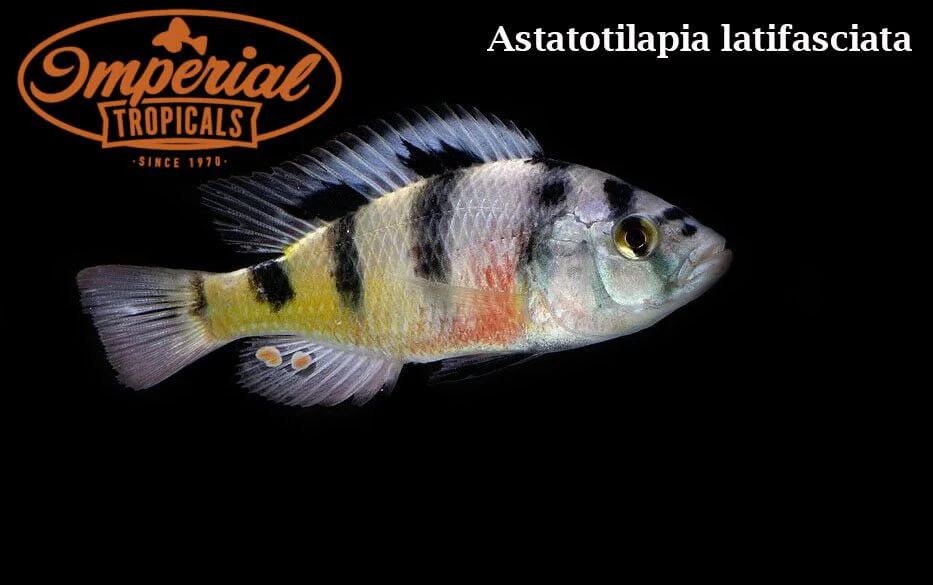
Zebra Obliquidens
Remarks: Astatotilapia latifasciata, previously known as Haplochromis latifasciatus and commonly known as zebra obliquidens, are an excellent introduction to Victorian and African cichlids in general. They exhibit comparatively low levels of aggression, though some males can be particularly feisty if they feel their territory is being encroached upon. They can get along with Victorian cichlids, but also Malawi cichlids including peacocks and haps. Scattered rock piles will allow them to form territories and seek shelter when threatened. This mimics their natural habitat which is actually the Lake Kyoga system and not Lake Victoria despite this fish typically being considered as a Victorian cichlid.
It is best to keep male A. latifasciata together with other male species of haps and peacocks, or in a species only tank with a ratio of one male for every three or more females. Hybridization is common among Victorian cichlids so it is not advised to keep males and females of different species of Astatotilapia or Haplochromis together. Hybrids can affect conservation efforts which is extremely important for Astatotilapia latifasciata as they are critically endangered in the wild due to habitat destruction, pollution, and introduction of invasive species. Through careful captive breeding, we can help keep this species alive until the time is right for reintroduction efforts.
Original: $6.99
-65%$6.99
$2.45Product Information
Product Information
Shipping & Returns
Shipping & Returns
Description
Remarks: Astatotilapia latifasciata, previously known as Haplochromis latifasciatus and commonly known as zebra obliquidens, are an excellent introduction to Victorian and African cichlids in general. They exhibit comparatively low levels of aggression, though some males can be particularly feisty if they feel their territory is being encroached upon. They can get along with Victorian cichlids, but also Malawi cichlids including peacocks and haps. Scattered rock piles will allow them to form territories and seek shelter when threatened. This mimics their natural habitat which is actually the Lake Kyoga system and not Lake Victoria despite this fish typically being considered as a Victorian cichlid.
It is best to keep male A. latifasciata together with other male species of haps and peacocks, or in a species only tank with a ratio of one male for every three or more females. Hybridization is common among Victorian cichlids so it is not advised to keep males and females of different species of Astatotilapia or Haplochromis together. Hybrids can affect conservation efforts which is extremely important for Astatotilapia latifasciata as they are critically endangered in the wild due to habitat destruction, pollution, and introduction of invasive species. Through careful captive breeding, we can help keep this species alive until the time is right for reintroduction efforts.