Skunk Hoplisoma (Hoplisoma granti)
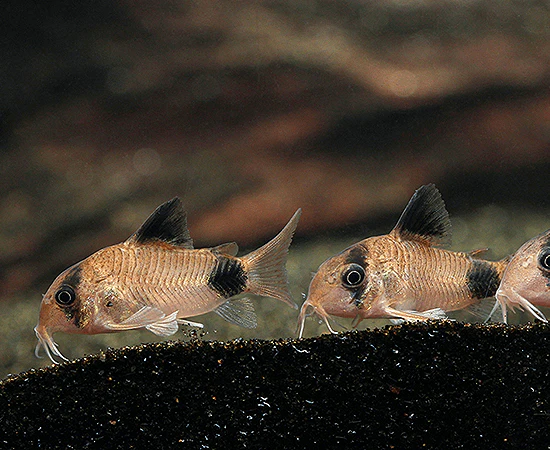
Remarks: The skunk hoplisoma (Hoplisoma granti), also known as the C020 skunk cory, has been a classic in the hobby for many years. They have an elegant off-white color and, like other species belonging to the group of Corydoradinae referred to as the “arc-striped corys,” has a black or dark gray band extending from the eye, along the back, and ending at the base of the tail. This skunk-like pattern gave rise to the skunk hoplisoma’s common name and has caught the eye of many aquarists.
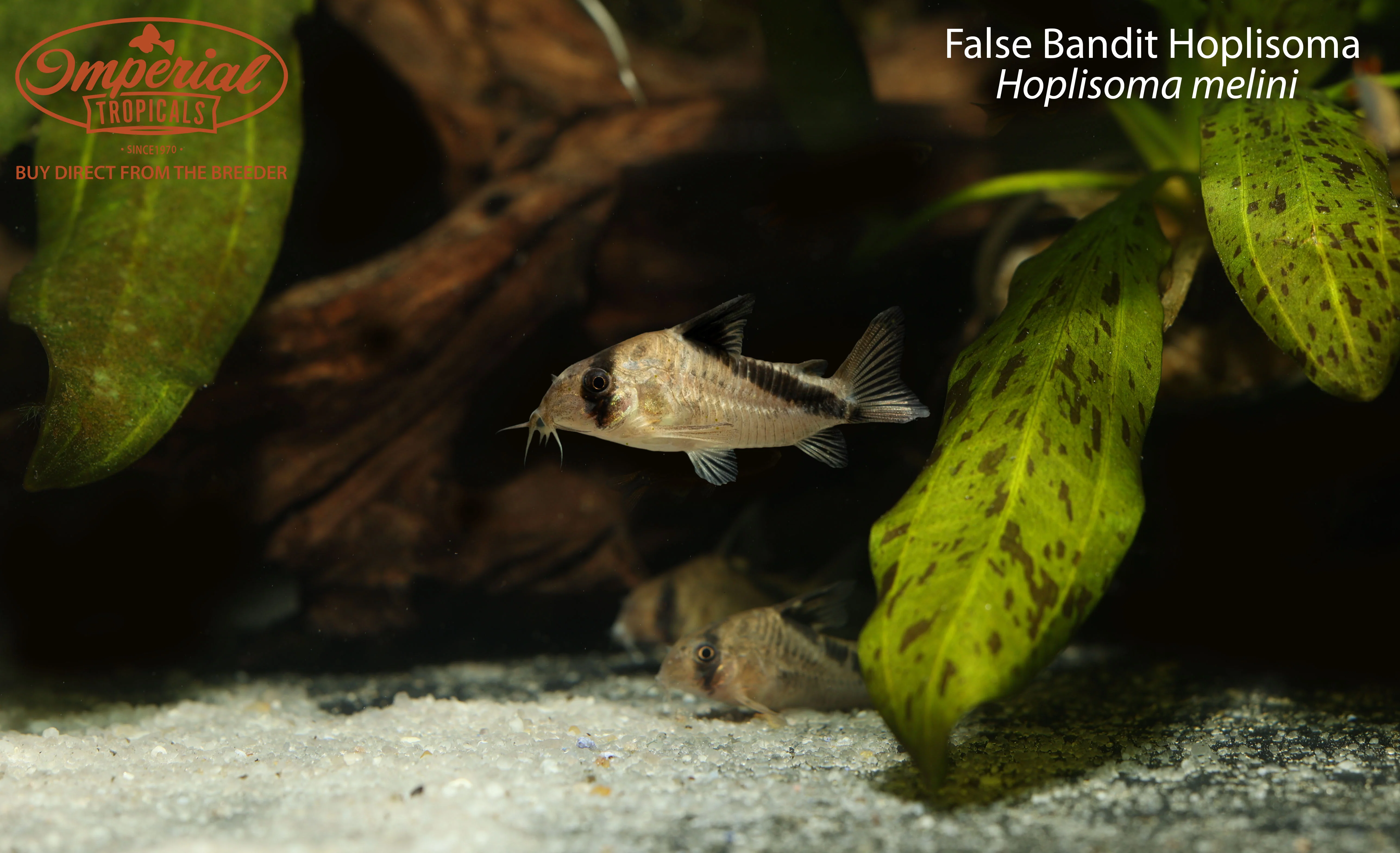
While the skunk hoplisoma has been a staple for many years, for a large chunk of that time It was under an incorrect identification. Until 2019, they were lumped together with and mistaken for the very similar looking skunk brochis (Brochis arcuatus). Thanks to the work of Steven Grant, whom Hoplisoma granti was named after, on recording and analyzing the differences between all the “arc-striped corys,” it was found that the skunk hoplisoma was a distinct species. The easiest way for the average hobbyist to tell H. granti and B. arcuatus apart is to look at the head and snout. The snouts and heads of H. granti are shorter and more rounded compared to B. arcuatus which have a slimmer head and a longer, more pointed snout. This difference can be seen in juveniles but upon maturity, it can also be seen that H. granti is much smaller overall compared to B. arcuatus.
The skunk hoplisoma can be found all throughout the upper Amazon region in several different habitats. Populations have been seen in calmer black water creeks while others have been found in clear, swift moving streams. Interestingly, while all these different populations look mostly the same, a particular one in the Rio Jutai in Brazil has a unique black mark on the first ray of their dorsal fin, but only when they are juveniles. What is shared amongst all their different habitats and populations is that the water is free of pollutants, soft, and moderately acidic. This adaptability extends into the aquarium with many noting that the skunk hoplisoma is very hardy so long as they are given frequent water changes, plenty of aeration, and soft, moderately acidic conditions.
The skunk hoplisoma was previously classified as Corydoras granti, but was reclassified as Hoplisoma granti upon publication of a phylogenomic analysis in 2024 that reclassified many species in the Corydoradinae subfamily.
Corydoradinae are small, peaceful catfish that are active shoalers and will stay near conspecifics, making for a lovely sight. They feed by searching through sand with their barbels, making such a substrate necessary for their long-term health. Gravel substrates tend to be abrasive and damage the barbels, leading to infections and an inability to find food.
While these friendly catfish are willing to swim with other species of Corydoradinae different from their own, this does not provide the same social need as being kept with members of their own species. Because of this, it is highly recommended to keep at least six of each species of Corydoradinae present in the aquarium and only mix species if one has the space to keep at least six of each.
Corydoradinae are often looked at as "scavengers," but they should be treated in a similar fashion as the rest of your fish. They are omnivores and require a mixed diet. Sinking prepared foods are readily accepted, as are frozen and live foods such as brine shrimp, blackworms, and bloodworms.
Original: $29.99
-65%$29.99
$10.50Product Information
Product Information
Shipping & Returns
Shipping & Returns
Description
Remarks: The skunk hoplisoma (Hoplisoma granti), also known as the C020 skunk cory, has been a classic in the hobby for many years. They have an elegant off-white color and, like other species belonging to the group of Corydoradinae referred to as the “arc-striped corys,” has a black or dark gray band extending from the eye, along the back, and ending at the base of the tail. This skunk-like pattern gave rise to the skunk hoplisoma’s common name and has caught the eye of many aquarists.
While the skunk hoplisoma has been a staple for many years, for a large chunk of that time It was under an incorrect identification. Until 2019, they were lumped together with and mistaken for the very similar looking skunk brochis (Brochis arcuatus). Thanks to the work of Steven Grant, whom Hoplisoma granti was named after, on recording and analyzing the differences between all the “arc-striped corys,” it was found that the skunk hoplisoma was a distinct species. The easiest way for the average hobbyist to tell H. granti and B. arcuatus apart is to look at the head and snout. The snouts and heads of H. granti are shorter and more rounded compared to B. arcuatus which have a slimmer head and a longer, more pointed snout. This difference can be seen in juveniles but upon maturity, it can also be seen that H. granti is much smaller overall compared to B. arcuatus.
The skunk hoplisoma can be found all throughout the upper Amazon region in several different habitats. Populations have been seen in calmer black water creeks while others have been found in clear, swift moving streams. Interestingly, while all these different populations look mostly the same, a particular one in the Rio Jutai in Brazil has a unique black mark on the first ray of their dorsal fin, but only when they are juveniles. What is shared amongst all their different habitats and populations is that the water is free of pollutants, soft, and moderately acidic. This adaptability extends into the aquarium with many noting that the skunk hoplisoma is very hardy so long as they are given frequent water changes, plenty of aeration, and soft, moderately acidic conditions.
The skunk hoplisoma was previously classified as Corydoras granti, but was reclassified as Hoplisoma granti upon publication of a phylogenomic analysis in 2024 that reclassified many species in the Corydoradinae subfamily.
Corydoradinae are small, peaceful catfish that are active shoalers and will stay near conspecifics, making for a lovely sight. They feed by searching through sand with their barbels, making such a substrate necessary for their long-term health. Gravel substrates tend to be abrasive and damage the barbels, leading to infections and an inability to find food.
While these friendly catfish are willing to swim with other species of Corydoradinae different from their own, this does not provide the same social need as being kept with members of their own species. Because of this, it is highly recommended to keep at least six of each species of Corydoradinae present in the aquarium and only mix species if one has the space to keep at least six of each.
Corydoradinae are often looked at as "scavengers," but they should be treated in a similar fashion as the rest of your fish. They are omnivores and require a mixed diet. Sinking prepared foods are readily accepted, as are frozen and live foods such as brine shrimp, blackworms, and bloodworms.