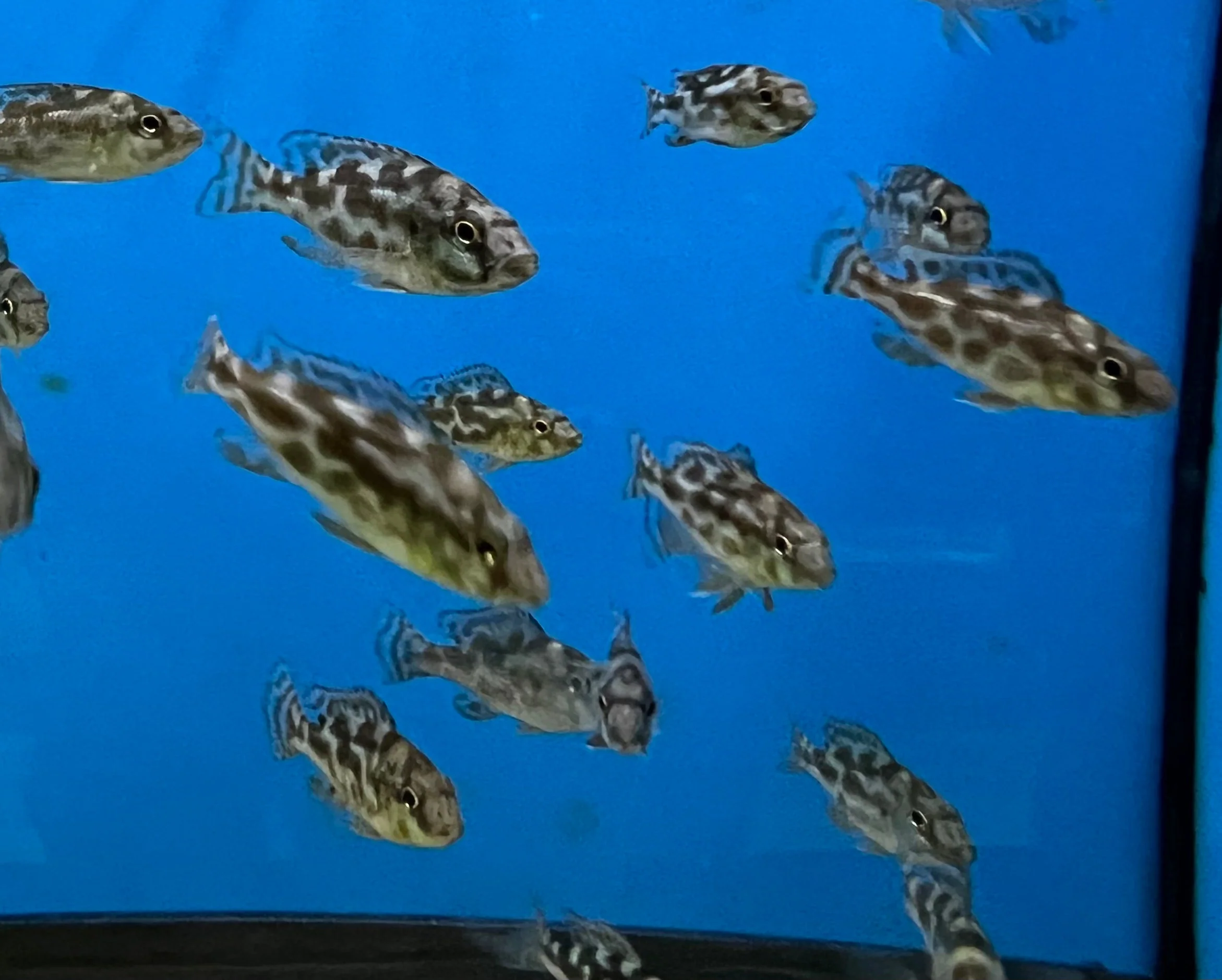
Nimbochromis livingstonii
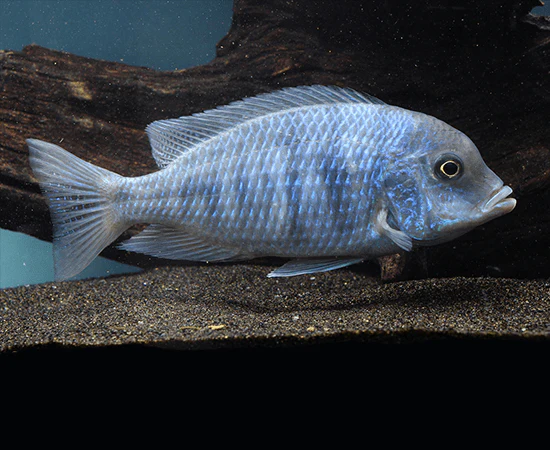
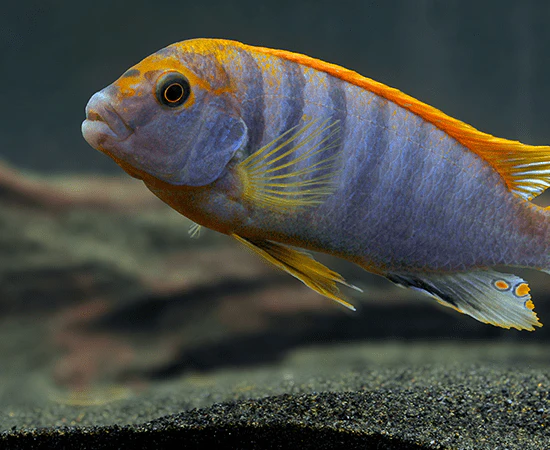
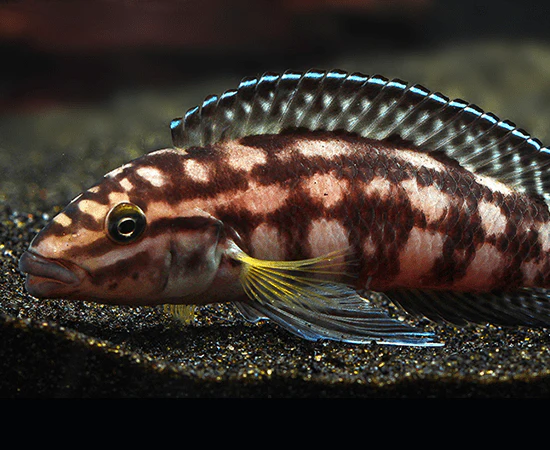
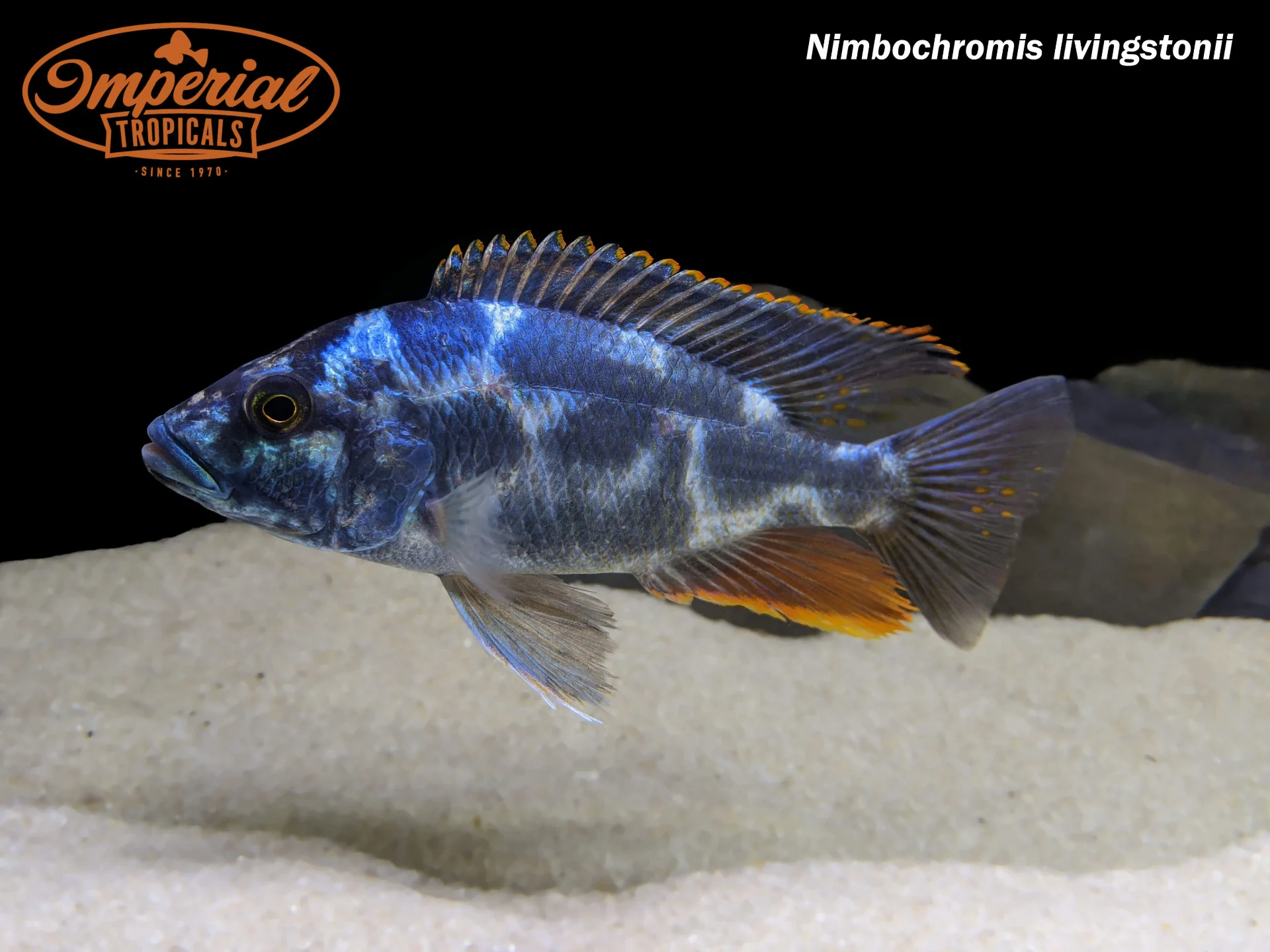
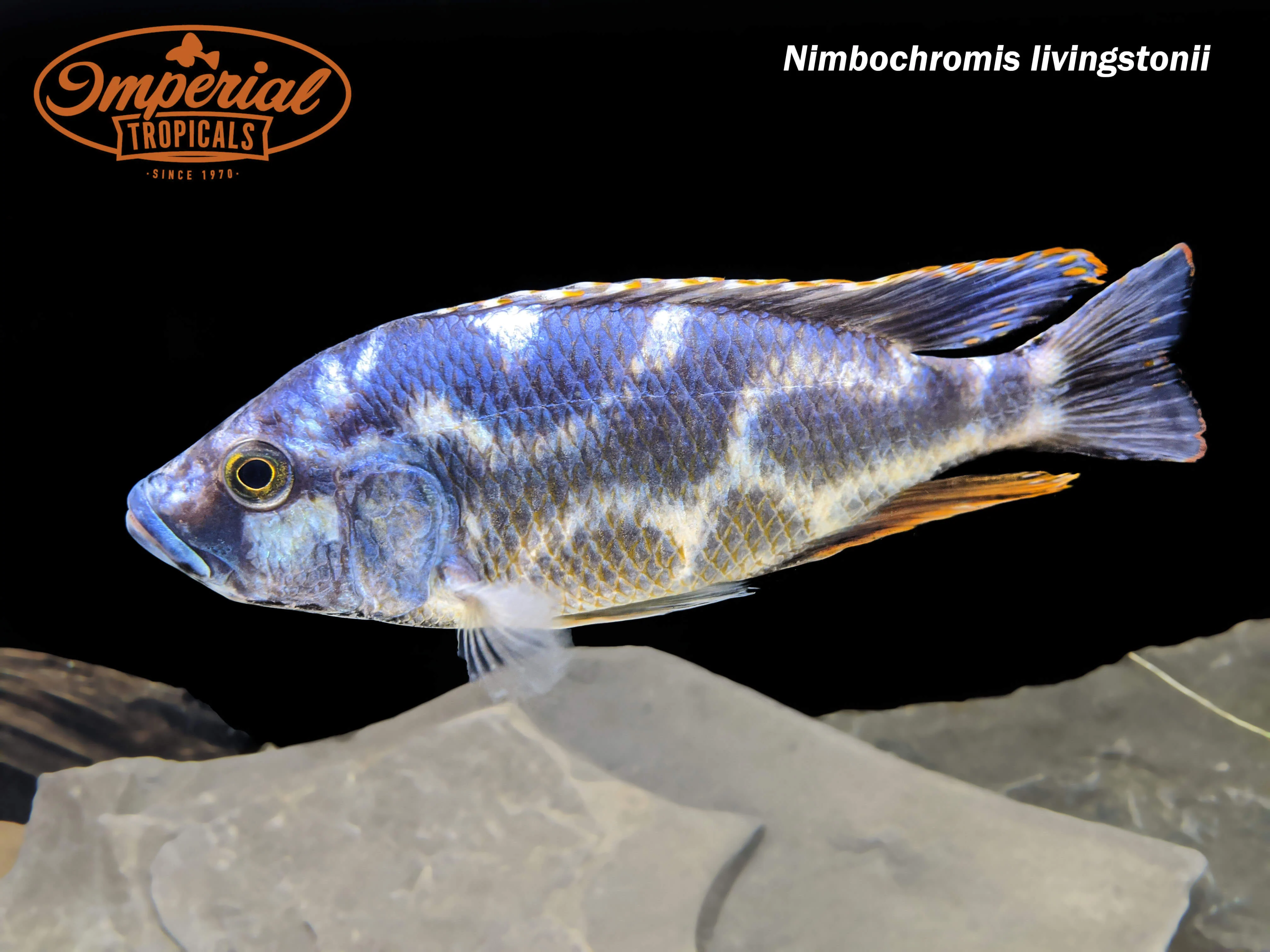
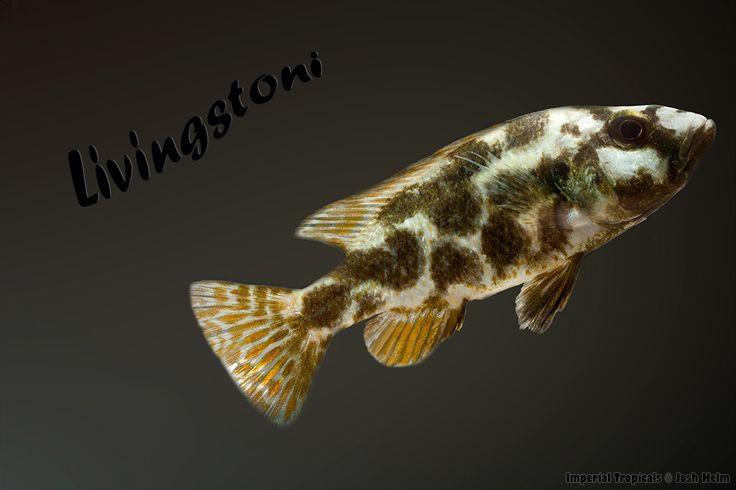
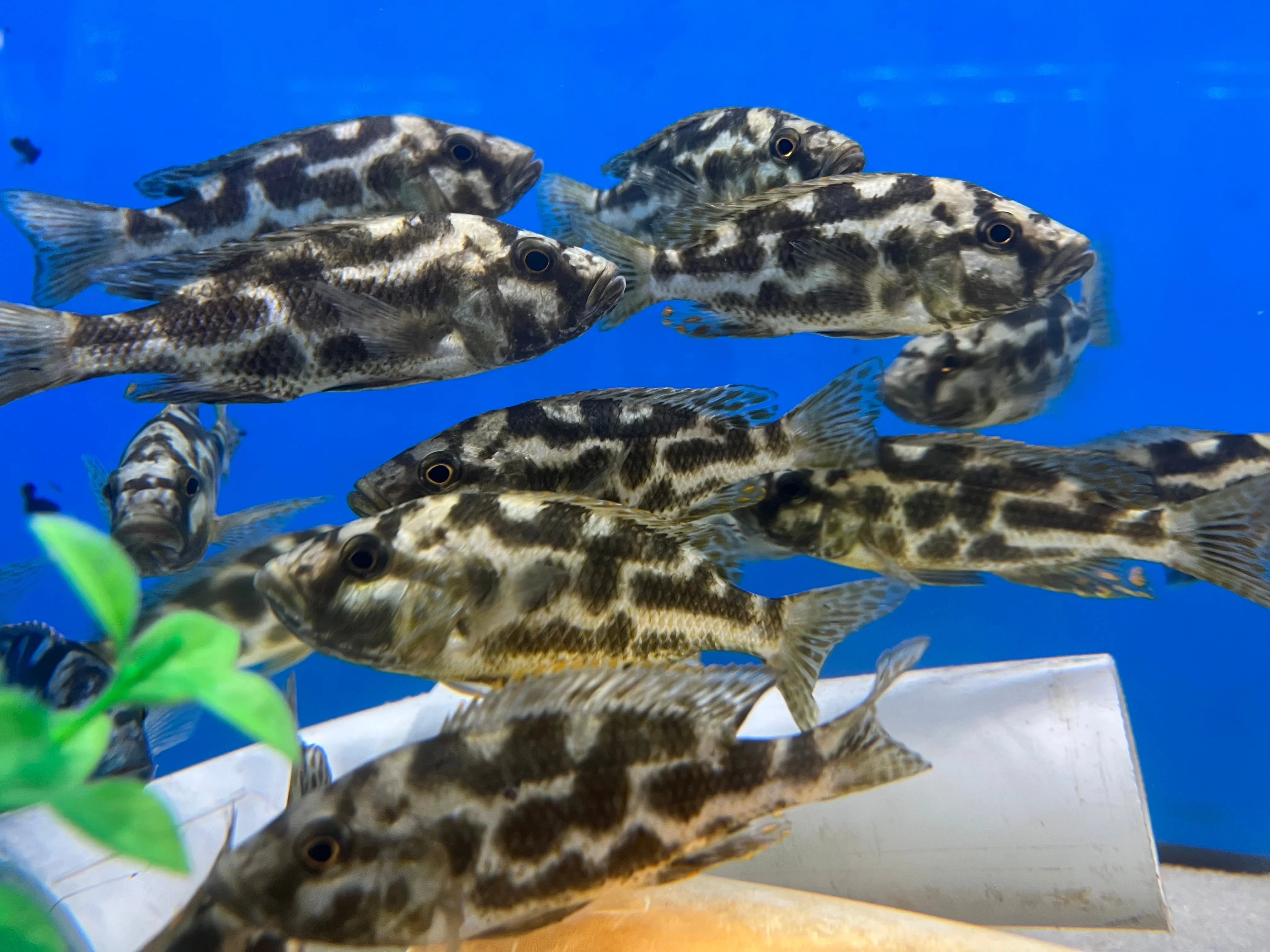
Remarks: Male Nimbochromis livingstonii can rapidly change from the juvenile "giraffe spot" pattern to solid, brilliant blue. This fish has an interesting hunting mechanism. They can be found laying on their sides, motionless, as if deceased. This attracts small fish that don't know any better, and they are quickly swallowed if they get too close! Like other Nimbochromis species, they should not be kept with small cichlids as they are piscivorous by nature.
Scientific Name: Nimbochromis livingstonii
Common Name:
Max Size: 10"
pH: 7.5-8.4
Hardness: Hard
Temperature: 74-82°
Aggressiveness: Aggressive
Region of Origin: Lake Malawi, Africa
Captive Bred or Wild: Captive Bred
Diet: Flake or pellet
Compatibility: Victorian Haps, Malawi Haps, Malawi Peacocks, Synodontis
Tank Mate Options:
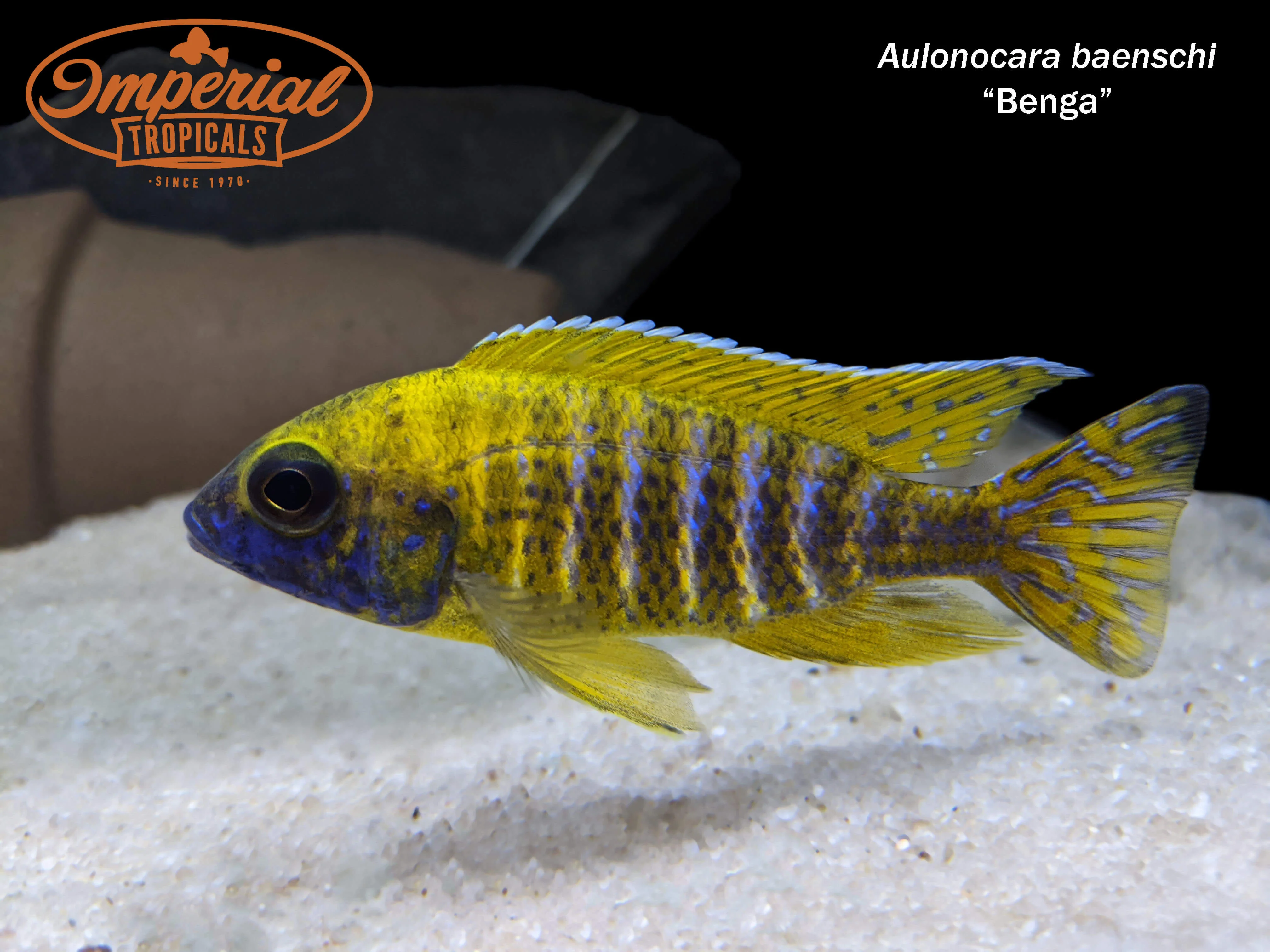
- Aulonocara baenschi Sunshine/Yellow Benga
- Lethrinops sp. Mbasi
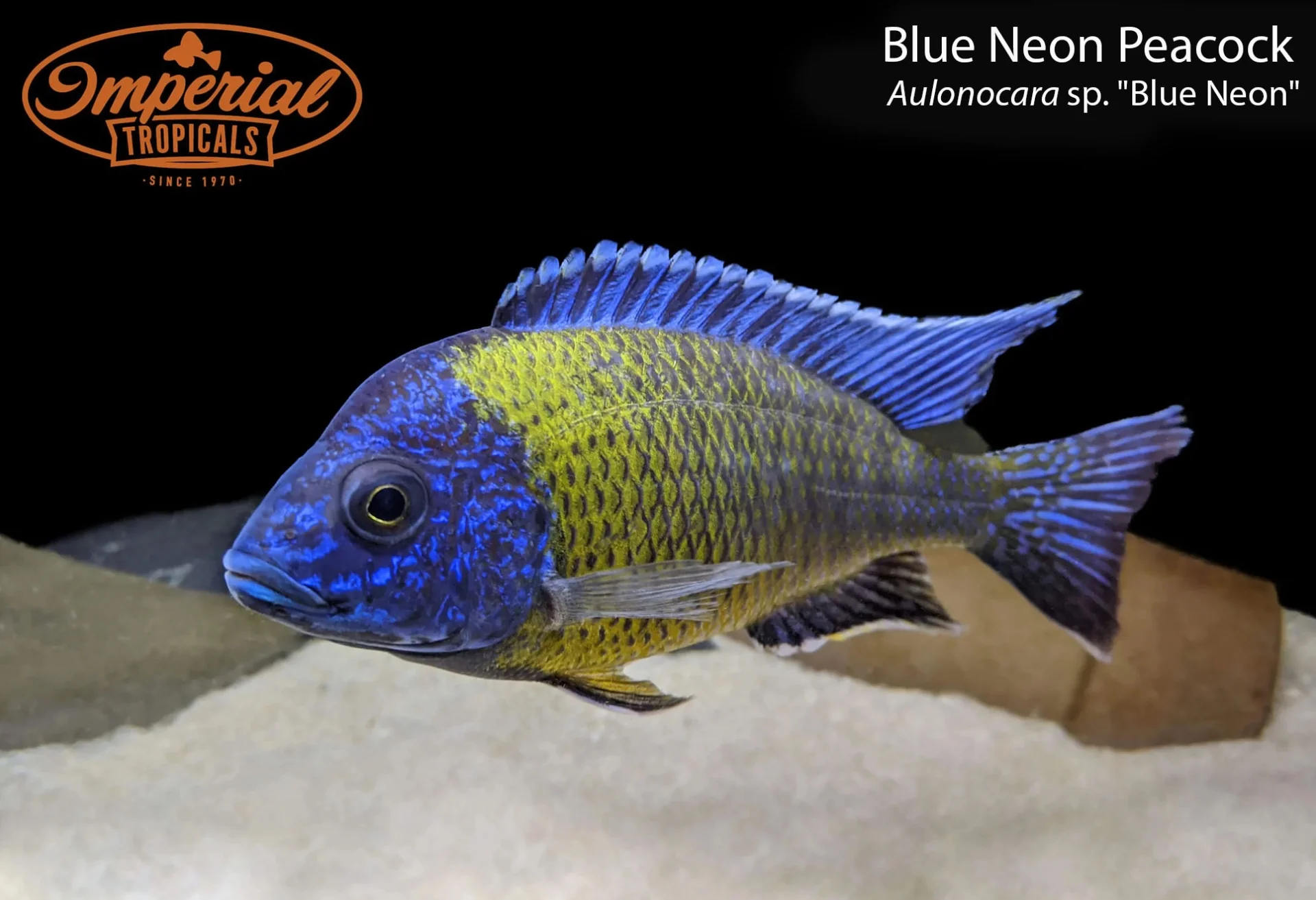
- Aulonocara sp. Blue Dragon Blood
Original: $9.99
-65%$9.99
$3.50Product Information
Product Information
Shipping & Returns
Shipping & Returns
Description
Remarks: Male Nimbochromis livingstonii can rapidly change from the juvenile "giraffe spot" pattern to solid, brilliant blue. This fish has an interesting hunting mechanism. They can be found laying on their sides, motionless, as if deceased. This attracts small fish that don't know any better, and they are quickly swallowed if they get too close! Like other Nimbochromis species, they should not be kept with small cichlids as they are piscivorous by nature.
Scientific Name: Nimbochromis livingstonii
Common Name:
Max Size: 10"
pH: 7.5-8.4
Hardness: Hard
Temperature: 74-82°
Aggressiveness: Aggressive
Region of Origin: Lake Malawi, Africa
Captive Bred or Wild: Captive Bred
Diet: Flake or pellet
Compatibility: Victorian Haps, Malawi Haps, Malawi Peacocks, Synodontis
Tank Mate Options:
- Aulonocara baenschi Sunshine/Yellow Benga
- Lethrinops sp. Mbasi
- Aulonocara sp. Blue Dragon Blood