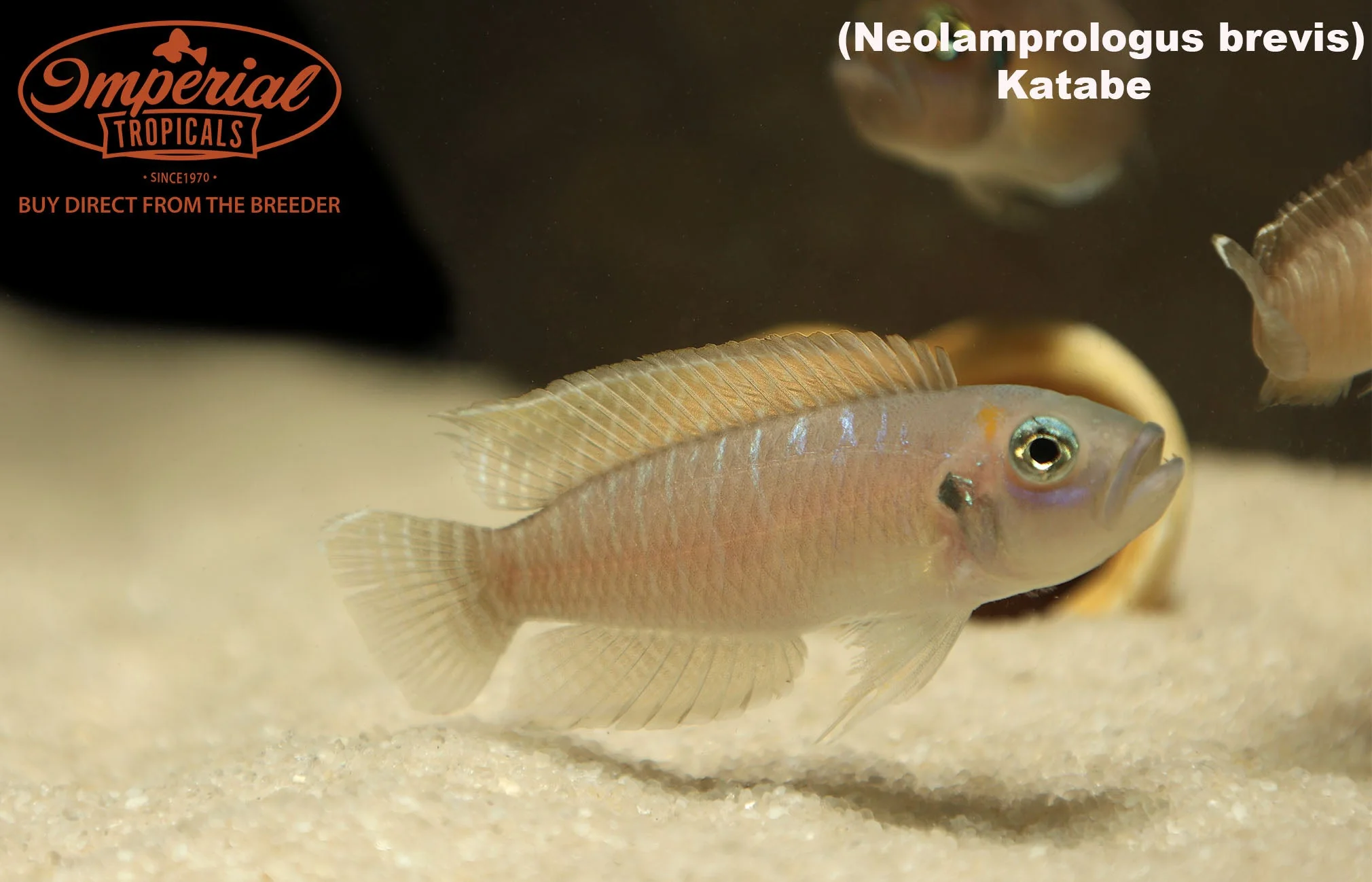
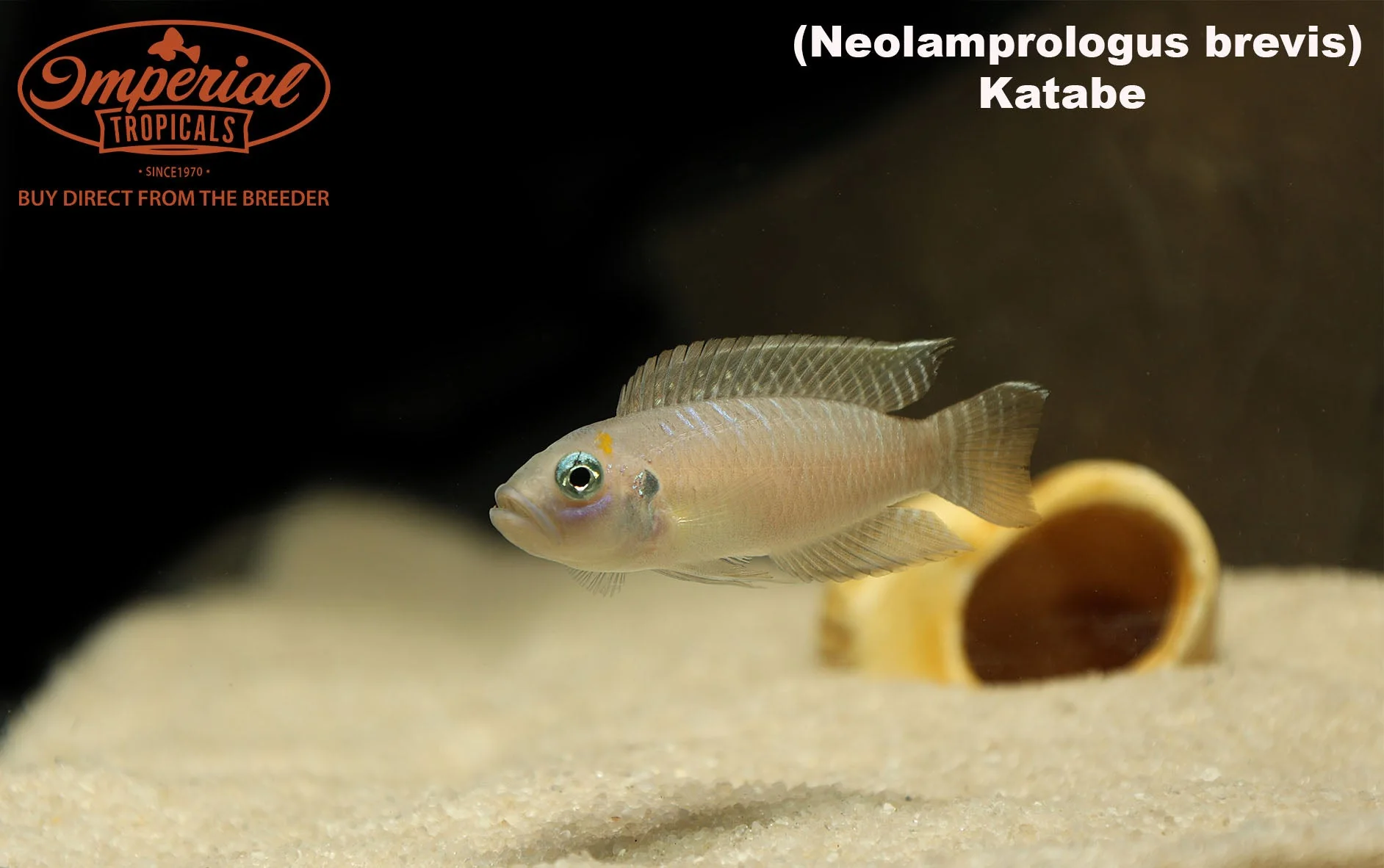
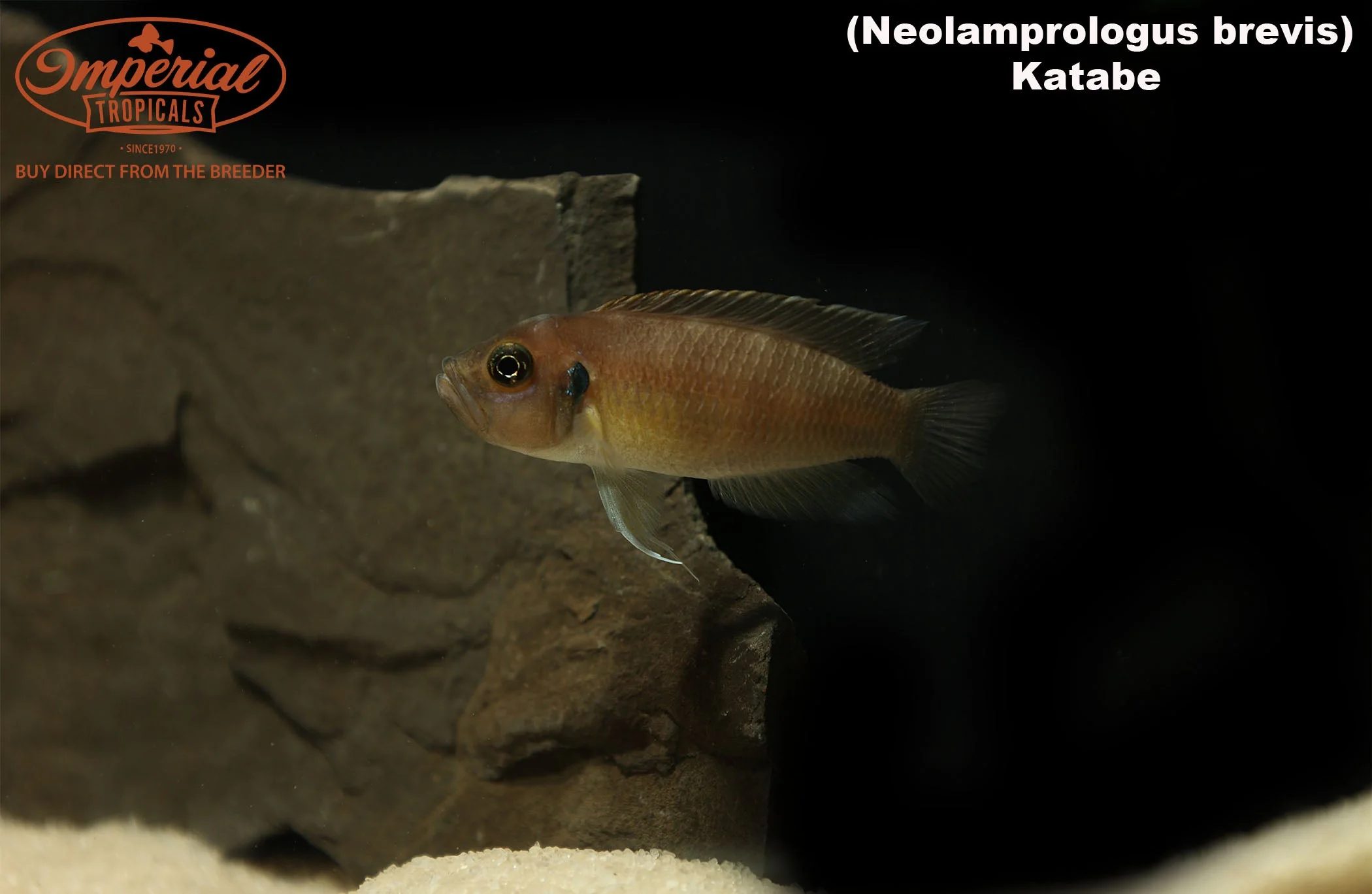
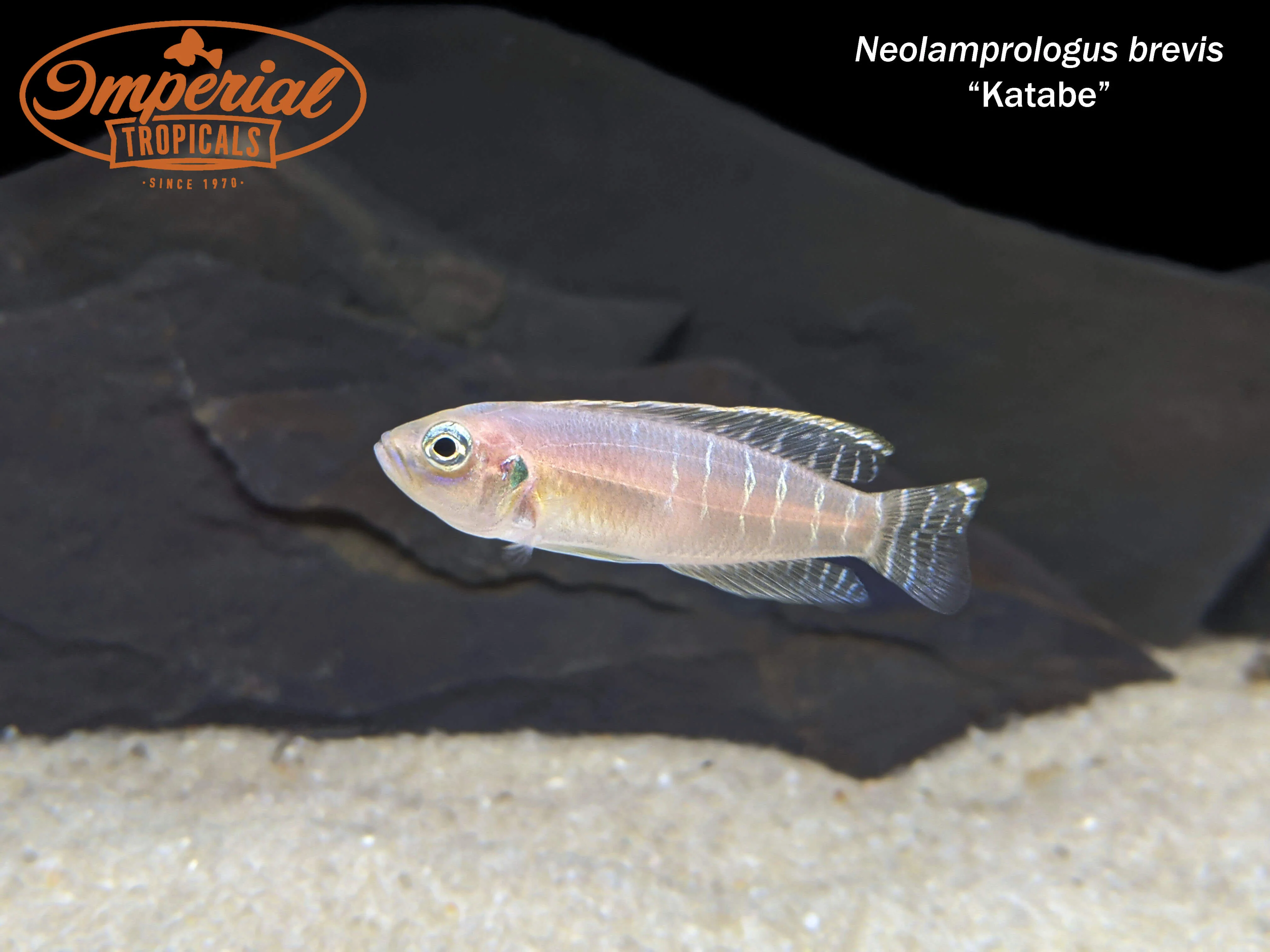
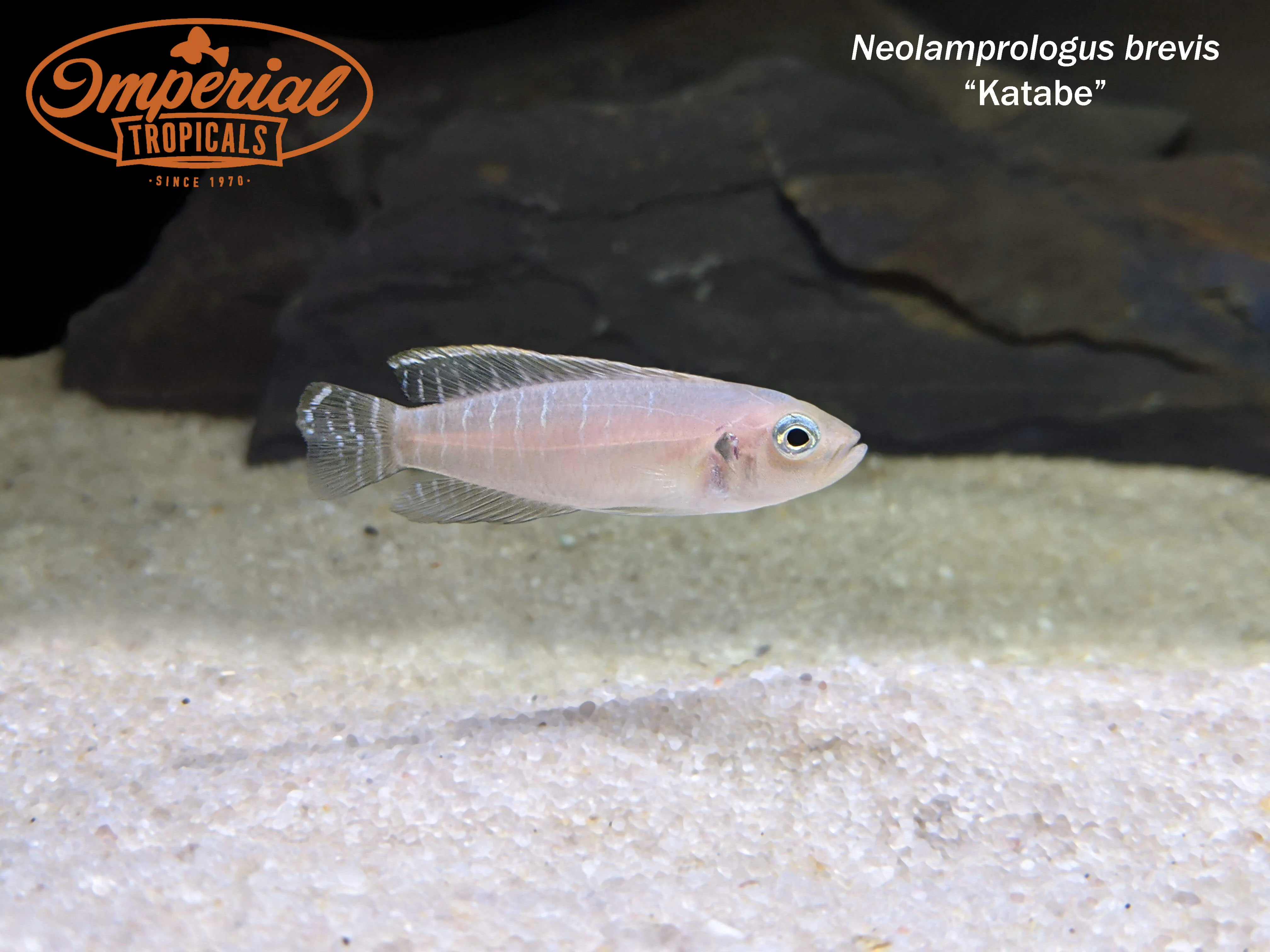
Neolamprologus brevis "Katabe"
Remarks: These shell-dwellers will use round snail shells as breeding locations, sometimes burying the shell in sand to conceal it. Neolamprologus brevis were once part of the genus Lamprologus. In the wild, they occupy shells of snails that have been eaten by Synodontis multipunctatus. Males are nearly twice as large as females, but at a young age it is impossible to tell the sexes apart.
These fish exhibit a remarkable behavior when choosing their spawning site. If no shells are overturned, they will turn them with their mouths. After positioning the shell with the opening facing upward, they will bury the shell by whipping their tails in the sand.
Due to their social nature, these fish should be kept in groups of 5 or more.
Scientific Name: Neolamprologus brevis "Katabe"
Common Name:
Max Size: 3"
pH: 7.5-8.6
Hardness: Hard
Temperature: 70-82°
Aggressiveness: Semi-Aggressive
Region of Origin: Lake Tanganyika, Africa
Captive Bred or Wild: Captive Bred
Diet: Flake or pellet, frozen and live food
Compatibility: Lake Tanganyikan cichlids
Tank Mate Options:
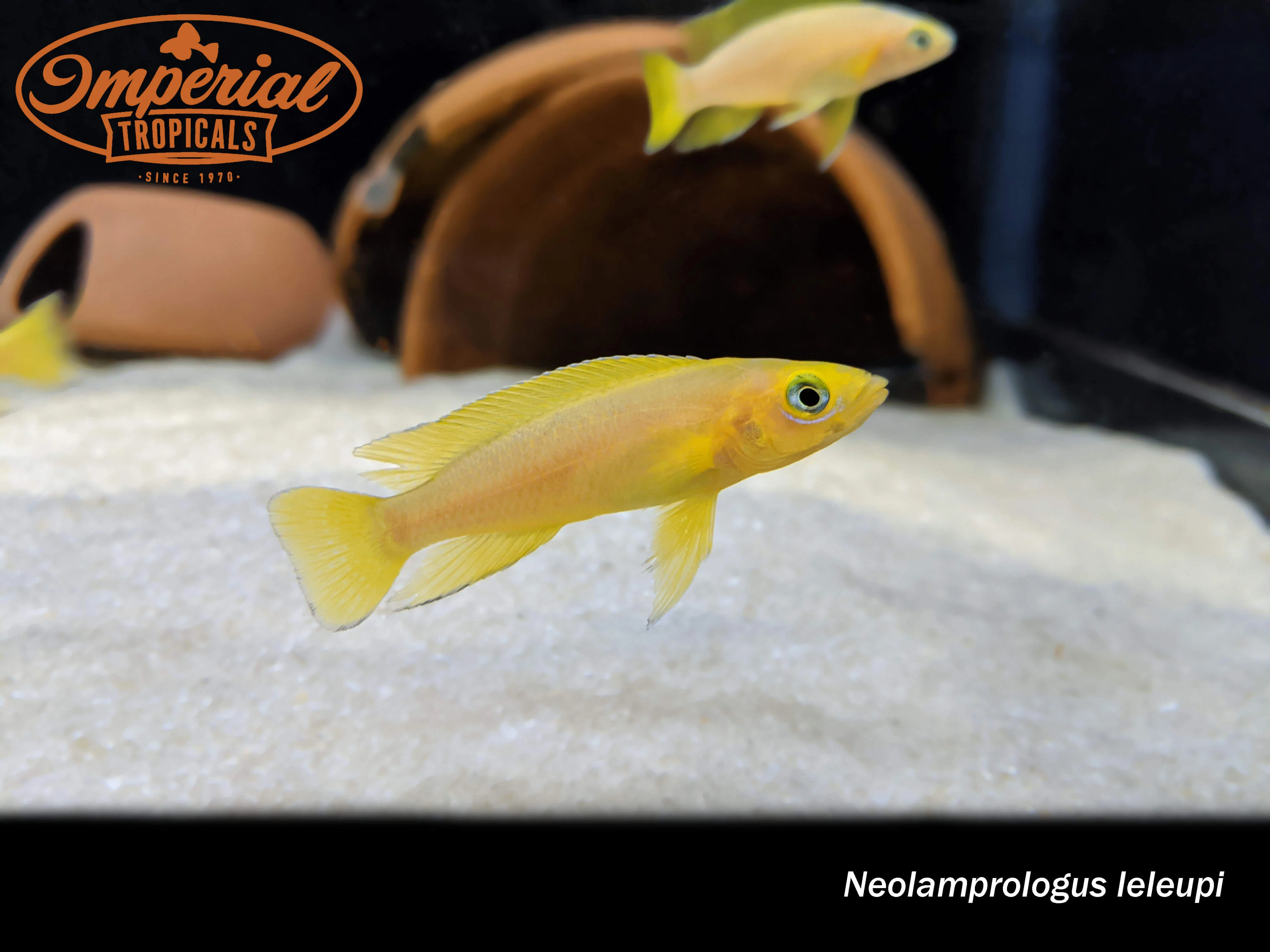
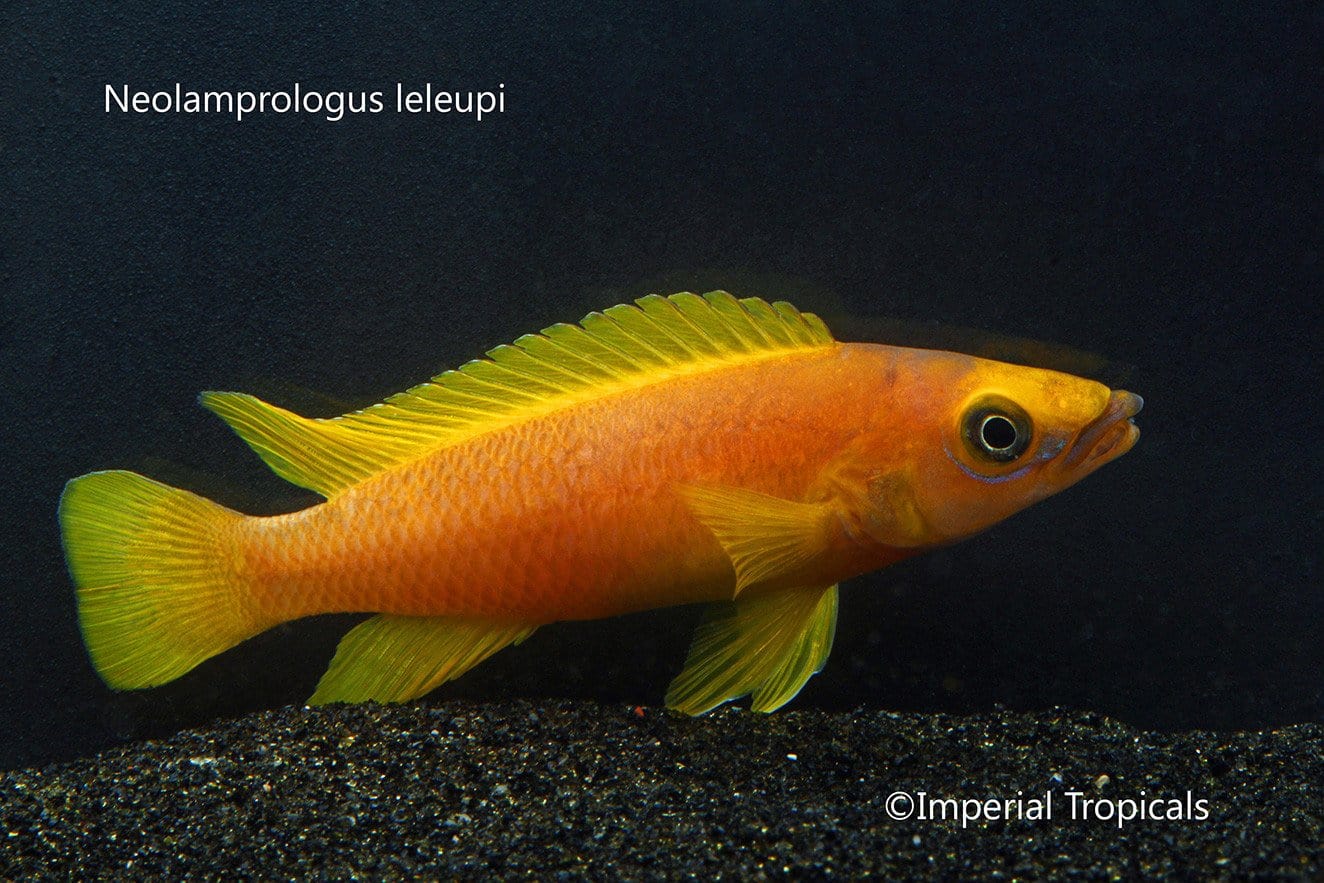
- Neolamprologus leleupi
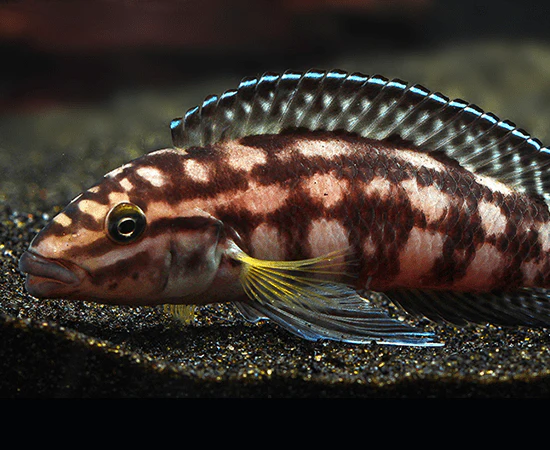
- Julidochromis marlieri
- Synodontis multipunctatus
Original: $14.99
-65%$14.99
$5.25Product Information
Product Information
Shipping & Returns
Shipping & Returns
Description
Remarks: These shell-dwellers will use round snail shells as breeding locations, sometimes burying the shell in sand to conceal it. Neolamprologus brevis were once part of the genus Lamprologus. In the wild, they occupy shells of snails that have been eaten by Synodontis multipunctatus. Males are nearly twice as large as females, but at a young age it is impossible to tell the sexes apart.
These fish exhibit a remarkable behavior when choosing their spawning site. If no shells are overturned, they will turn them with their mouths. After positioning the shell with the opening facing upward, they will bury the shell by whipping their tails in the sand.
Due to their social nature, these fish should be kept in groups of 5 or more.
Scientific Name: Neolamprologus brevis "Katabe"
Common Name:
Max Size: 3"
pH: 7.5-8.6
Hardness: Hard
Temperature: 70-82°
Aggressiveness: Semi-Aggressive
Region of Origin: Lake Tanganyika, Africa
Captive Bred or Wild: Captive Bred
Diet: Flake or pellet, frozen and live food
Compatibility: Lake Tanganyikan cichlids
Tank Mate Options:
- Neolamprologus leleupi
- Julidochromis marlieri
- Synodontis multipunctatus