Julidochromis dickfeldi
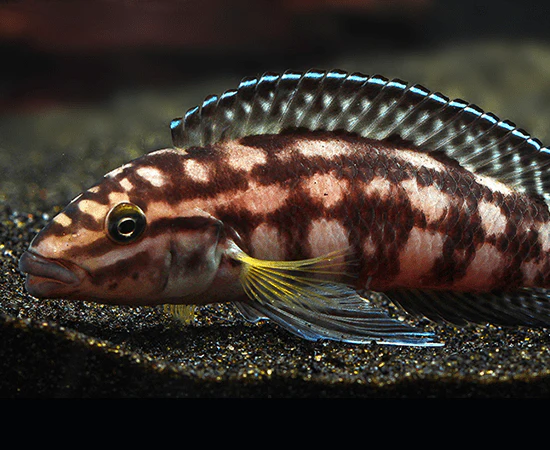
Remarks: Julidochromis dickfeldi is a yellow-tan torpedo-shaped cichlid from Lake Tanganyika with several horizontal black bars and blue fins. They inhabit rocky areas of the lake and can often be seen hovering upside-down below a rocky outcropping. Julies make for an excellent candidate for a breeder looking to try Tanganyikan cichlids, as they are cave spawners and tend to produce quite a few fry, which they raise for several weeks. Sexing is nearly impossible, so young groups should be kept together until they pair off.
Scientific Name: Julidochromis dickfeldi
Common Name:
Max Size: 4"
pH: 7.5-8.6
Hardness: Hard
Temperature: 70-82°
Aggressiveness: Semi-Aggressive
Region of Origin: Lake Tanganyika, Africa
Captive Bred or Wild: Captive Bred
Diet: Flake or pellet, frozen and live food
Compatibility: Lake Tanganyikan cichlids
Tank Mate Options:
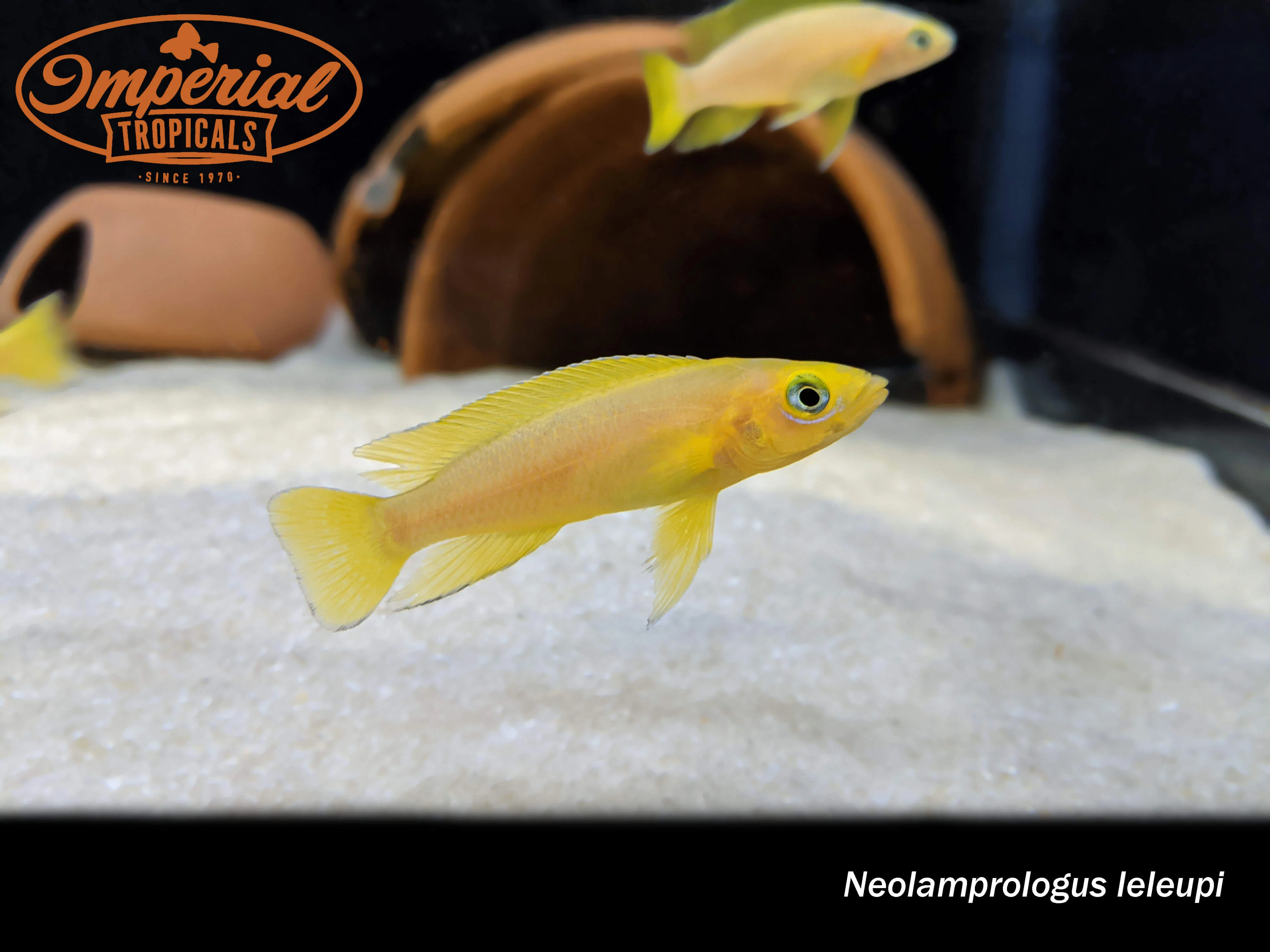
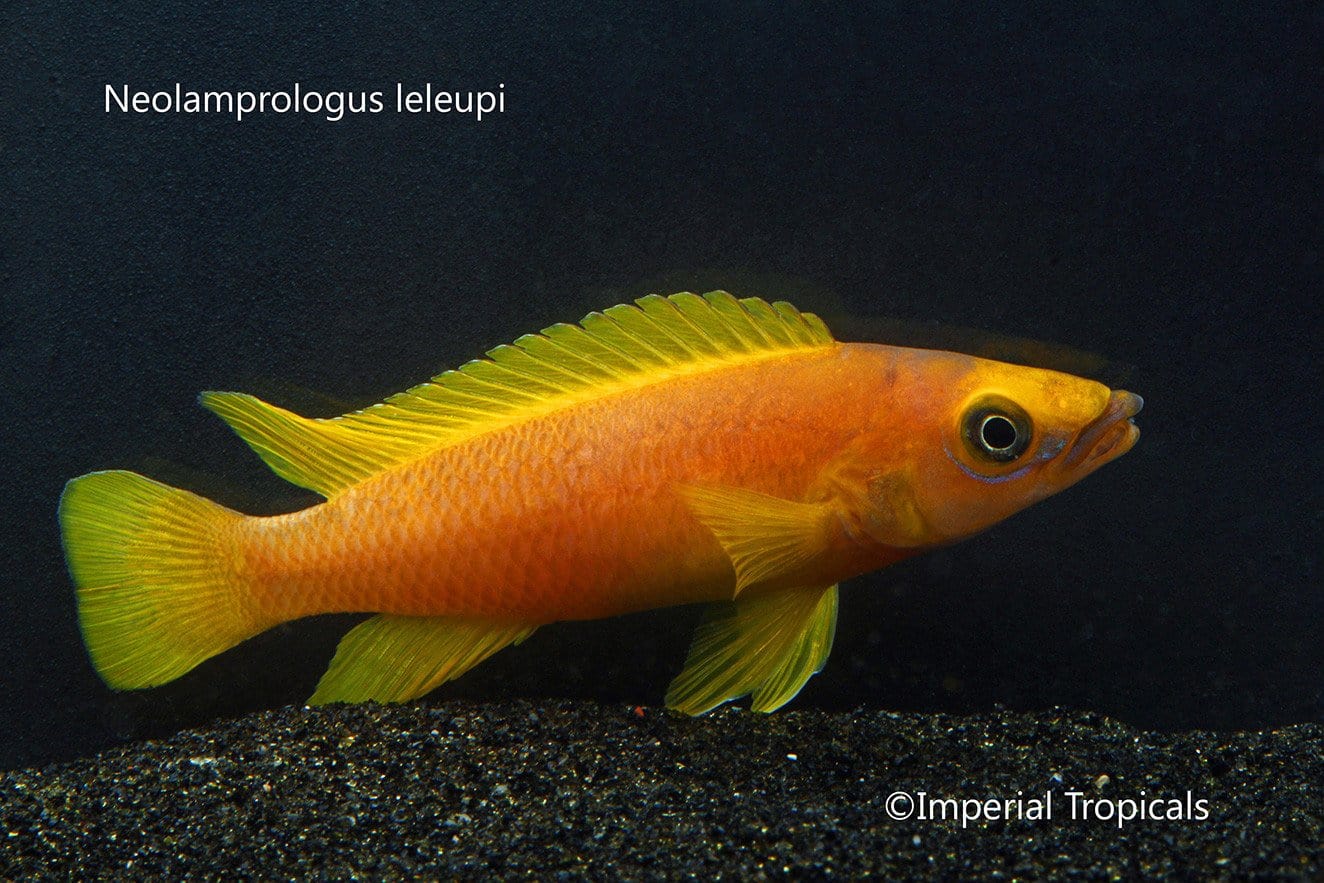
- Neolamprologus leleupi
- Julidochromis ornatus
- Synodontis multipunctatus
Original: $16.99
-65%$16.99
$5.95Product Information
Product Information
Shipping & Returns
Shipping & Returns
Description
Remarks: Julidochromis dickfeldi is a yellow-tan torpedo-shaped cichlid from Lake Tanganyika with several horizontal black bars and blue fins. They inhabit rocky areas of the lake and can often be seen hovering upside-down below a rocky outcropping. Julies make for an excellent candidate for a breeder looking to try Tanganyikan cichlids, as they are cave spawners and tend to produce quite a few fry, which they raise for several weeks. Sexing is nearly impossible, so young groups should be kept together until they pair off.
Scientific Name: Julidochromis dickfeldi
Common Name:
Max Size: 4"
pH: 7.5-8.6
Hardness: Hard
Temperature: 70-82°
Aggressiveness: Semi-Aggressive
Region of Origin: Lake Tanganyika, Africa
Captive Bred or Wild: Captive Bred
Diet: Flake or pellet, frozen and live food
Compatibility: Lake Tanganyikan cichlids
Tank Mate Options:
- Neolamprologus leleupi
- Julidochromis ornatus
- Synodontis multipunctatus