Chili Rasbora
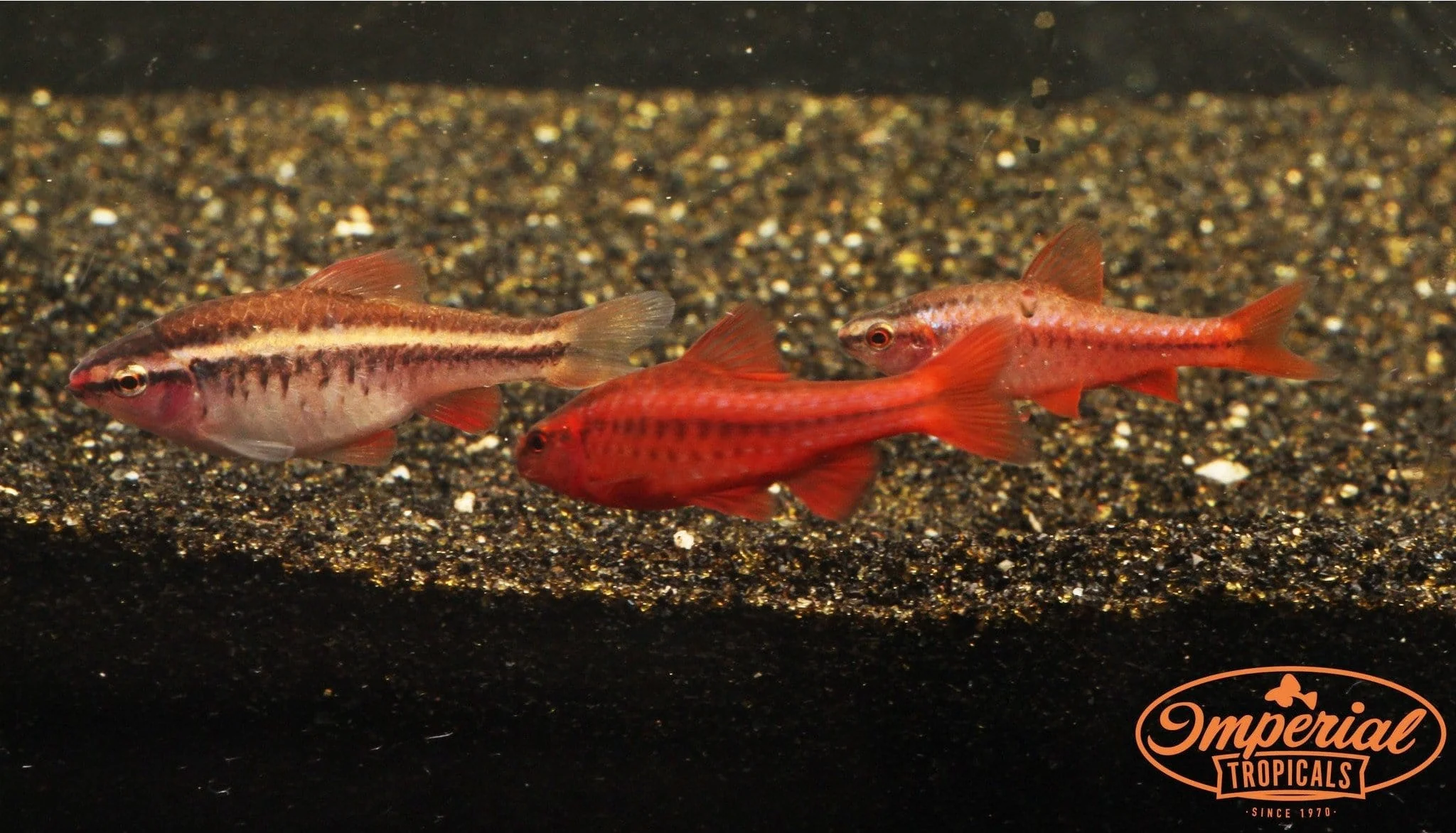
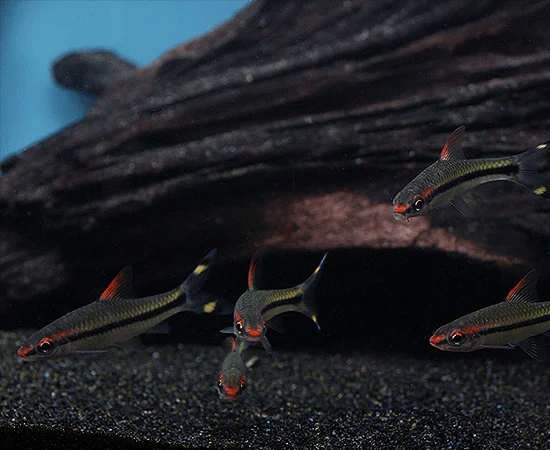
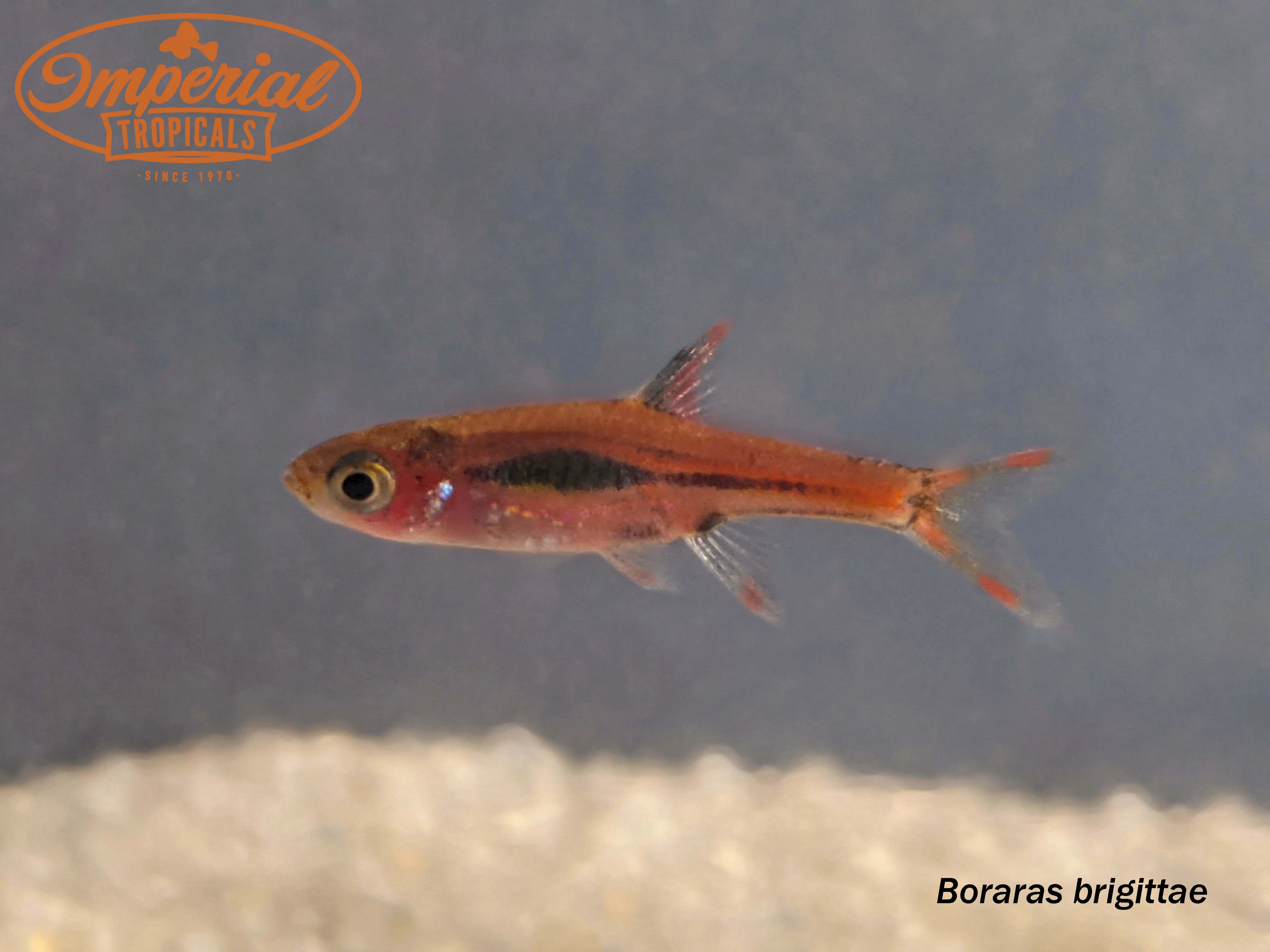
Remarks: Chili Rasboras (Boraras brigittae) are one of the smallest freshwater fish in the hobby but they are packed with color. They are a bright red fish with a blackish-green stripe from the middle of the body to the caudal peduncle, bordered by a tiny orange stripe. Because of their small size, it is best to keep a school of 6 or more in a tank, but if the tank is bigger than 10 gallons, we recommend at least 15 fish. At less than half an inch long, if you were to group all 15 fish into a small ball, it would be no larger an 2" in diameter. Add in the fact that their little bodies cannot produce much waste, and you will realize that more is always better and you will rarely risk overcrowding them.
Their small size can also cause trouble, however. You must ensure you cover any filtration openings with a fine mesh or sponge to avoid the fish being sucked into a filter. It is also highly recommended to keep a lid on their tank, as they are notorious for jumping while riding a current from a filter. They also have extremely fast metabolisms and small mouths so they must be fed multiple times a day with small meaty foods such as baby brine shrimp. This is best managed by only adding them to well-established tanks with plenty of infusoria and tiny crustaceans to feed on.
Original: $15.99
-65%$15.99
$5.60Product Information
Product Information
Shipping & Returns
Shipping & Returns
Description
Remarks: Chili Rasboras (Boraras brigittae) are one of the smallest freshwater fish in the hobby but they are packed with color. They are a bright red fish with a blackish-green stripe from the middle of the body to the caudal peduncle, bordered by a tiny orange stripe. Because of their small size, it is best to keep a school of 6 or more in a tank, but if the tank is bigger than 10 gallons, we recommend at least 15 fish. At less than half an inch long, if you were to group all 15 fish into a small ball, it would be no larger an 2" in diameter. Add in the fact that their little bodies cannot produce much waste, and you will realize that more is always better and you will rarely risk overcrowding them.
Their small size can also cause trouble, however. You must ensure you cover any filtration openings with a fine mesh or sponge to avoid the fish being sucked into a filter. It is also highly recommended to keep a lid on their tank, as they are notorious for jumping while riding a current from a filter. They also have extremely fast metabolisms and small mouths so they must be fed multiple times a day with small meaty foods such as baby brine shrimp. This is best managed by only adding them to well-established tanks with plenty of infusoria and tiny crustaceans to feed on.