Chalinochromis sp. Ndobnoi
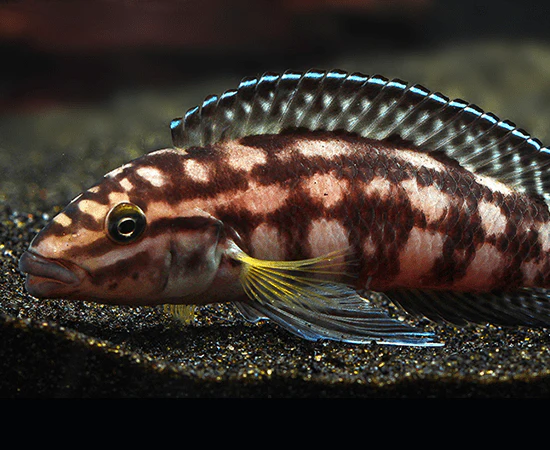
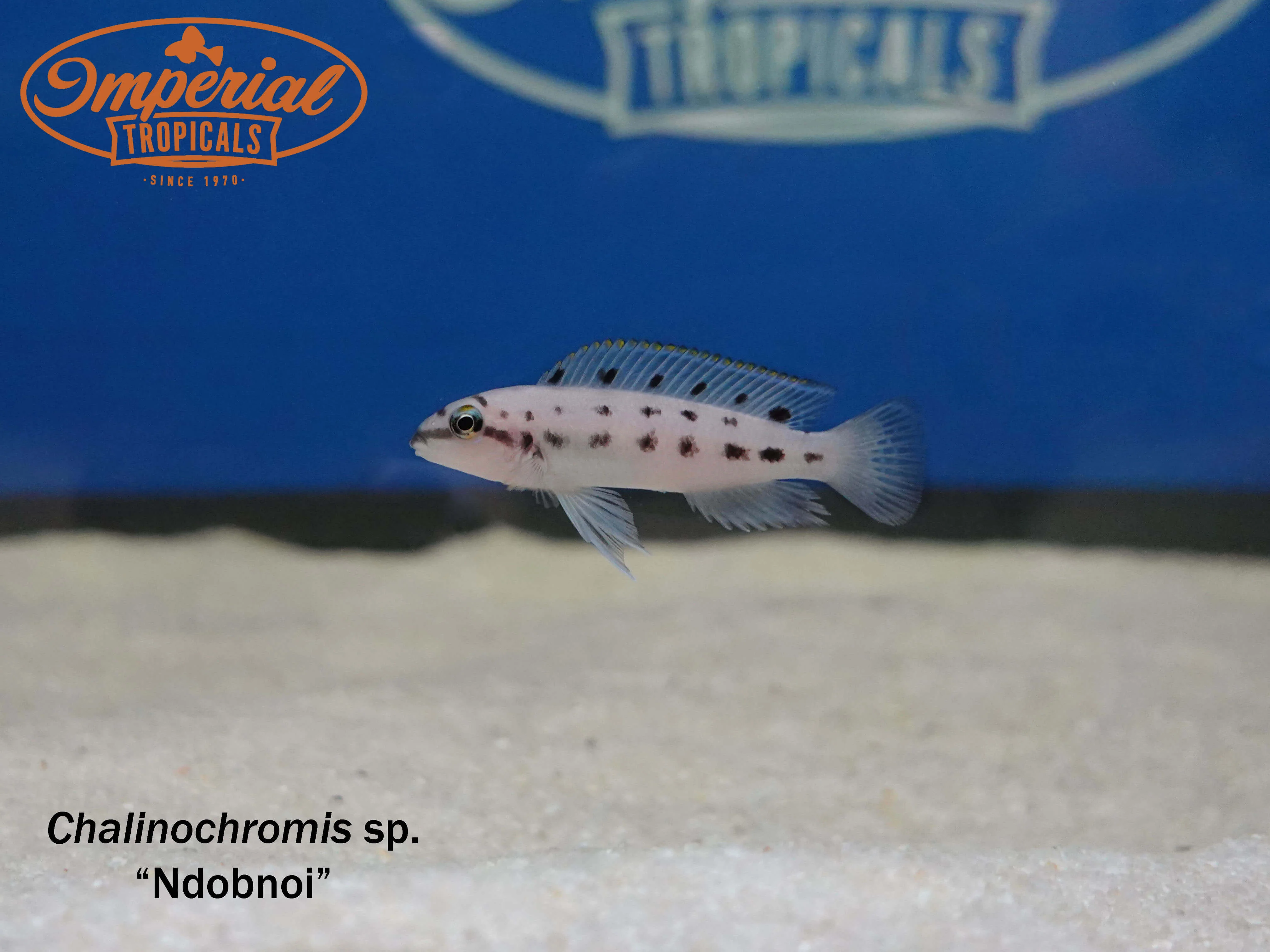
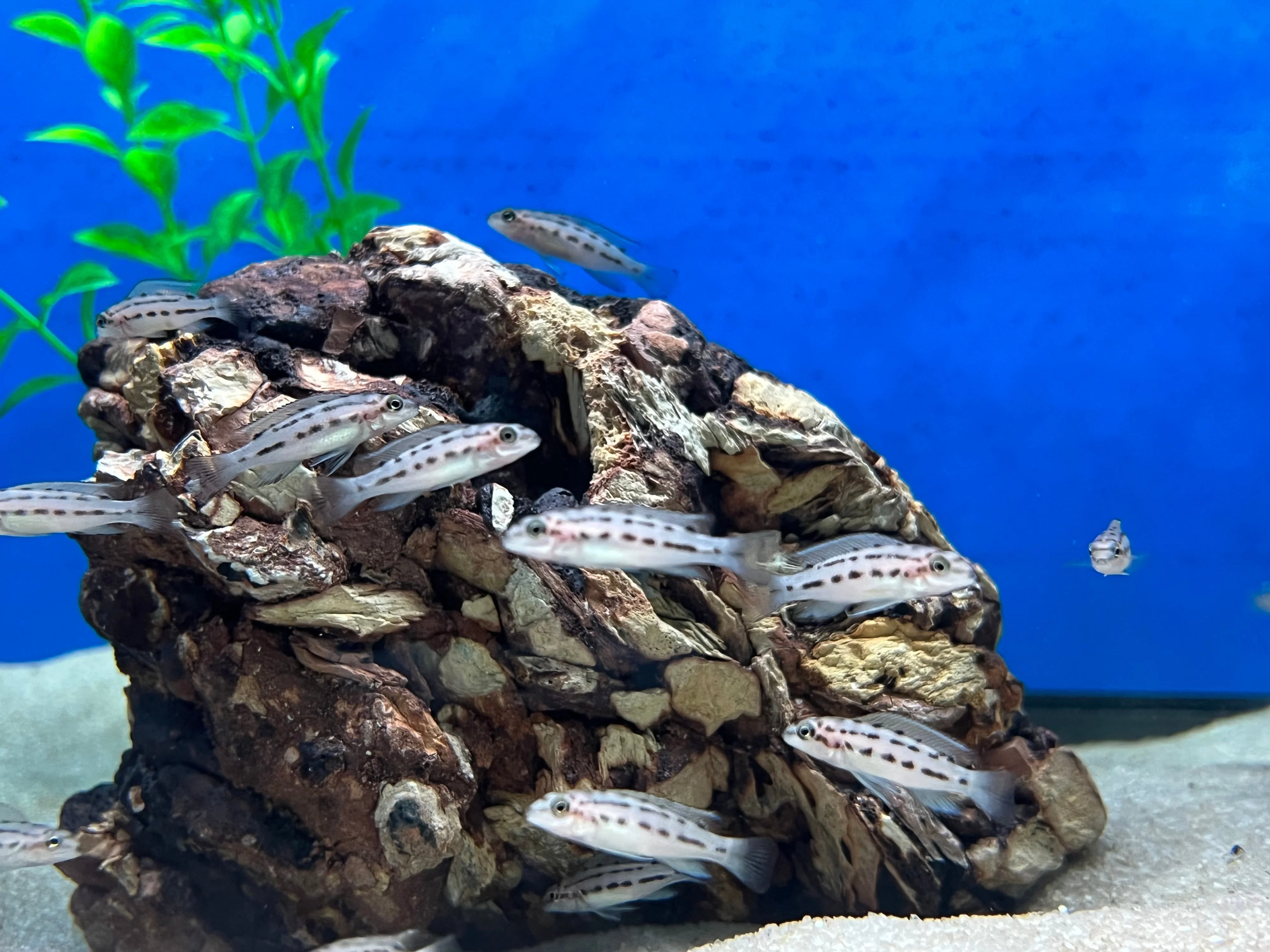
Remarks: Chalinochromis sp. Ndobnoi is a Tanganyikan cichlid with a white body and two or three rows of black dots along the lateral line and base of the dorsal fin. Like other Chalinochroms spp., they have bridle-like markings on the face (chalina in Greek translates to bridle). They can be distinguished from another popular species, C. brichardi, because they keep their spots into adulthood while C. brichardi lose them.
They can be spawned by keeping a small group of fish until they pair off. Once a pair is formed, they will defend a spawning site, such as a flower pot or cave, and lay 40-60 eggs.
Scientific Name: Chalinochromis sp. Ndobnoi
Common Name:
Max Size: 5"
pH: 7.5-8.6
Hardness: Hard
Temperature: 70-82°
Aggressiveness: Semi-Aggressive
Region of Origin: Lake Tanganyika, Africa
Captive Bred or Wild: Captive Bred
Diet: Flake or pellet, frozen and live food
Compatibility: Lake Tanganyikan cichlids
Tank Mate Options:
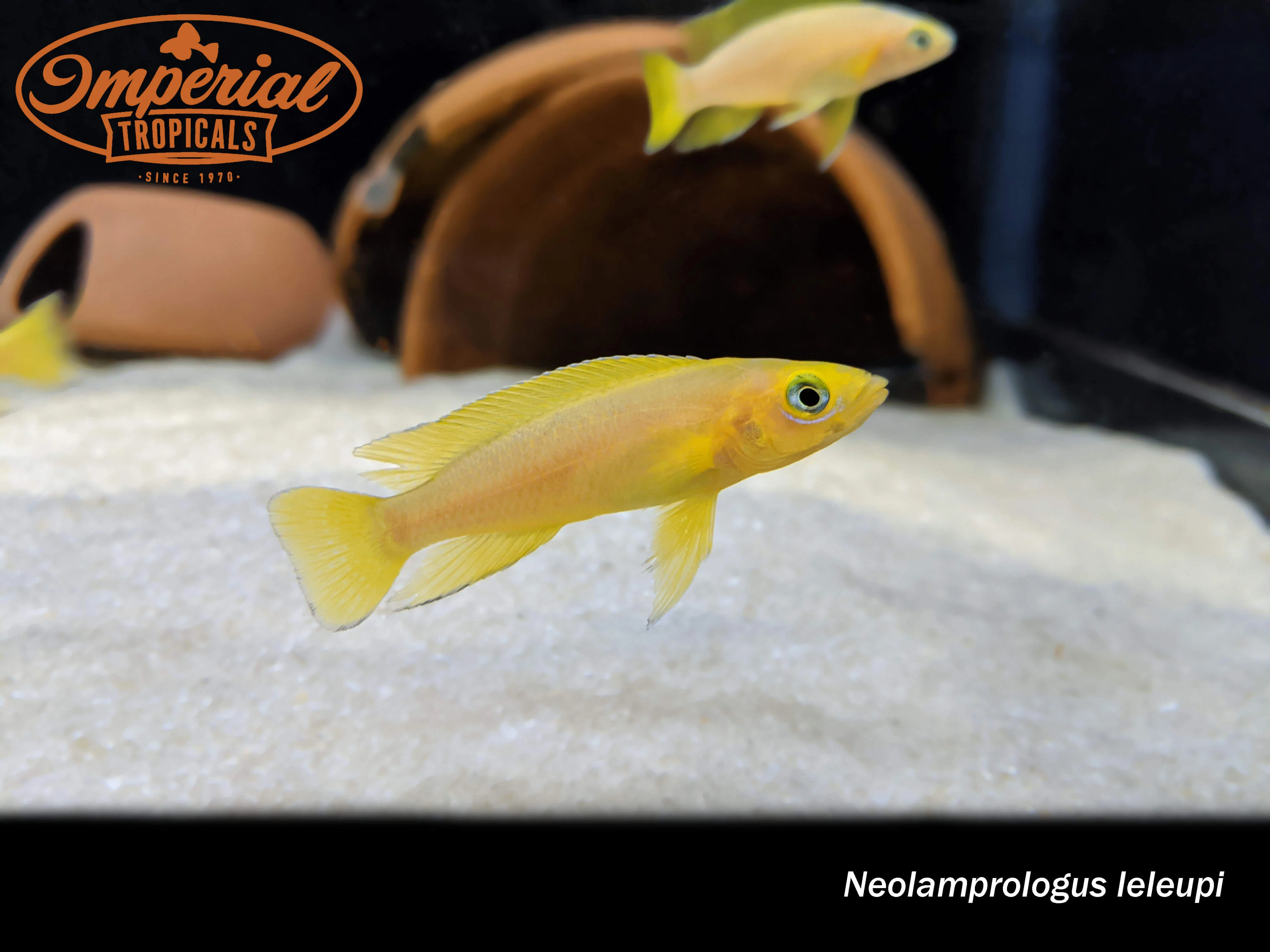
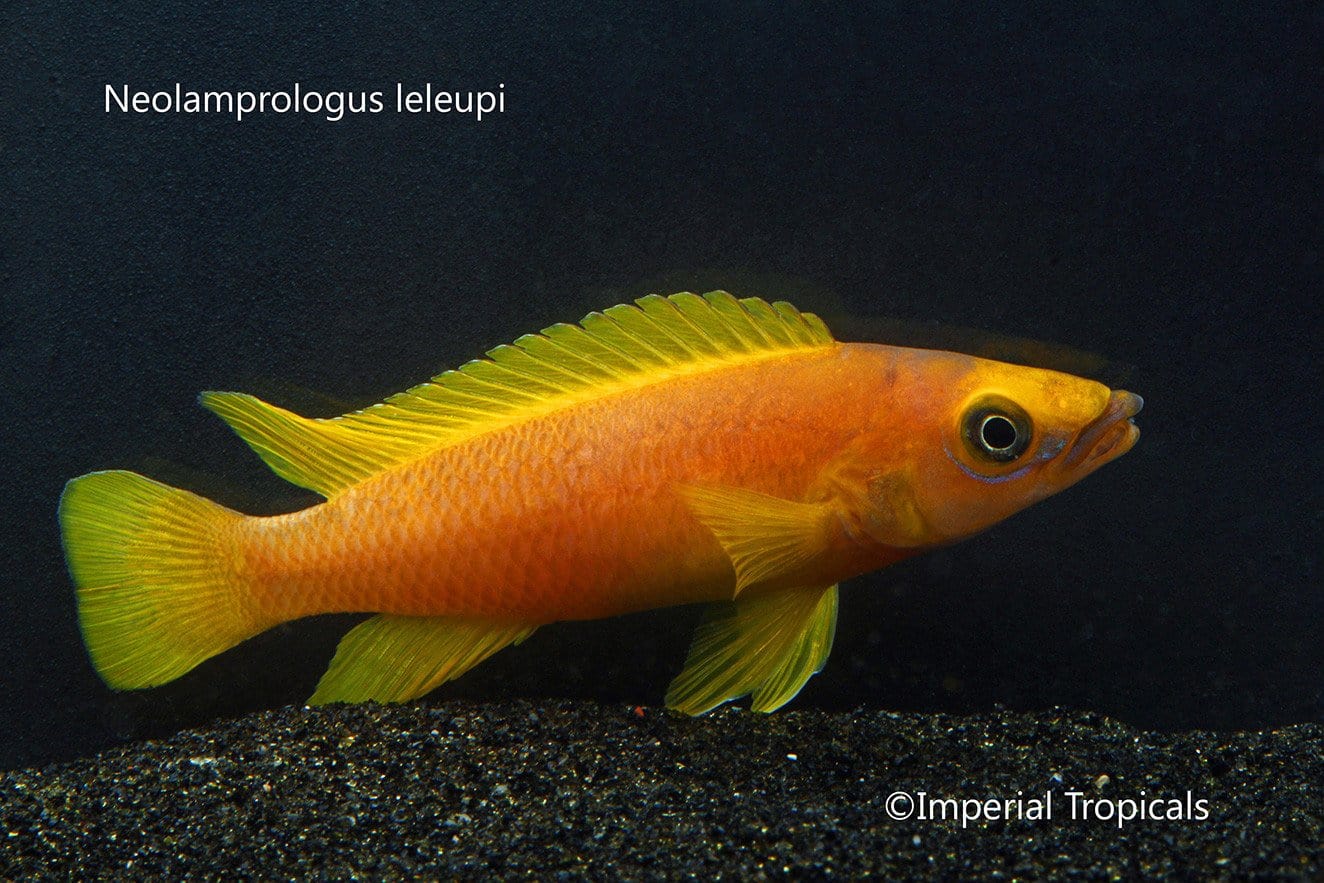
- Neolamprologus leleupi
- Neolamprologus tretocephalus
- Synodontis multipunctatus
Original: $14.99
-65%$14.99
$5.25Product Information
Product Information
Shipping & Returns
Shipping & Returns
Description
Remarks: Chalinochromis sp. Ndobnoi is a Tanganyikan cichlid with a white body and two or three rows of black dots along the lateral line and base of the dorsal fin. Like other Chalinochroms spp., they have bridle-like markings on the face (chalina in Greek translates to bridle). They can be distinguished from another popular species, C. brichardi, because they keep their spots into adulthood while C. brichardi lose them.
They can be spawned by keeping a small group of fish until they pair off. Once a pair is formed, they will defend a spawning site, such as a flower pot or cave, and lay 40-60 eggs.
Scientific Name: Chalinochromis sp. Ndobnoi
Common Name:
Max Size: 5"
pH: 7.5-8.6
Hardness: Hard
Temperature: 70-82°
Aggressiveness: Semi-Aggressive
Region of Origin: Lake Tanganyika, Africa
Captive Bred or Wild: Captive Bred
Diet: Flake or pellet, frozen and live food
Compatibility: Lake Tanganyikan cichlids
Tank Mate Options:
- Neolamprologus leleupi
- Neolamprologus tretocephalus
- Synodontis multipunctatus