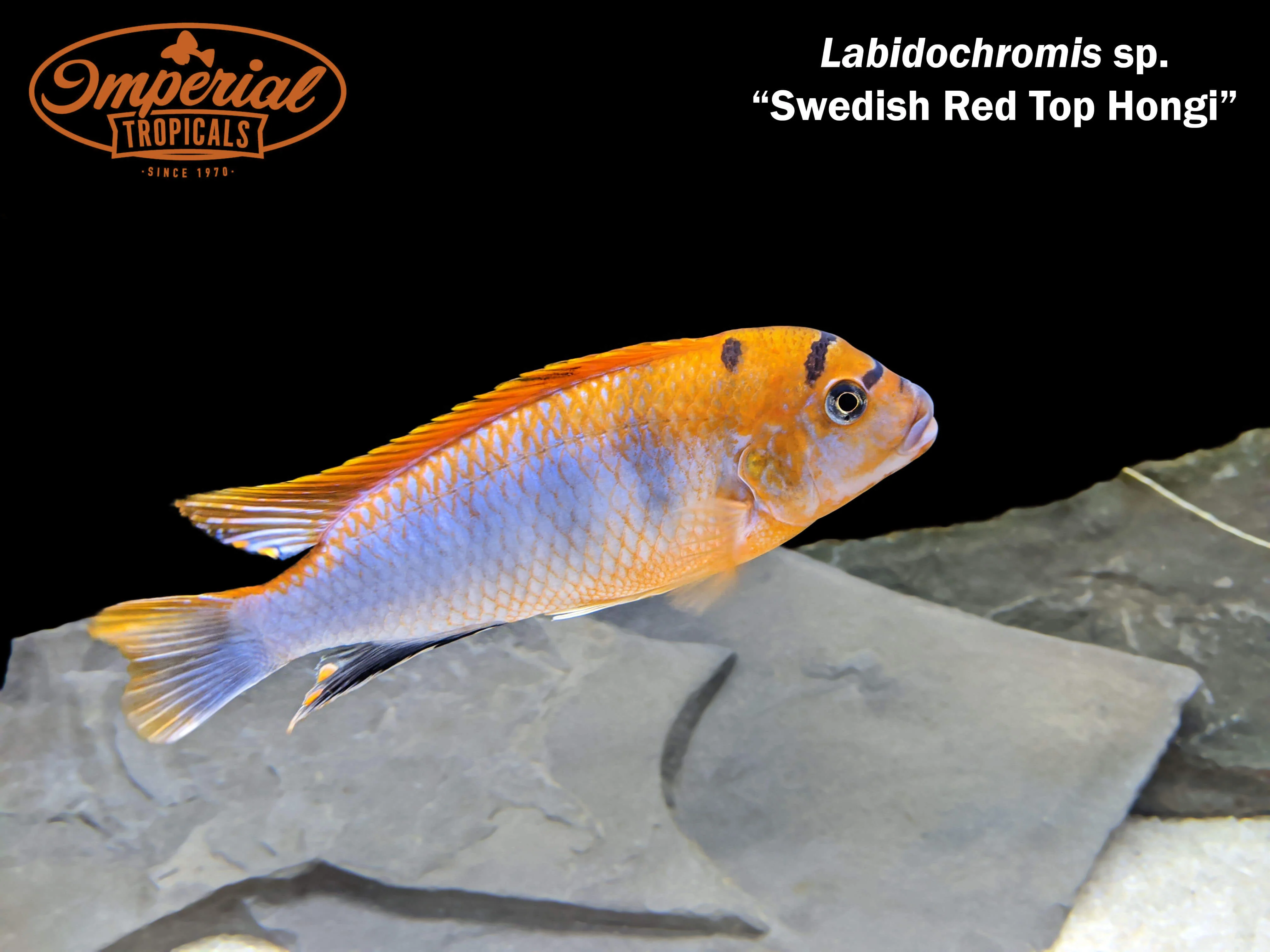
Swedish Red Top Hongi
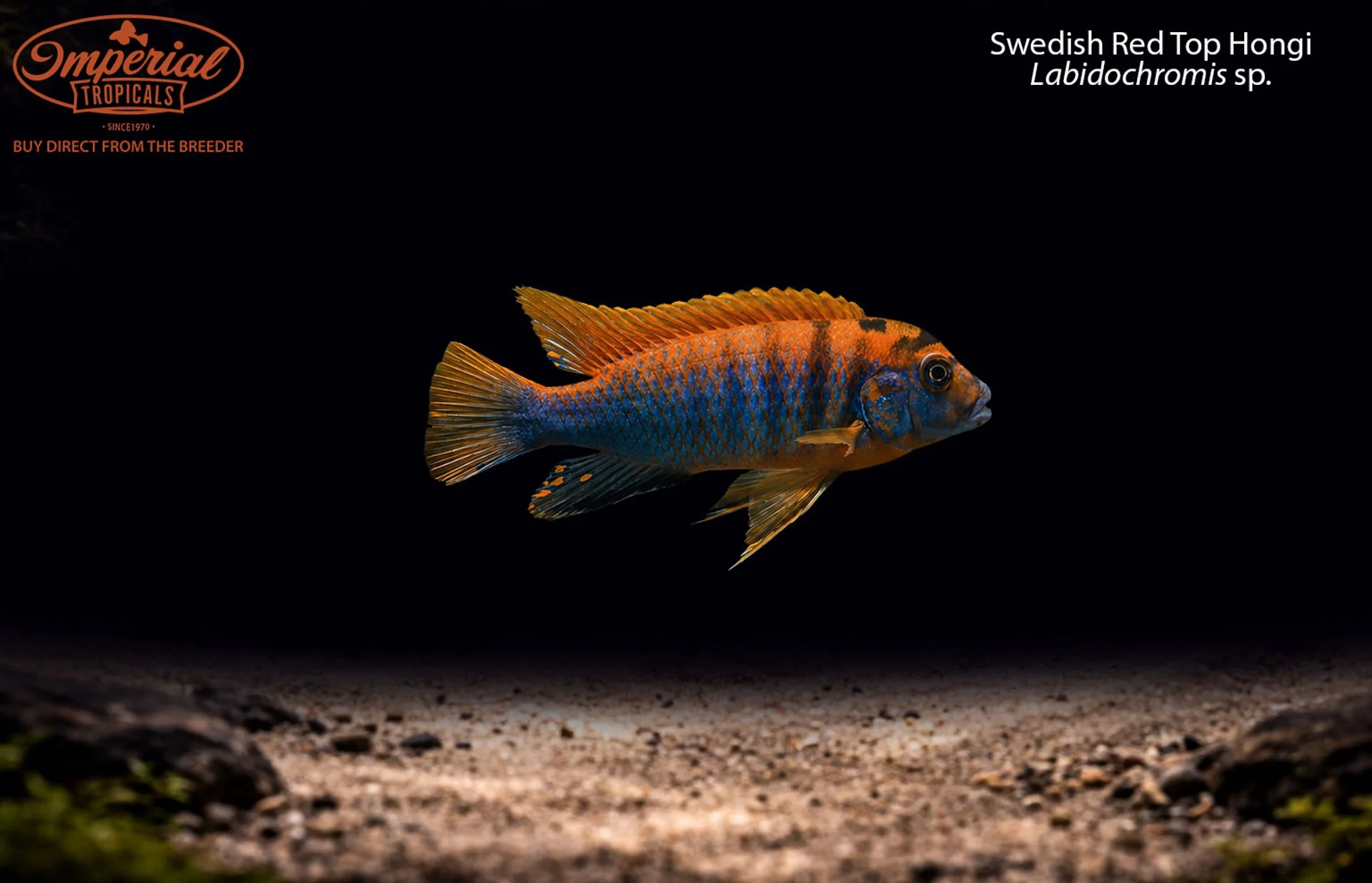
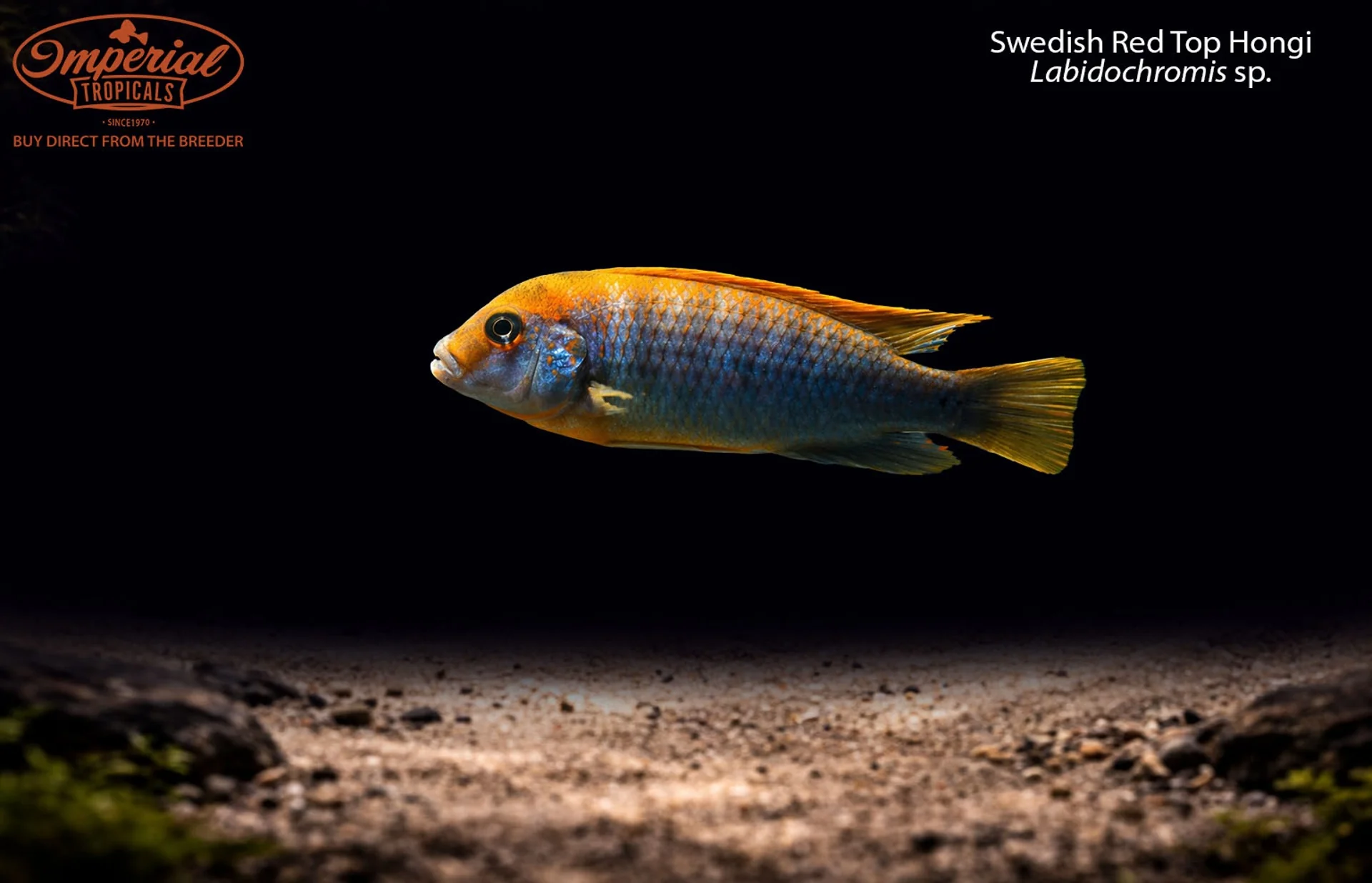
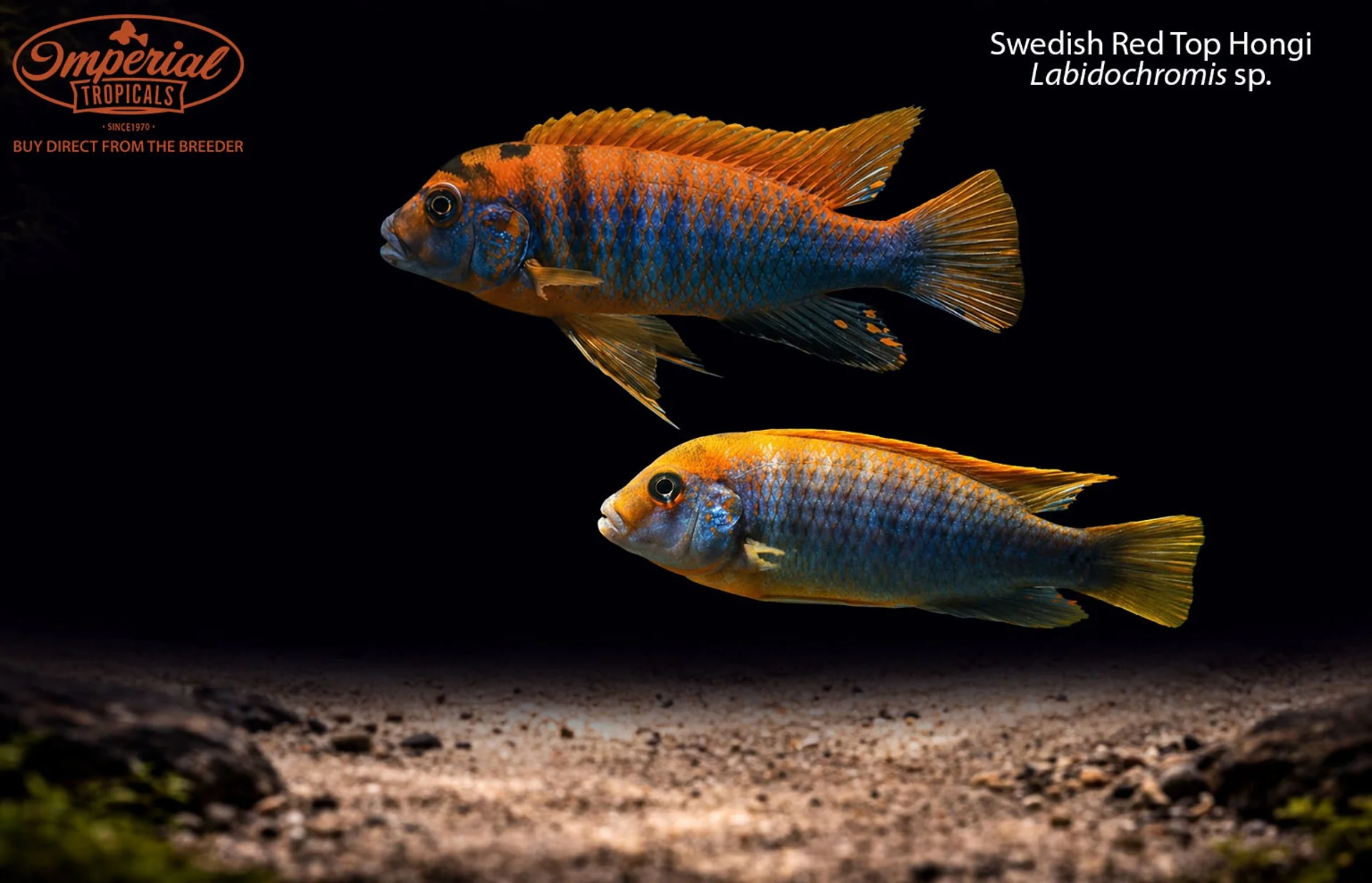
Remarks: The Swedish strain of Labidochromis sp. Hongi have been linebred to produce more intense orange-red coloration in the forehead and dorsal fin, as well as darker blue bands and an almost white body. They are herbivorous mbuna that strongly defend rocky territories (unlike Yellow Labs, another Labidochromis species). Males are a pale blue with dark striping, a bright orange dorsal fin and forehead, and several purple mask lines between the eyes. Females will typically be similar in color, although somewhat muted.
Scientific Name: Labidochromis sp.
Common Name: Swedish Red Top Hongi
Max Size: 6"
pH: 7.5-8.4
Hardness: Hard
Temperature: 74-82°
Aggressiveness: Aggressive
Region of Origin: Lake Malawi, Africa
Captive Bred or Wild: Captive Bred
Diet: Flake food low in protein
Compatibility: Mbuna
Tank Mate Options:
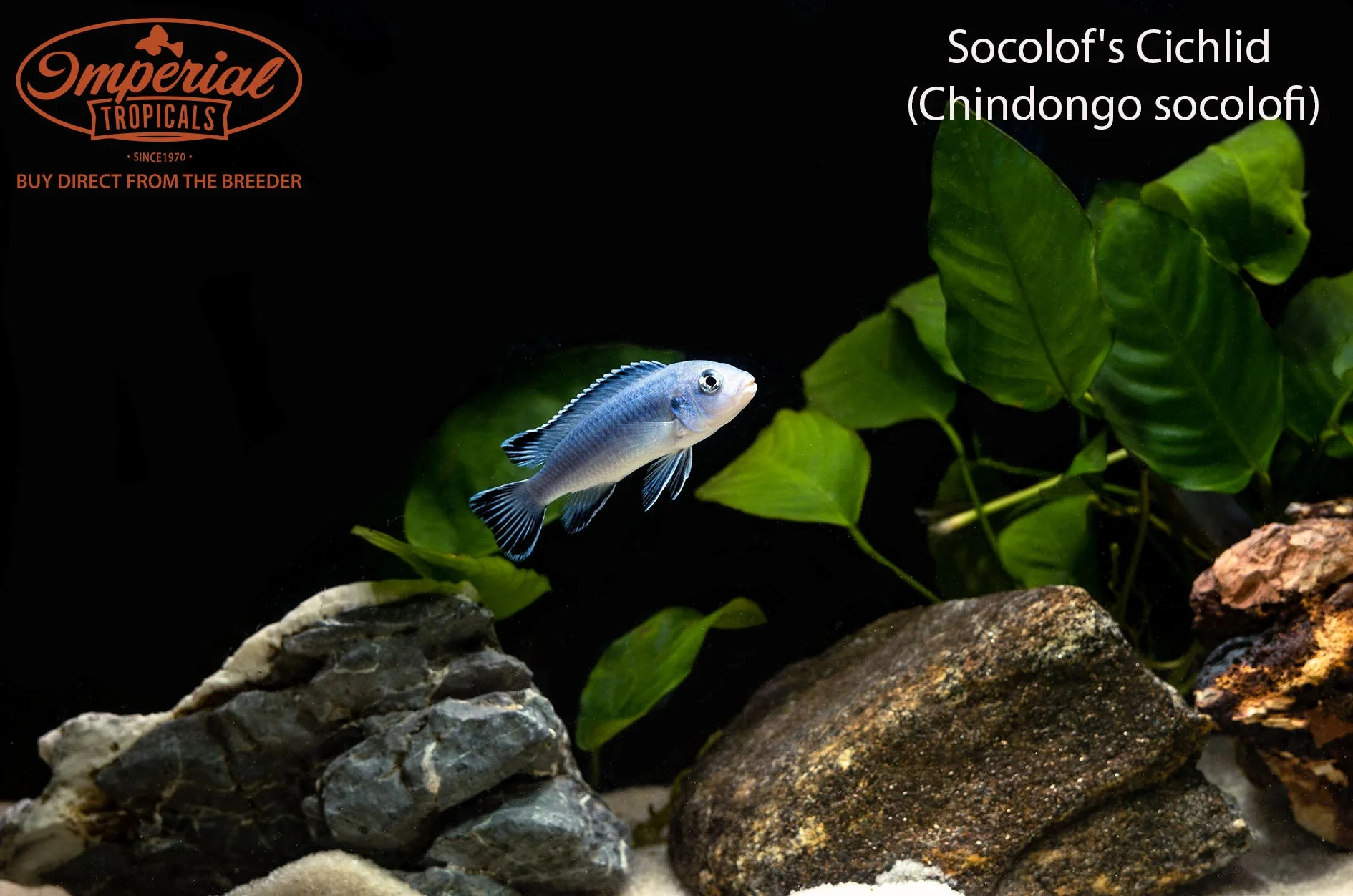
- Chindongo demasoni
- Pseudotropheus lombardoi
- White Tail Acei
Product Information
Product Information
Shipping & Returns
Shipping & Returns
Description
Remarks: The Swedish strain of Labidochromis sp. Hongi have been linebred to produce more intense orange-red coloration in the forehead and dorsal fin, as well as darker blue bands and an almost white body. They are herbivorous mbuna that strongly defend rocky territories (unlike Yellow Labs, another Labidochromis species). Males are a pale blue with dark striping, a bright orange dorsal fin and forehead, and several purple mask lines between the eyes. Females will typically be similar in color, although somewhat muted.
Scientific Name: Labidochromis sp.
Common Name: Swedish Red Top Hongi
Max Size: 6"
pH: 7.5-8.4
Hardness: Hard
Temperature: 74-82°
Aggressiveness: Aggressive
Region of Origin: Lake Malawi, Africa
Captive Bred or Wild: Captive Bred
Diet: Flake food low in protein
Compatibility: Mbuna
Tank Mate Options:
- Chindongo demasoni
- Pseudotropheus lombardoi
- White Tail Acei