Longfin Serpae Tetra
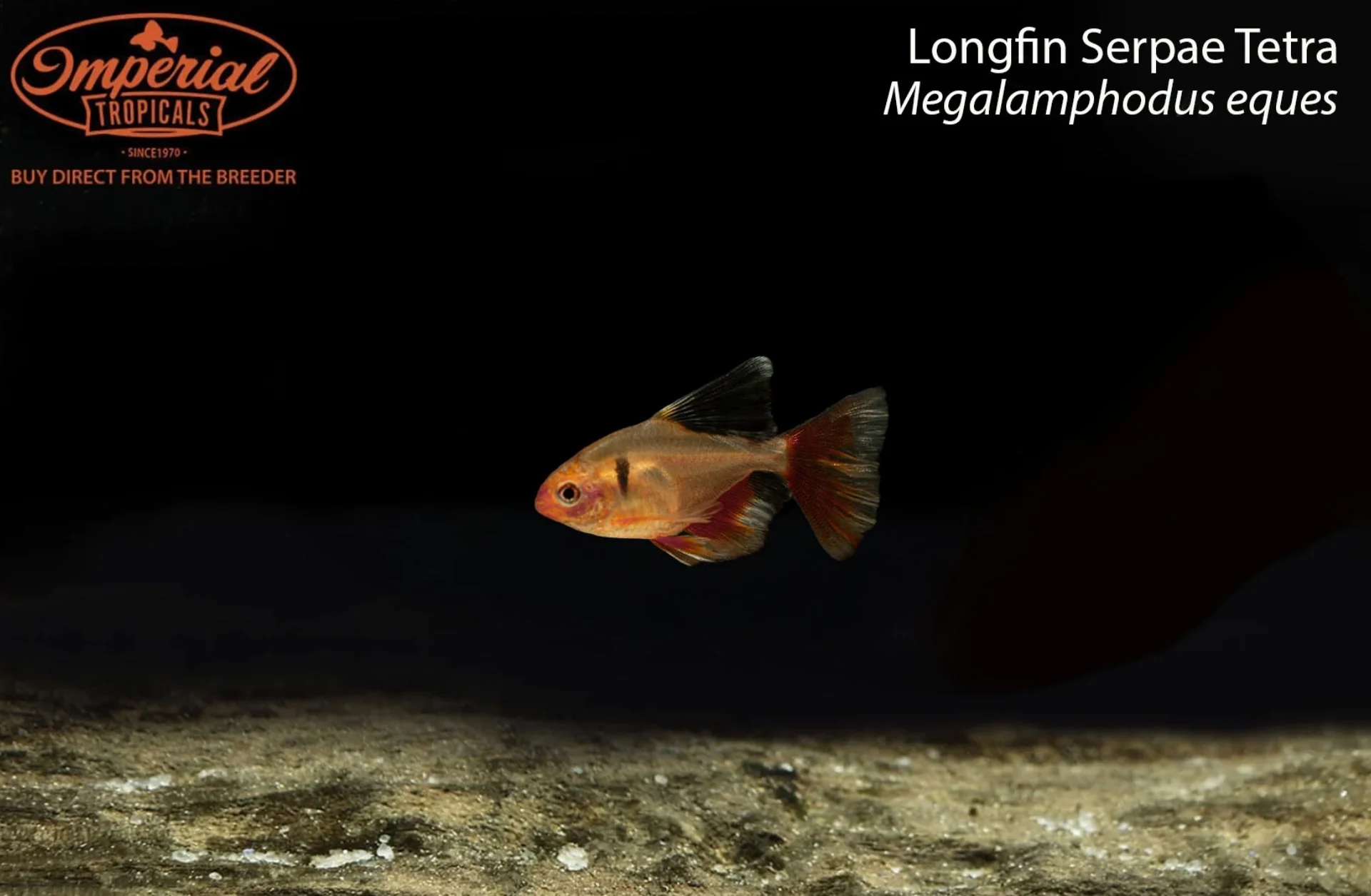
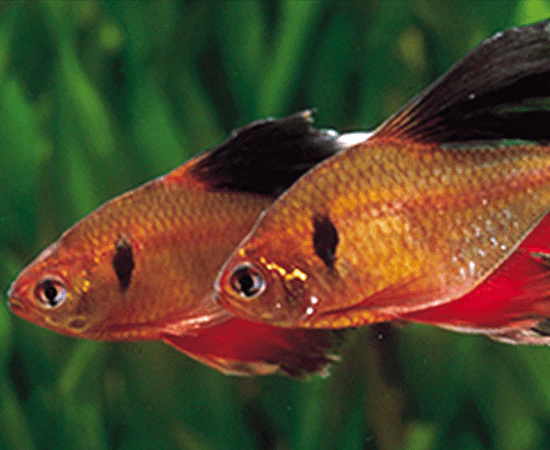
Remarks: Serpae Tetras are a medium sized tetra with bright red bodies and black dorsal fins. Occasionally their ventral and anal fins get white tips that provide great contrast. Being a shoaling species, they should be kept in groups of six or more. They can be somewhat nippy towards others, especially slow-moving species or long-finned species, so care should be taken when choosing tank-mates. These fish were selectively bred over many generations to have long, flowing fins.
The scientific name for the serpae tetra used to be Hyphessobryon eques. However, it was reclassified as Megalamphodus eques after the completion of an intensive phylogenic study on species in the family Characidae. Many other species were reclassified as well as a result of this study which can be read here: https://academic.oup.com/zoolinnean/article-abstract/202/1/zlae101/7748269
The following article also provides a good breakdown of the results of the study and does not have a paywall: https://aquainfo.org/the-end-of-the-characidae-family-as-we-know-it/
Original: $19.99
-65%$19.99
$7.00Product Information
Product Information
Shipping & Returns
Shipping & Returns
Description
Remarks: Serpae Tetras are a medium sized tetra with bright red bodies and black dorsal fins. Occasionally their ventral and anal fins get white tips that provide great contrast. Being a shoaling species, they should be kept in groups of six or more. They can be somewhat nippy towards others, especially slow-moving species or long-finned species, so care should be taken when choosing tank-mates. These fish were selectively bred over many generations to have long, flowing fins.
The scientific name for the serpae tetra used to be Hyphessobryon eques. However, it was reclassified as Megalamphodus eques after the completion of an intensive phylogenic study on species in the family Characidae. Many other species were reclassified as well as a result of this study which can be read here: https://academic.oup.com/zoolinnean/article-abstract/202/1/zlae101/7748269
The following article also provides a good breakdown of the results of the study and does not have a paywall: https://aquainfo.org/the-end-of-the-characidae-family-as-we-know-it/