Laetacara fulvipinnis
Remarks: Laetacara fulvipinnis is a rare relative of the popular Laetacara curviceps not often seen within the hobby. This is in spite of them being known in the hobby since 1978, only being formally described by Staeck and Schindler in 2007. Their rarity is not due to a lack of demand, but rather them only being imported and bred infrequently. Laetacara fulvipinnis quickly become a favorite for those who have a chance to keep them due to their beautiful colors, manageable size, and docile personalities.
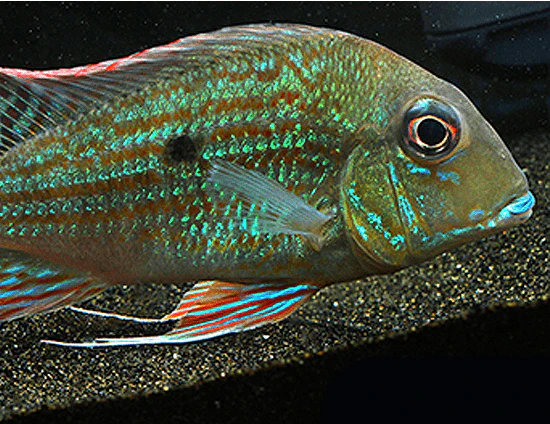
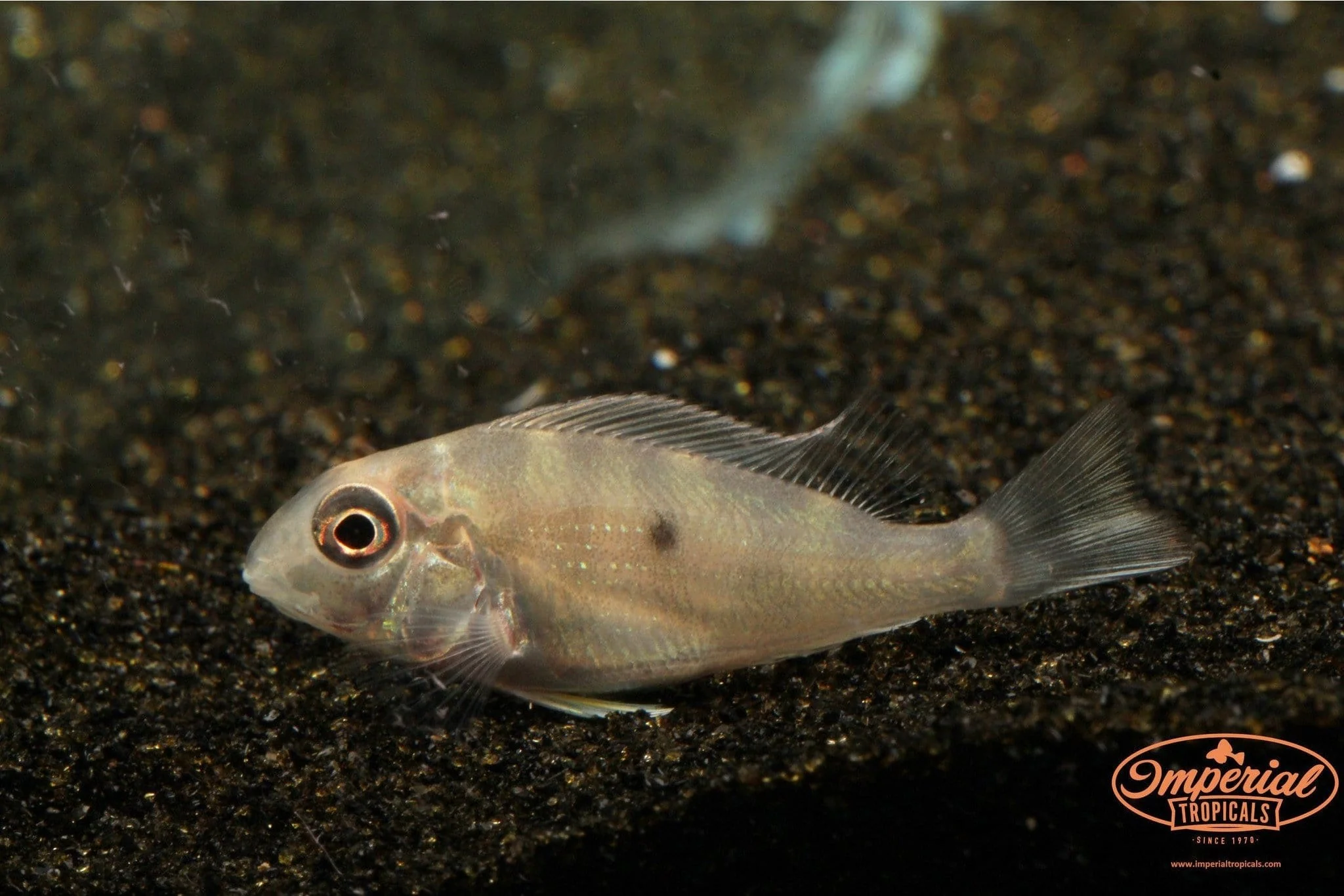
When mature, Laetacara fulvipinnis are striking both in color and form. Their tan and silver bodies take on a blue iridescence that is more intense in males and often is seen in the fins as well. This blue color is contrasted nicely by a deep reddish-orange or yellow in the caudal (tail), anal, and sometimes dorsal fin. This same color is often also seen in the form of two small dots or bars on either side of the black spot on the center of the body as well as being present in the eyes. This coloration is used to differentiate the species from others in the Laetacara genus. Heavily dominant and mature male Laetacara fulvipinnis will develop a more pronounced “forehead” as well as long extensions on the dorsal, anal, and caudal fins making an already fantastic fish more amazing looking.
In the wild, Laetacara fulvipinnis have been known to inhabit shallow areas of the upper and middle Río Orinoco, the Río Casiquiare, and the upper and middle Río Negro in Venezuela and Brazil. Some populations have also been collected from eastern Colombia. In these warm, calm, acidic, tannin-stained, waters Laetacara fulvipinnis will graze on just about anything they can find in the thick layers of leaf litter and amongst submerged roots and vegetation.
For the best chance at having your Laetacara fulvipinnis thrive, it is recommend to replicate their natural habitat with warm, calm, soft, acidic conditions with plenty of hiding spots. Since these fish aren’t known to eat plants, they can make a great choice for a planted tank. Providing a soft sand substrate will encourage both natural foraging behaviors as well as make the Laetacara fulvipinnis feel more at home. While some of their close relatives can be rather boisterous, many have noted they are very docile to non-conspecifics and outside of spawning. In fact, they can be shy around more aggressive tankmates so they are best paired with other peaceful species. If provided the right conditions, they instead prove to be very bold, readily coming out to explore and beg for food.
Original: $29.99
-65%$29.99
$10.50Product Information
Product Information
Shipping & Returns
Shipping & Returns
Description
Remarks: Laetacara fulvipinnis is a rare relative of the popular Laetacara curviceps not often seen within the hobby. This is in spite of them being known in the hobby since 1978, only being formally described by Staeck and Schindler in 2007. Their rarity is not due to a lack of demand, but rather them only being imported and bred infrequently. Laetacara fulvipinnis quickly become a favorite for those who have a chance to keep them due to their beautiful colors, manageable size, and docile personalities.
When mature, Laetacara fulvipinnis are striking both in color and form. Their tan and silver bodies take on a blue iridescence that is more intense in males and often is seen in the fins as well. This blue color is contrasted nicely by a deep reddish-orange or yellow in the caudal (tail), anal, and sometimes dorsal fin. This same color is often also seen in the form of two small dots or bars on either side of the black spot on the center of the body as well as being present in the eyes. This coloration is used to differentiate the species from others in the Laetacara genus. Heavily dominant and mature male Laetacara fulvipinnis will develop a more pronounced “forehead” as well as long extensions on the dorsal, anal, and caudal fins making an already fantastic fish more amazing looking.
In the wild, Laetacara fulvipinnis have been known to inhabit shallow areas of the upper and middle Río Orinoco, the Río Casiquiare, and the upper and middle Río Negro in Venezuela and Brazil. Some populations have also been collected from eastern Colombia. In these warm, calm, acidic, tannin-stained, waters Laetacara fulvipinnis will graze on just about anything they can find in the thick layers of leaf litter and amongst submerged roots and vegetation.
For the best chance at having your Laetacara fulvipinnis thrive, it is recommend to replicate their natural habitat with warm, calm, soft, acidic conditions with plenty of hiding spots. Since these fish aren’t known to eat plants, they can make a great choice for a planted tank. Providing a soft sand substrate will encourage both natural foraging behaviors as well as make the Laetacara fulvipinnis feel more at home. While some of their close relatives can be rather boisterous, many have noted they are very docile to non-conspecifics and outside of spawning. In fact, they can be shy around more aggressive tankmates so they are best paired with other peaceful species. If provided the right conditions, they instead prove to be very bold, readily coming out to explore and beg for food.