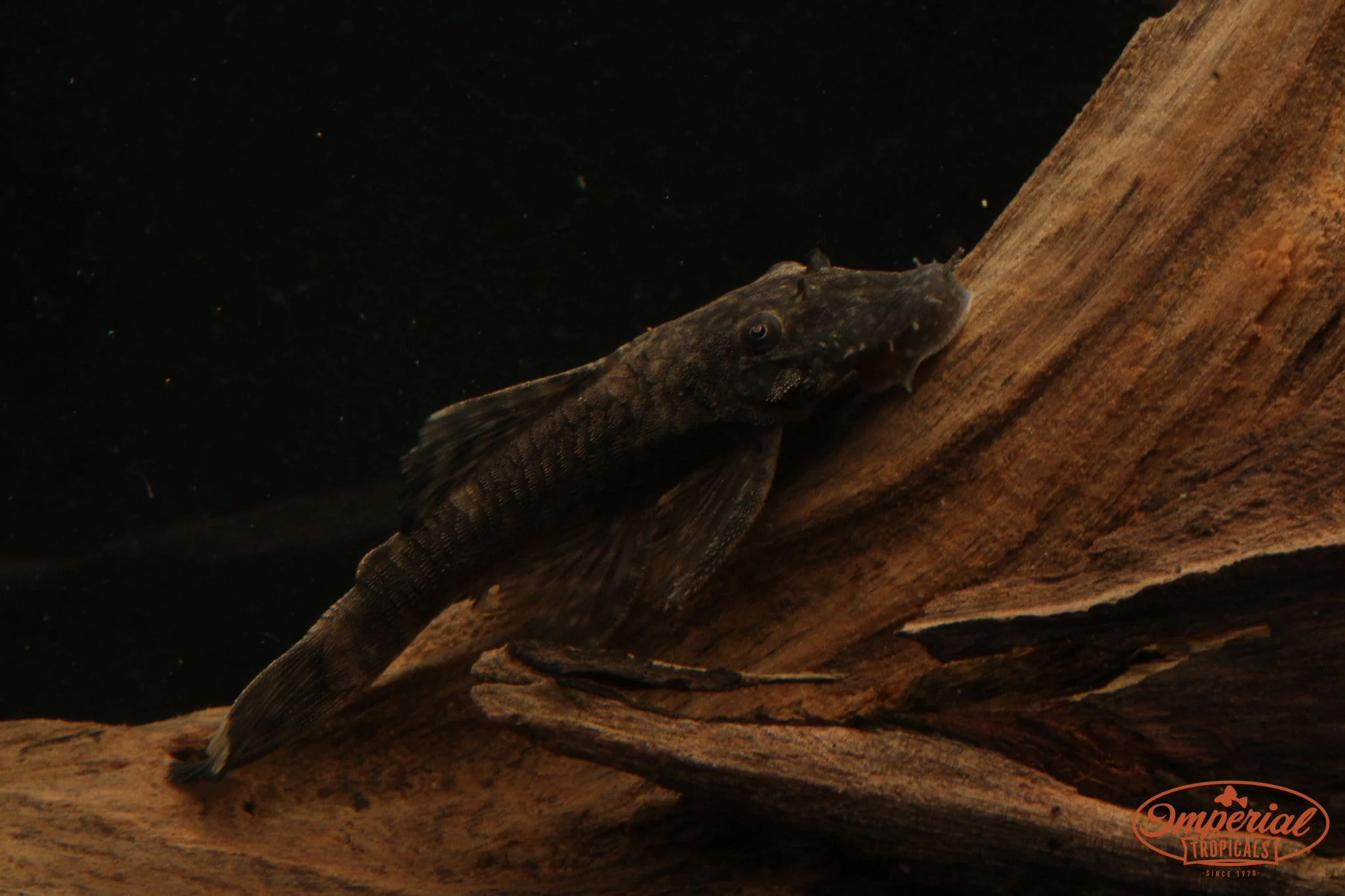
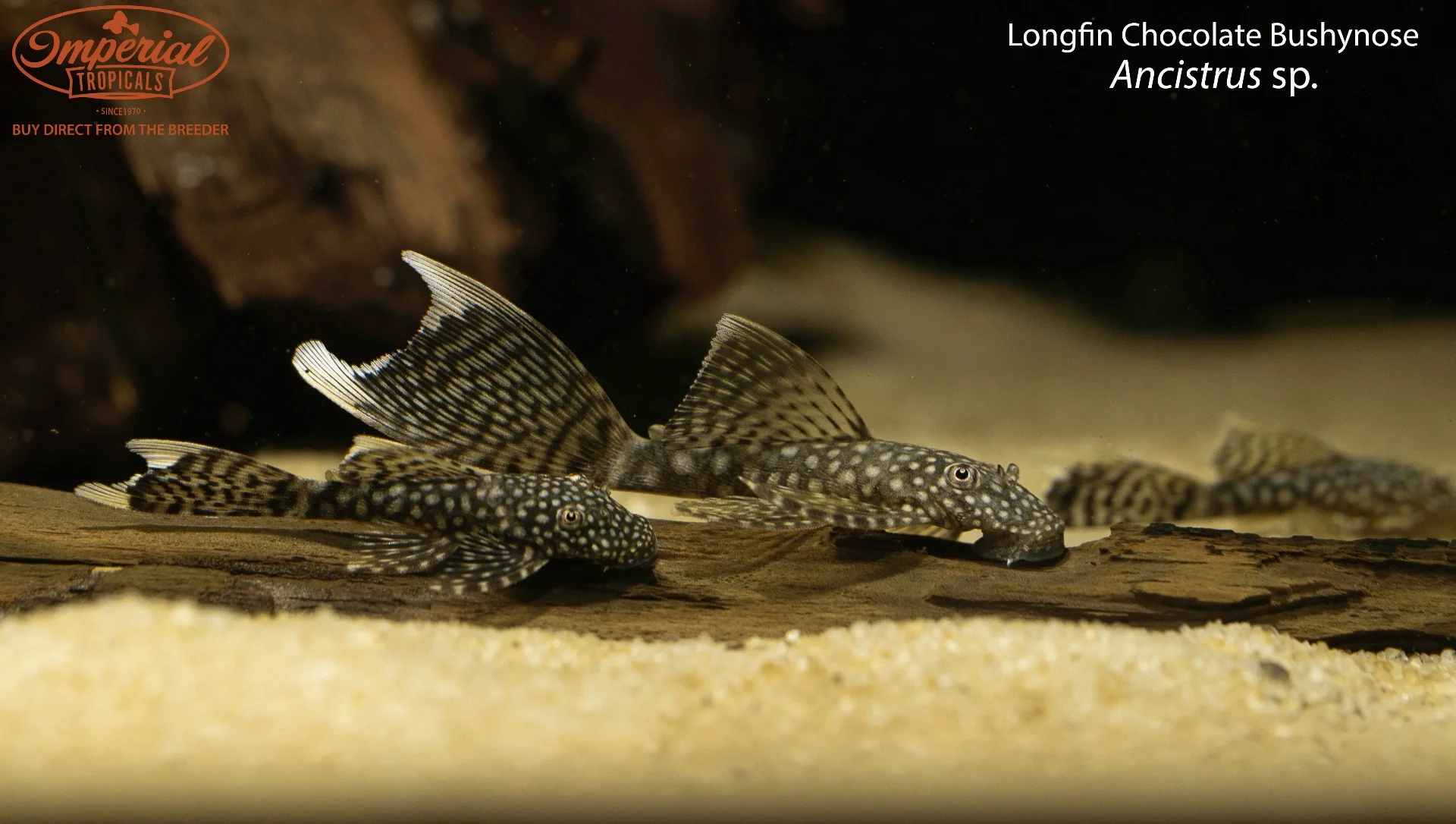
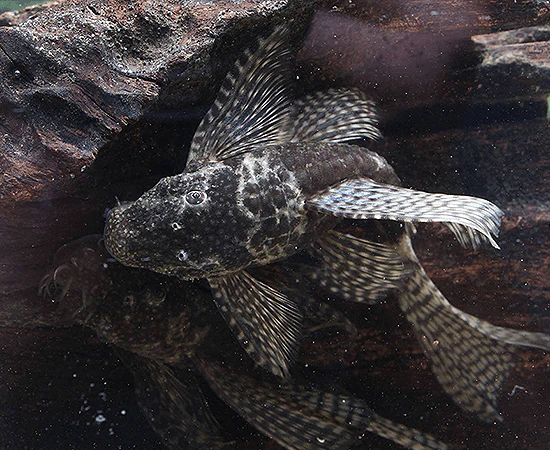
L330 Watermelon Pleco (Panaque nigrolineatus laurafabianae)
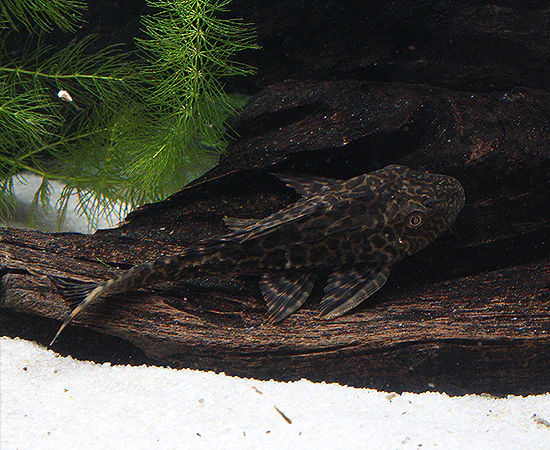
Remarks: The L330 watermelon pleco (Panaque nigrolineatus laurafabianae) is a subspecies of the ever-popular L190 royal pleco (Panaque nigrolineatus). While their care, temperament, size, and many other aspects are the same, it has been noted that the patterning and genetics of the population known from the Rio Guaviare, a tributary of the Rio Orinoco, are different enough to have it classified at least as a subspecies. While both L190 and L330 have similar horizontal stripe patterns when young, as the fish mature, L330 watermelon plecos will begin to have sections of their patterns change to spots. The amount of their pattern that undergoes this change varies amongst individuals with those with greater amounts of spots being seen as more valuable to collectors.
With how large and well armored L330 watermelon plecos are, they can make a great addition to a tank containing larger and more aggressive fish so long as they share the same preferred water parameters consisting of somewhat soft, acidic conditions with little pollutants. However, it should be kept in mind L330 watermelon plecos can be territorial toward conspecifics so if housing them with other loricariids, plenty of space and hiding spots should be provided. Other fish being swallowed is not something that needs to be worried about as these fish are almost completely non-predatory.
Like other Panaque species, L330 watermelon plecos supplement their nutrition by rasping wood to consume the microorganisms and algae that live on and below its surface. To ensure proper digestion and nutrition as well as make them feel at home, L330 watermelon plecos must always have access to wood to graze on. They also appreciate vegetables such as zucchini or cucumbers as well as algae wafers. These fish graze almost 24/7 so that means they also produce a lot of waste. To avoid build up of pollutants, frequent water changes should be performed. Like with any Loricariid lots of oxygenation is also appreciated which can be achieved through the use of wavemakers, heavy filtration, and aerators. If all their needs are attended to, L330 watermelon plecos can be a fantastic choice for those looking for a large, robust pleco.
Original: $29.99
-65%$29.99
$10.50Product Information
Product Information
Shipping & Returns
Shipping & Returns
Description
Remarks: The L330 watermelon pleco (Panaque nigrolineatus laurafabianae) is a subspecies of the ever-popular L190 royal pleco (Panaque nigrolineatus). While their care, temperament, size, and many other aspects are the same, it has been noted that the patterning and genetics of the population known from the Rio Guaviare, a tributary of the Rio Orinoco, are different enough to have it classified at least as a subspecies. While both L190 and L330 have similar horizontal stripe patterns when young, as the fish mature, L330 watermelon plecos will begin to have sections of their patterns change to spots. The amount of their pattern that undergoes this change varies amongst individuals with those with greater amounts of spots being seen as more valuable to collectors.
With how large and well armored L330 watermelon plecos are, they can make a great addition to a tank containing larger and more aggressive fish so long as they share the same preferred water parameters consisting of somewhat soft, acidic conditions with little pollutants. However, it should be kept in mind L330 watermelon plecos can be territorial toward conspecifics so if housing them with other loricariids, plenty of space and hiding spots should be provided. Other fish being swallowed is not something that needs to be worried about as these fish are almost completely non-predatory.
Like other Panaque species, L330 watermelon plecos supplement their nutrition by rasping wood to consume the microorganisms and algae that live on and below its surface. To ensure proper digestion and nutrition as well as make them feel at home, L330 watermelon plecos must always have access to wood to graze on. They also appreciate vegetables such as zucchini or cucumbers as well as algae wafers. These fish graze almost 24/7 so that means they also produce a lot of waste. To avoid build up of pollutants, frequent water changes should be performed. Like with any Loricariid lots of oxygenation is also appreciated which can be achieved through the use of wavemakers, heavy filtration, and aerators. If all their needs are attended to, L330 watermelon plecos can be a fantastic choice for those looking for a large, robust pleco.