L204 Flash Pleco
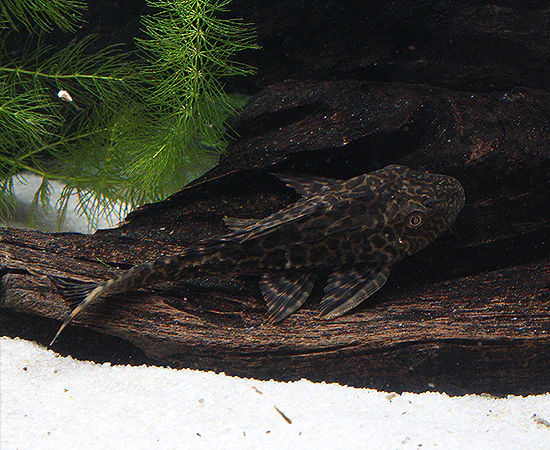
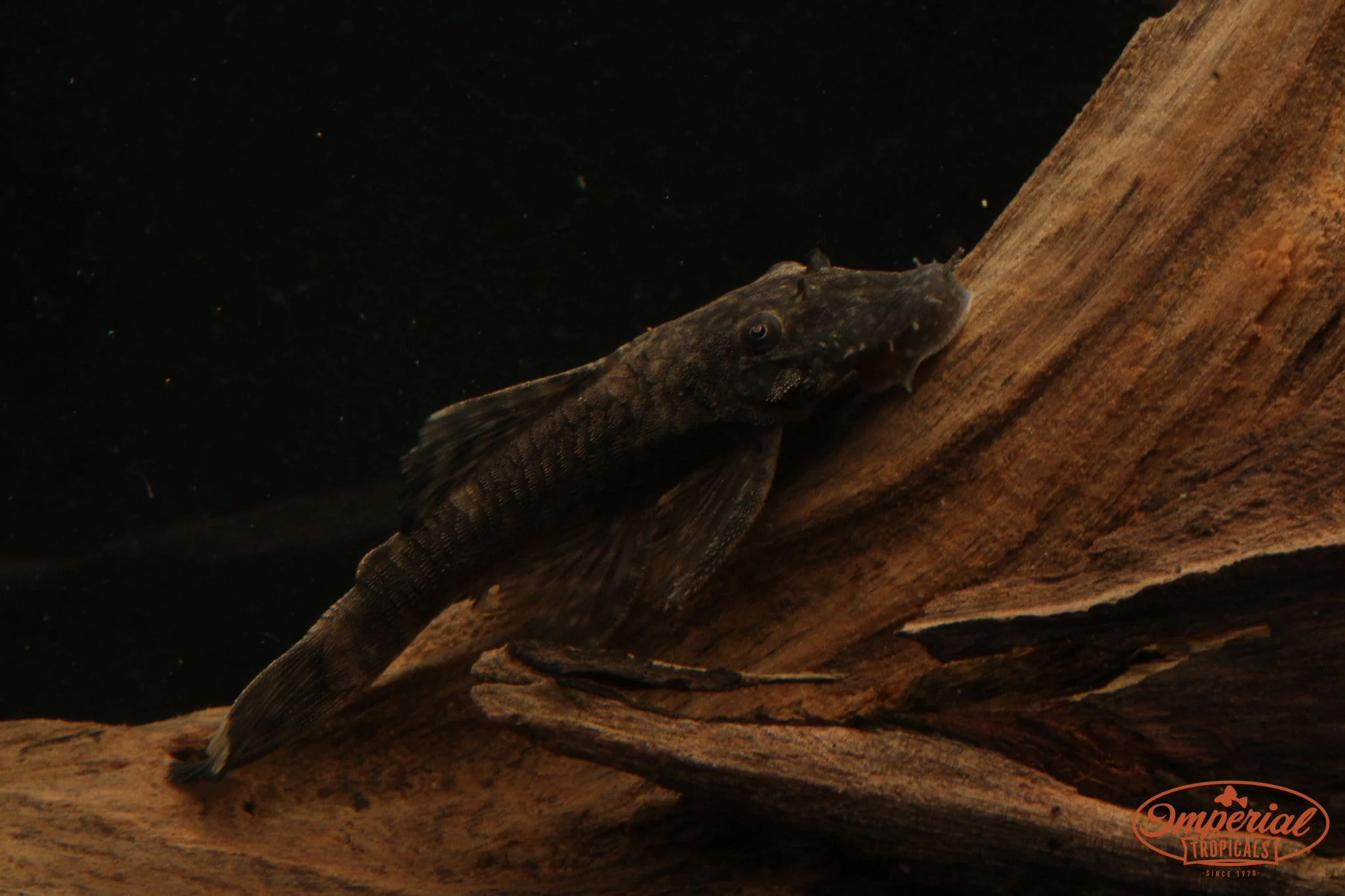
Remarks: L204 flash plecos (Panaqolus albivermis) are a uniquely patterned Loricariid also called pinstripe panaques. They have dark brown or black bodies with thin white or yellow vertical stripes. As the fish mature, these stripes tend to break with some even turning into spots over time. Spotted individuals are sometimes called L204a despite just being mature forms of the L204 flash pleco. Spots or stripes, these fish have an attractive pattern that can look fantastic in many aquariums.
In the wild, L204 flash plecos can be found in swift moving sections of the Ucayali River drainage in Peru. To reduce drag in the fast current, they have evolved to have a rather flat shape when compared to others in their genus. Interestingly, the L204 flash pleco can be found in sections of the river that have a higher level of conductivity and fluctuation in temperature compared to the habitats of other Loricariids. This has resulted in this species being able to tolerate a fairly broad range in water parameters making them a great choice if your aquarium is on the more moderate side when it comes to water hardness and pH. However, it is best to keep in mind they do best and will only spawn in soft water.
While L204 flash plecos are tolerant of pH and water hardness, they absolutely will not tolerate poor water quality or low oxygen levels. This can be a challenge as they are one of the many "wood-eating" plecos that produce a lot of waste as they graze all day and have fairly fast metabolisms. To combat their high waste production and keep their water pristine, it is recommended to provide the L204 flash pleco with heavy aeration, over-filtration, and frequent water changes.
Like other Loricariids that are frequently called "wood-eaters," when the L204 flash pleco grazes on driftwood, they are not actually digesting the wood. Instead, these herbivore leaning omnivores are actually digesting the microbes, fungi, algae, and other things living in and on the surface of the wood. So, while they should be provided lots of driftwood to graze on, L204 flash plecos should not be expected to subsist only on this and should be fed like any other fish. Fresh vegetables such as zucchini, carrots, and sweet potatoes along with prepared foods like algae wafers are all great choices to feed them.
Due to their endangered status, we encourage anyone keeping this species to attempt to breed them. Like many plecos, L204 flash plecos can be encouraged to spawn by feeding a high quality diet supplemented with the occasional meaty treat, keeping them in soft, pristine water, and providing plenty of caves and hiding spots.
Original: $49.99
-65%$49.99
$17.50Product Information
Product Information
Shipping & Returns
Shipping & Returns
Description
Remarks: L204 flash plecos (Panaqolus albivermis) are a uniquely patterned Loricariid also called pinstripe panaques. They have dark brown or black bodies with thin white or yellow vertical stripes. As the fish mature, these stripes tend to break with some even turning into spots over time. Spotted individuals are sometimes called L204a despite just being mature forms of the L204 flash pleco. Spots or stripes, these fish have an attractive pattern that can look fantastic in many aquariums.
In the wild, L204 flash plecos can be found in swift moving sections of the Ucayali River drainage in Peru. To reduce drag in the fast current, they have evolved to have a rather flat shape when compared to others in their genus. Interestingly, the L204 flash pleco can be found in sections of the river that have a higher level of conductivity and fluctuation in temperature compared to the habitats of other Loricariids. This has resulted in this species being able to tolerate a fairly broad range in water parameters making them a great choice if your aquarium is on the more moderate side when it comes to water hardness and pH. However, it is best to keep in mind they do best and will only spawn in soft water.
While L204 flash plecos are tolerant of pH and water hardness, they absolutely will not tolerate poor water quality or low oxygen levels. This can be a challenge as they are one of the many "wood-eating" plecos that produce a lot of waste as they graze all day and have fairly fast metabolisms. To combat their high waste production and keep their water pristine, it is recommended to provide the L204 flash pleco with heavy aeration, over-filtration, and frequent water changes.
Like other Loricariids that are frequently called "wood-eaters," when the L204 flash pleco grazes on driftwood, they are not actually digesting the wood. Instead, these herbivore leaning omnivores are actually digesting the microbes, fungi, algae, and other things living in and on the surface of the wood. So, while they should be provided lots of driftwood to graze on, L204 flash plecos should not be expected to subsist only on this and should be fed like any other fish. Fresh vegetables such as zucchini, carrots, and sweet potatoes along with prepared foods like algae wafers are all great choices to feed them.
Due to their endangered status, we encourage anyone keeping this species to attempt to breed them. Like many plecos, L204 flash plecos can be encouraged to spawn by feeding a high quality diet supplemented with the occasional meaty treat, keeping them in soft, pristine water, and providing plenty of caves and hiding spots.