L136 Angelicus Pleco (Hypancistrus sp. (L136))
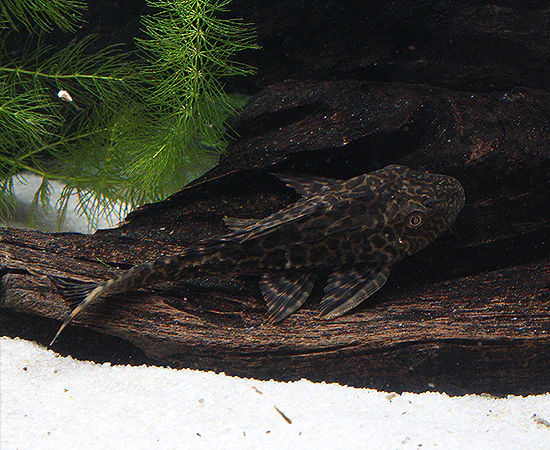
Remarks: The L136 angelicus pleco (Hypancistrus sp. (L136)) is one of the many Hypancistrus species found within the Rio Negro basin in Brazil that have yet to receive a proper scientific name. Instead, it has been referred to with a few different L numbers with each corresponding to different populations. Currently, L136, L136a, L136b, L136c, LDA05, LDA06 are all considered members of this species. Each population differs slightly in appearance mainly in regards to the size and number of spots as they all share the similar appearance of a dark colored body covered in white spots. These L136 angelicus plecos are the standard type and will have a standard pattern.
Care for the L136 angelicus pleco does not differ from most other Hypancistrus. They come from rocky areas of pristine, heavily oxygenated, warm, soft, and acidic water and will gradually decline in health in the home aquarium if these conditions are not replicated. Using a high-quality filter with a high flow rate along with a heater and frequent water changes will help keep these plecos happy and healthy. While the L136 angelicus pleco is an omnivore, like all known Hypancistrus, they mostly eat meaty foods with them gradually leaning more and more carnivorous as they age. So, to keep them well fed, they must be fed a varied diet high in protein. Protein rich gel foods like Repashy, bloodworms, and sinking wafers are good choices to feed to meet their dietary needs.
Most smaller Hypancistrus species do best in at least small groups, however they can become territorial especially during breeding. To reduce territorial fights and help the L136 angelicus pleco feel comfortable in the aquarium, plenty of snug, rocky caves should be provided for them to hide in. These caves are also where these fish will spawn if all other conditions are just right. They can be a very exciting breeding project as they are such a unique and beautiful catfish. An important thing to note, however, is that it is not wise to house the L136 angelicus pleco with other similar Hypancistrus as they can hybridize with it being near impossible to tell pure fish from hybrids.
Original: $69.99
-65%$69.99
$24.50Product Information
Product Information
Shipping & Returns
Shipping & Returns
Description
Remarks: The L136 angelicus pleco (Hypancistrus sp. (L136)) is one of the many Hypancistrus species found within the Rio Negro basin in Brazil that have yet to receive a proper scientific name. Instead, it has been referred to with a few different L numbers with each corresponding to different populations. Currently, L136, L136a, L136b, L136c, LDA05, LDA06 are all considered members of this species. Each population differs slightly in appearance mainly in regards to the size and number of spots as they all share the similar appearance of a dark colored body covered in white spots. These L136 angelicus plecos are the standard type and will have a standard pattern.
Care for the L136 angelicus pleco does not differ from most other Hypancistrus. They come from rocky areas of pristine, heavily oxygenated, warm, soft, and acidic water and will gradually decline in health in the home aquarium if these conditions are not replicated. Using a high-quality filter with a high flow rate along with a heater and frequent water changes will help keep these plecos happy and healthy. While the L136 angelicus pleco is an omnivore, like all known Hypancistrus, they mostly eat meaty foods with them gradually leaning more and more carnivorous as they age. So, to keep them well fed, they must be fed a varied diet high in protein. Protein rich gel foods like Repashy, bloodworms, and sinking wafers are good choices to feed to meet their dietary needs.
Most smaller Hypancistrus species do best in at least small groups, however they can become territorial especially during breeding. To reduce territorial fights and help the L136 angelicus pleco feel comfortable in the aquarium, plenty of snug, rocky caves should be provided for them to hide in. These caves are also where these fish will spawn if all other conditions are just right. They can be a very exciting breeding project as they are such a unique and beautiful catfish. An important thing to note, however, is that it is not wise to house the L136 angelicus pleco with other similar Hypancistrus as they can hybridize with it being near impossible to tell pure fish from hybrids.