L128 Blue Phantom Pleco
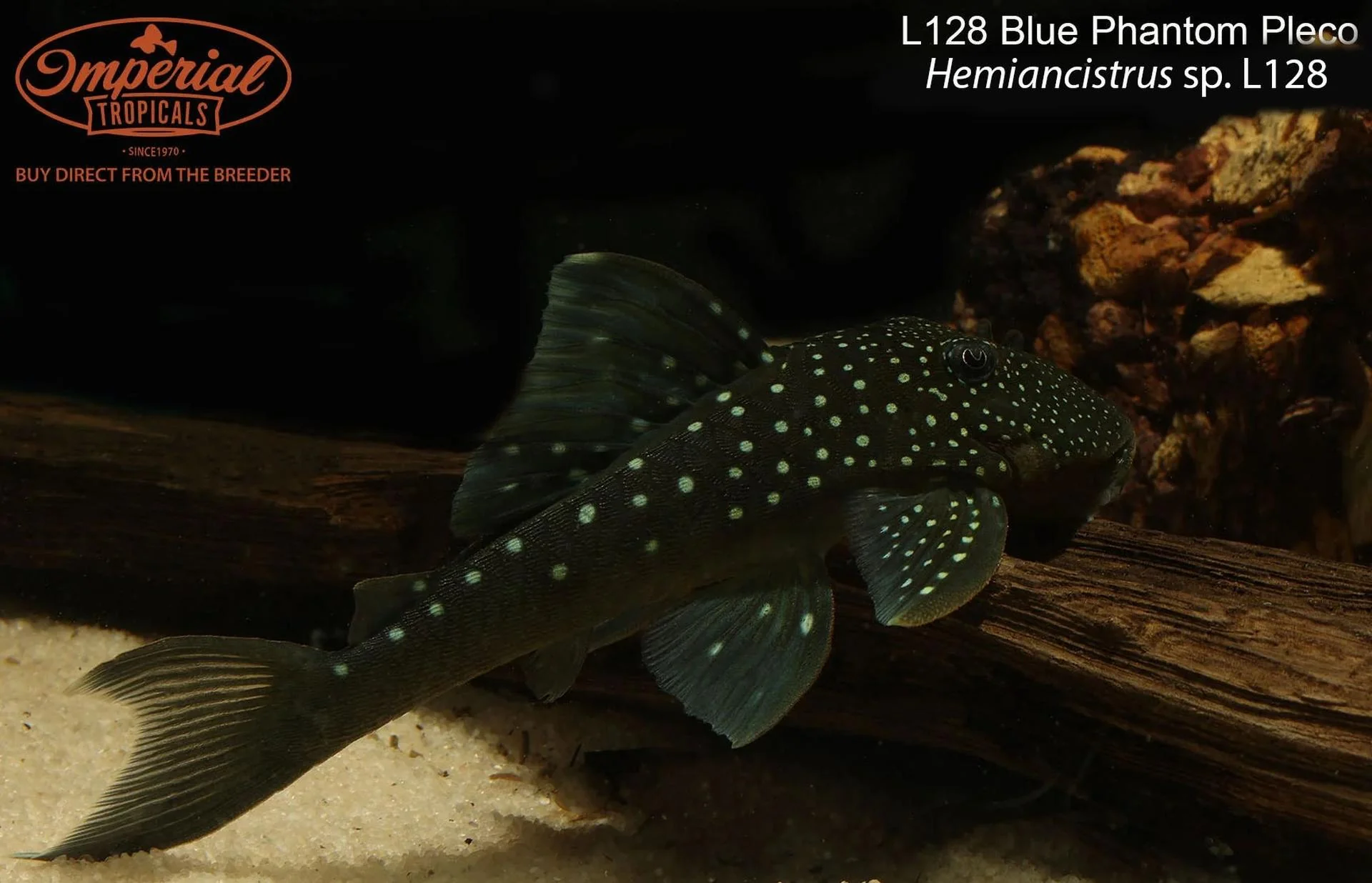
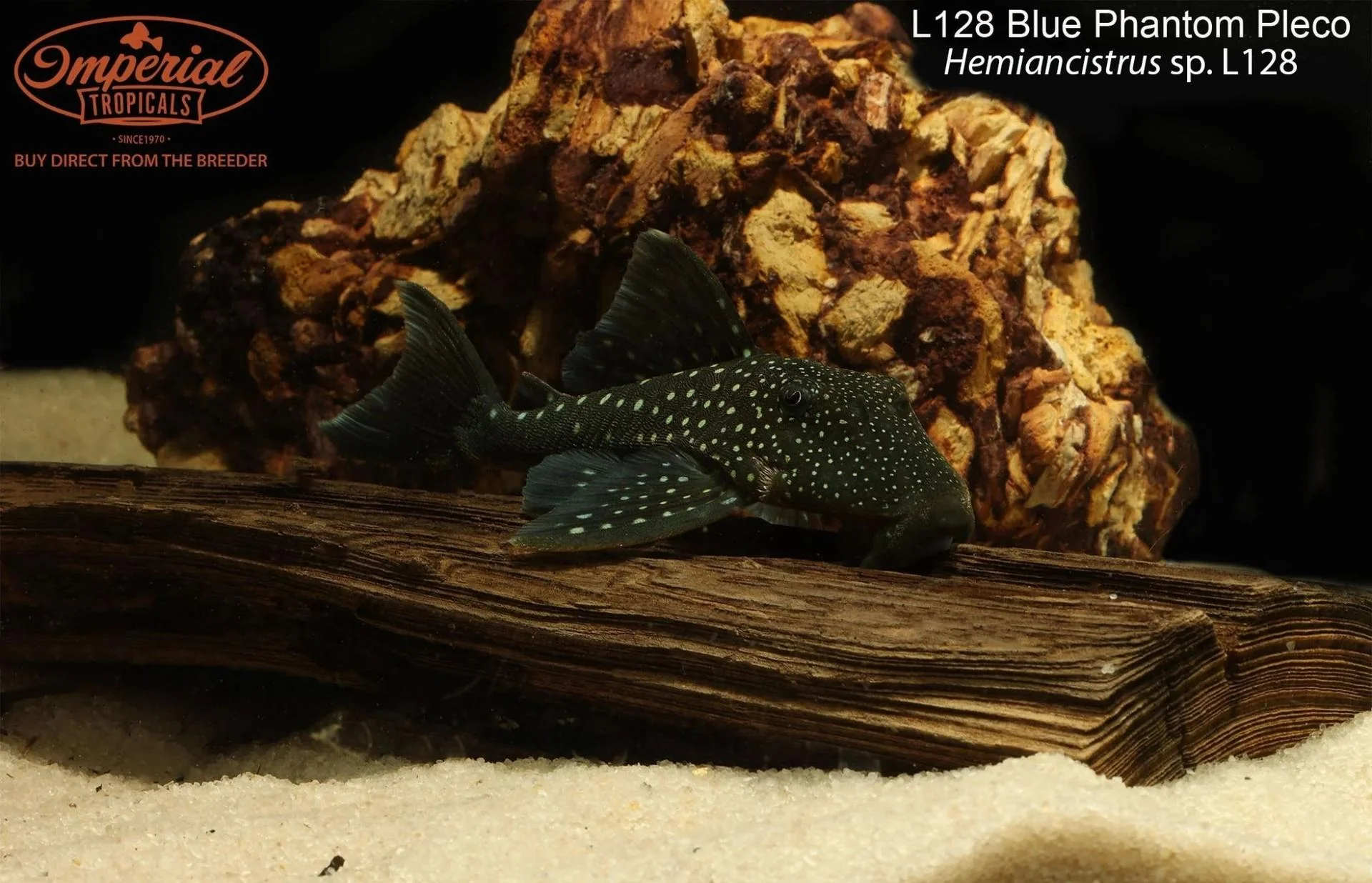
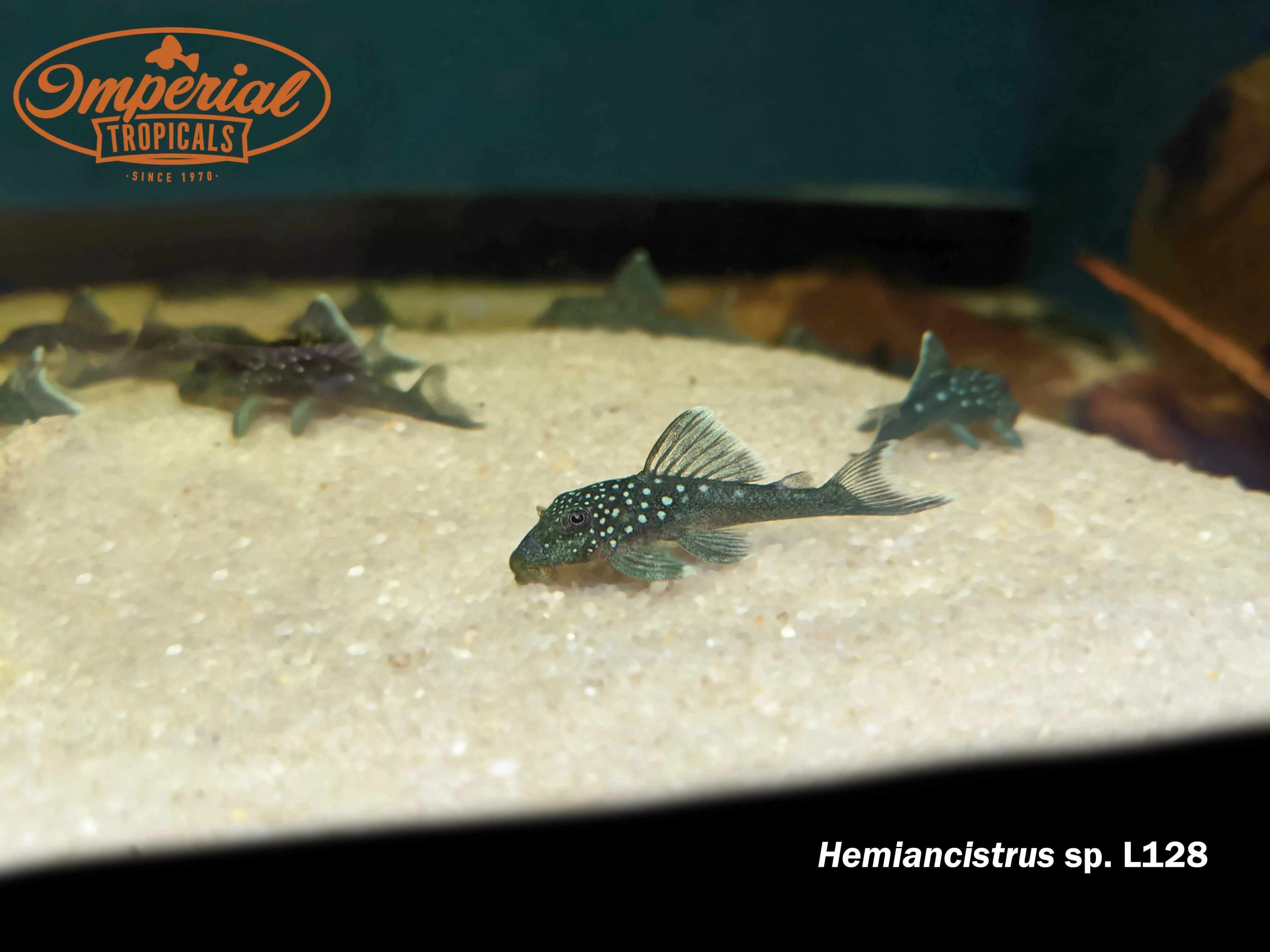
Remarks: Blue phantom plecos are medium-sized Loricariids from Venezuela and Colombia. They have a navy-blue or black body color with light blue spots throughout the body. At the snout, the spots are small and more dense, but they get larger and more sparse closer to the tail. Sometimes this blue hue also appears throughout the body and fins dependent on conditions and lighting.
Like all other plecos in the Hemiancistrus genus, blue phantom plecos are very sensitive to poor water quality and require lots of dissolved oxygen to remain healthy, so frequent, large water changes are a must. Many have noted that when kept in improper water parameters and/or when very stressed, these fish will turn a brown or greenish color, losing their attractive blue hue. While these plecos are great algae eaters when settled into an aquarium, they are omnivores and thus should receive a varied diet high in both vegetable matter and protein. If well cared for, this species will provide a burst of blue color that is seen in practically no other Loricariid.
Original: $49.99
-65%$49.99
$17.50Product Information
Product Information
Shipping & Returns
Shipping & Returns
Description
Remarks: Blue phantom plecos are medium-sized Loricariids from Venezuela and Colombia. They have a navy-blue or black body color with light blue spots throughout the body. At the snout, the spots are small and more dense, but they get larger and more sparse closer to the tail. Sometimes this blue hue also appears throughout the body and fins dependent on conditions and lighting.
Like all other plecos in the Hemiancistrus genus, blue phantom plecos are very sensitive to poor water quality and require lots of dissolved oxygen to remain healthy, so frequent, large water changes are a must. Many have noted that when kept in improper water parameters and/or when very stressed, these fish will turn a brown or greenish color, losing their attractive blue hue. While these plecos are great algae eaters when settled into an aquarium, they are omnivores and thus should receive a varied diet high in both vegetable matter and protein. If well cared for, this species will provide a burst of blue color that is seen in practically no other Loricariid.