L095 Orange Cheek Pinecone Pleco (Pseudorinelepis sp. (L095))
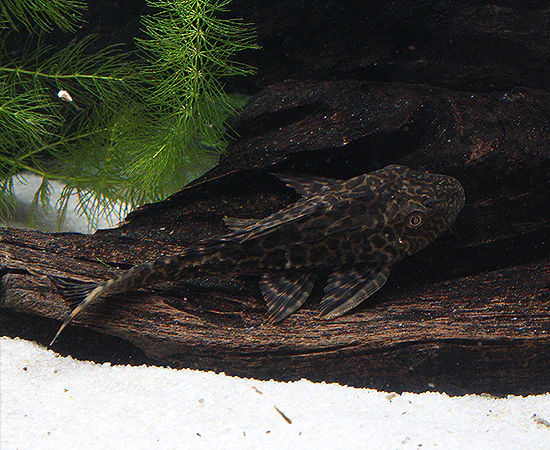
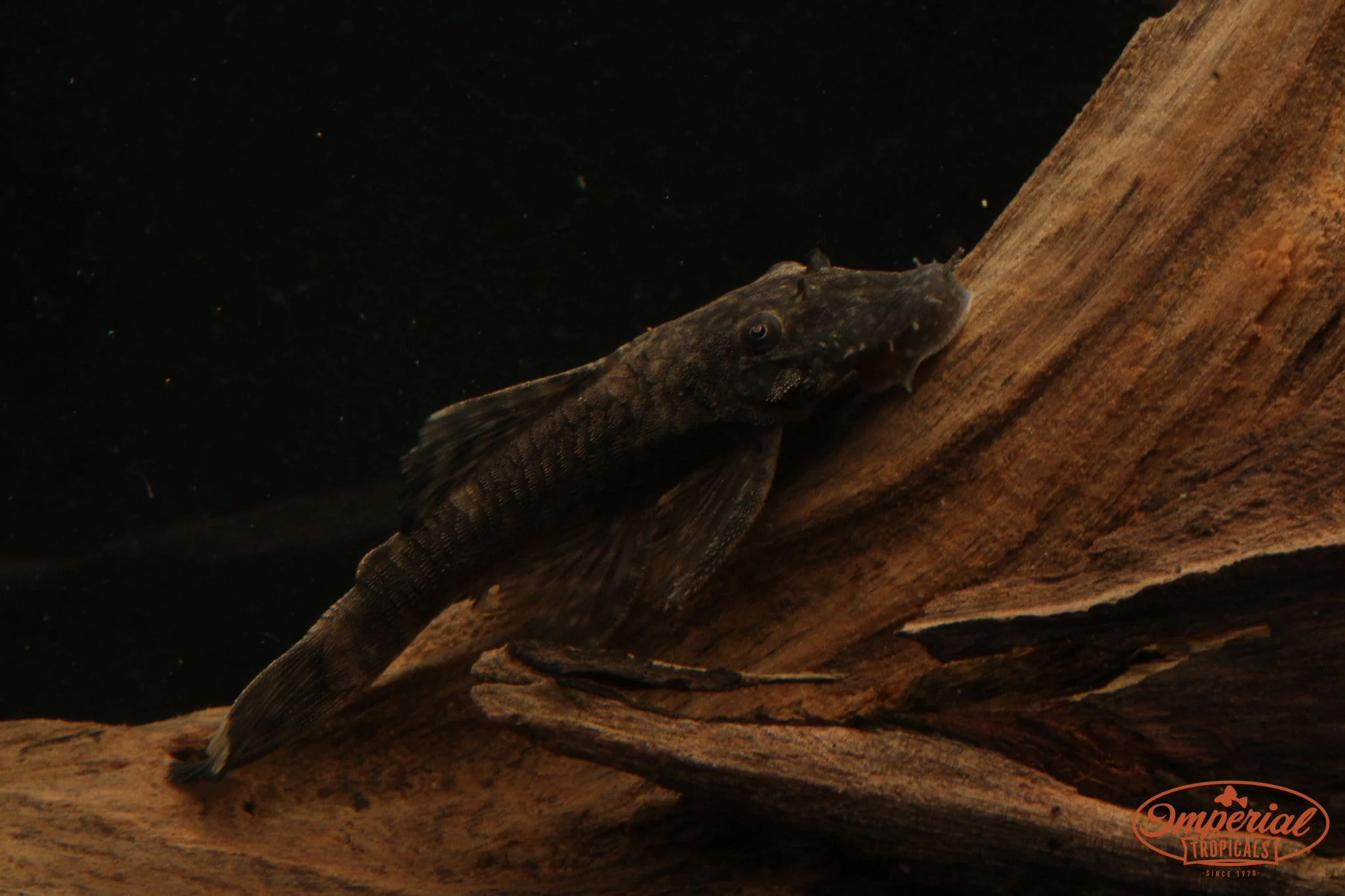
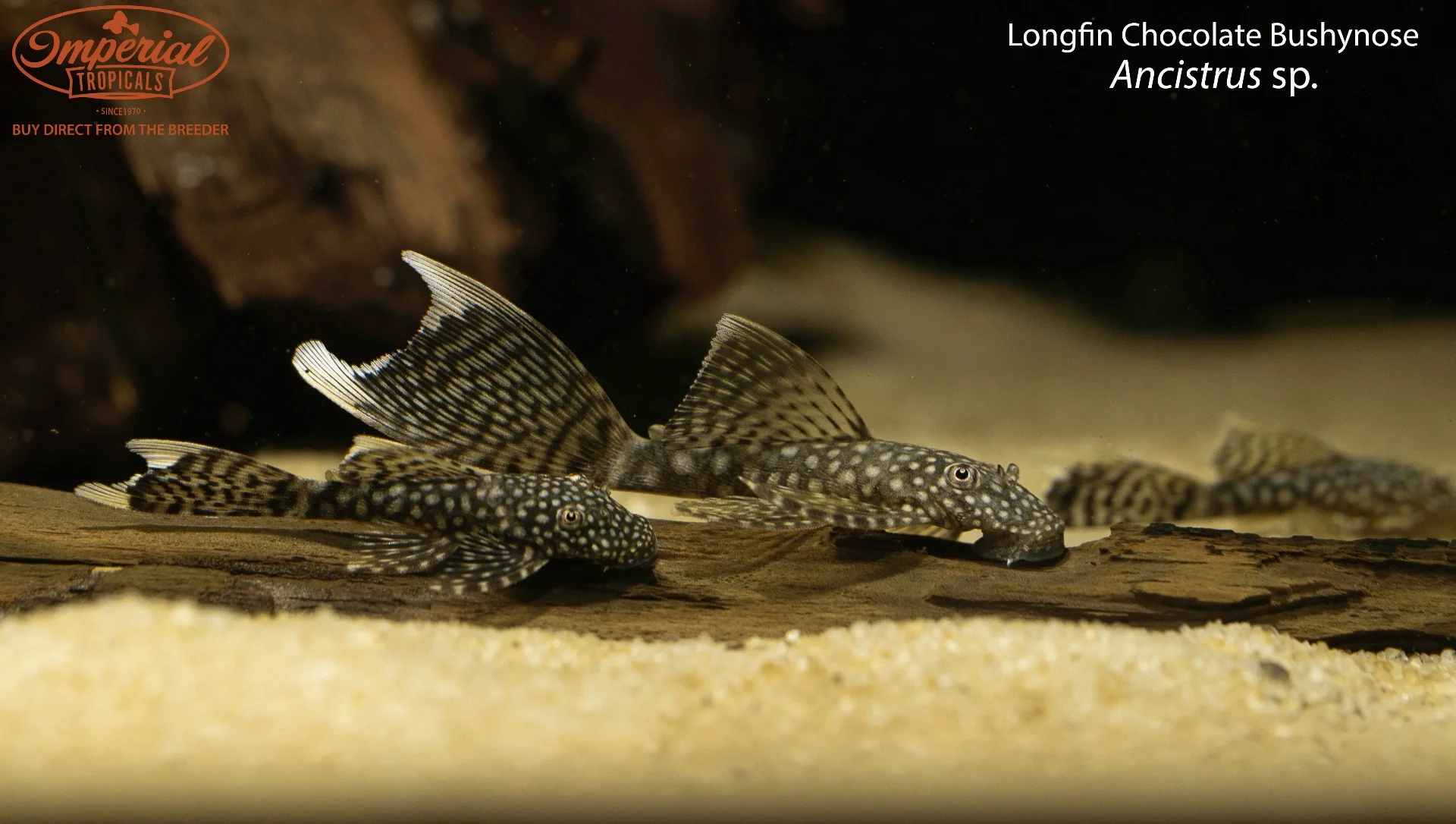
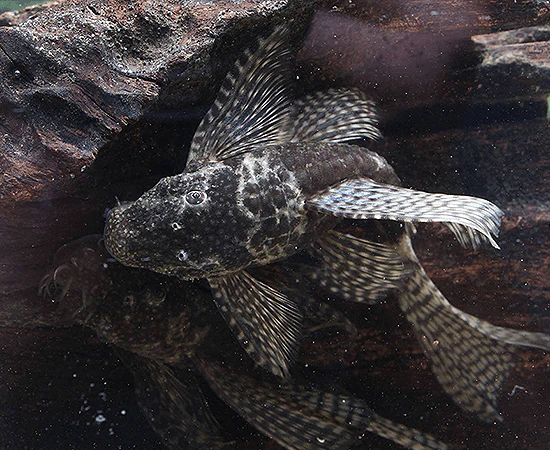
Remarks: The L095 orange cheek pinecone pleco (Pseudorinelepis sp. (L095), also known as the pineapple pleco, is a rare, large, and uniquely colorful Loricariid often sought after by pleco enthusiasts. Their base color is highly variable ranging from a dark gray to a light tan with black polka dots scattered across both the body and fins. With a vibrant orange on the “cheeks” and edges of the fins adding a splash of color, the L095 orange cheek pinecone pleco is a truly stunning species. An interesting thing to note is that the orange color on the cheeks is what is often used to differentiate this species from the heavily similar Pseudorinelepsis genibarbis that lacks any orange in this location.
In the wild, the L095 orange cheek pinecone pleco can be found in tributaries of the Rio Negro, more specifically the Lower Negro and Demini basins in Brazil. Their natural habitat consists of warm, clear, white-water sections littered with fallen wood. The current in these areas is also heavy, providing plenty of dissolved oxygen. This heavy oxygenation gives rise for why this species, unlike many Loricariids, is not known to take supplementary gulps of air from the surface. What this means for the care of L095 orange cheek pinecone plecos in the home aquarium is that over filtration and heavy oxygenation are a must to allow them to thrive. This is especially true when their preference for a warmer temperature is also followed as warm water holds less oxygen. L095 orange cheek pinecone plecos also need a soft sand substrate to protect their sensitive bellies and plenty of driftwood to hide under and graze on. Otherwise, this species is known to be decently hardy and more tolerant of a neutral pH and water hardness.
Many have noted that the L095 orange cheek pinecone pleco is less likely to become territorial toward other plecos compared to other large Loricariids. However, the possibility is still there, especially when keeping males, so plenty of extra space and caves should be provided if keeping one of these plecos with others. Being heavily armored and robust, L095 orange cheek pinecone plecos can be kept with larger South American species such as pike cichlids and peacock bass. Feeding is also easy as these catfish are omnivores that will take many kinds of foods, both meaty and vegetable based. These aspects along with their beauty make the L095 orange cheek pinecone pleco a great choice for a larger community tank or simply enjoyed on their own.
Original: $359.99
-65%$359.99
$126.00Product Information
Product Information
Shipping & Returns
Shipping & Returns
Description
Remarks: The L095 orange cheek pinecone pleco (Pseudorinelepis sp. (L095), also known as the pineapple pleco, is a rare, large, and uniquely colorful Loricariid often sought after by pleco enthusiasts. Their base color is highly variable ranging from a dark gray to a light tan with black polka dots scattered across both the body and fins. With a vibrant orange on the “cheeks” and edges of the fins adding a splash of color, the L095 orange cheek pinecone pleco is a truly stunning species. An interesting thing to note is that the orange color on the cheeks is what is often used to differentiate this species from the heavily similar Pseudorinelepsis genibarbis that lacks any orange in this location.
In the wild, the L095 orange cheek pinecone pleco can be found in tributaries of the Rio Negro, more specifically the Lower Negro and Demini basins in Brazil. Their natural habitat consists of warm, clear, white-water sections littered with fallen wood. The current in these areas is also heavy, providing plenty of dissolved oxygen. This heavy oxygenation gives rise for why this species, unlike many Loricariids, is not known to take supplementary gulps of air from the surface. What this means for the care of L095 orange cheek pinecone plecos in the home aquarium is that over filtration and heavy oxygenation are a must to allow them to thrive. This is especially true when their preference for a warmer temperature is also followed as warm water holds less oxygen. L095 orange cheek pinecone plecos also need a soft sand substrate to protect their sensitive bellies and plenty of driftwood to hide under and graze on. Otherwise, this species is known to be decently hardy and more tolerant of a neutral pH and water hardness.
Many have noted that the L095 orange cheek pinecone pleco is less likely to become territorial toward other plecos compared to other large Loricariids. However, the possibility is still there, especially when keeping males, so plenty of extra space and caves should be provided if keeping one of these plecos with others. Being heavily armored and robust, L095 orange cheek pinecone plecos can be kept with larger South American species such as pike cichlids and peacock bass. Feeding is also easy as these catfish are omnivores that will take many kinds of foods, both meaty and vegetable based. These aspects along with their beauty make the L095 orange cheek pinecone pleco a great choice for a larger community tank or simply enjoyed on their own.