Ivanacara adoketa
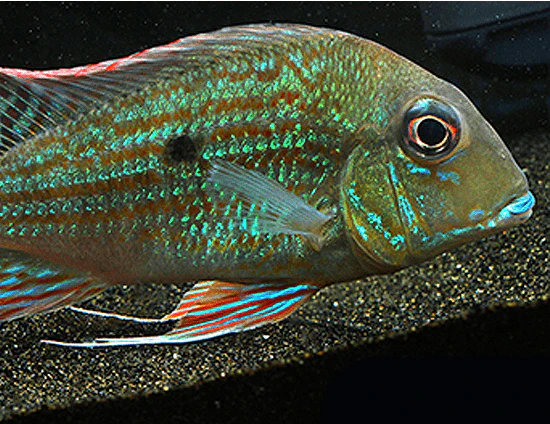
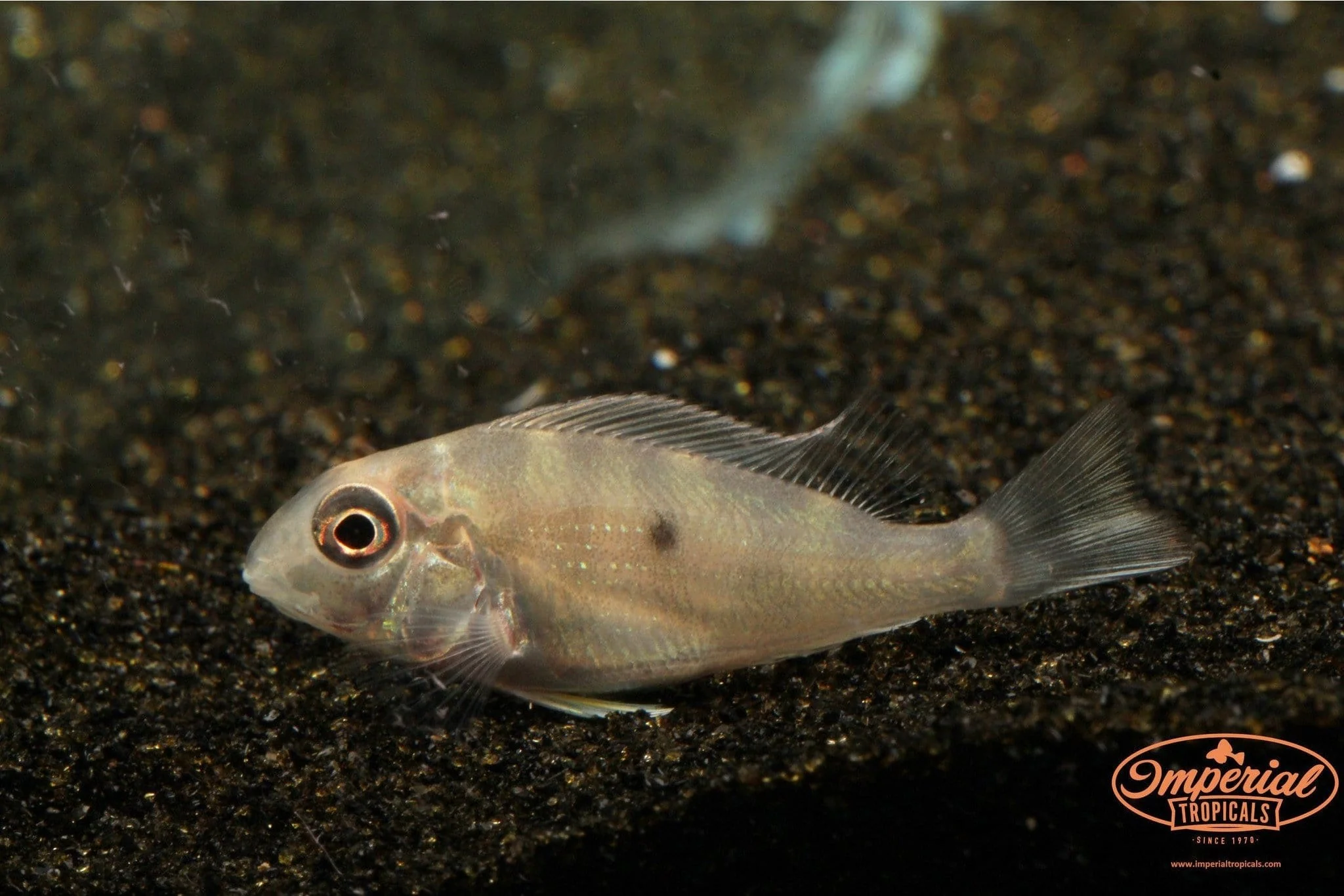
Remarks: Ivanacara adoketa, sometimes known as the zebra acara, is an uncommon cichlid endemic to the middle and upper sections of the Rio Negro system in Brazil. With their limited range, they are not often seen in the hobby which is a shame as they are gorgeous fish once they mature. Adult I. adoketa have silver or tan bodies covered in iridescent blue scales that nicely accent the orange markings on the face and fins. Their common name of zebra acara comes from their vertical black bands that get more prominent when breeding or rearing fry. Males will also get elegant fin extensions on their anal, pelvic, and dorsal fins resulting in a stunning looking fish.
The natural habitat of I. adoketa consists of shallow blackwater streams and tributaries during the dry season where little light breaks through the thick canopy. This same canopy litters the substrate with plenty of fallen leaves and other botanicals. The I. adoketa hunt for small crustacceans, insects and worms hiding within these leaves. These organics combined with the extremely soft water has the pH in these areas extremely low with it being as low as 3.0 at some points. During the wet season, these shallow waters flood and allow the I. adoketa along with any other fish living there to go out to feed in the flooded forest. This time is also when these fish breed, taking advantage of the abundant food and space. While considered open-spawners, I. adoketa will usually seek out a cave to spawn in keep their eggs and fry safe from predators also using this sudden expansion in space.
As this species is rather fickle about water parameters and does not tolerate pollutants, it is best to try to replicate their natural habitat as much as possible especially when working with wild caught specimens. Utilizing botanicals and RO/DI water will help in replicating the soft, acidic, blackwater they love and by occasionally doing water changes with slightly cooler water you can possibly induce spawning. Many note these fish also show their best color when kept in water heavily stained with tannins. I. adoketa are considering to be more of a medium sized cichlid and can be very territorial especially in regards to other cichlids and/or when spawning. To prevent aggression and possible loses of tankmates, we recommend only keeping a single pair in a 40 gallon with a 75 gallon or more needed If keeping more than two I. adoketa or when planning to house them with other cichlids. Fish that are small enough to be swallowed by an adult male which can reach five inches in length should also be avoided as they are likely to be eaten. With how beautiful, rare, and highly sought after I. adoketa are, they make a great breeding project for those up to the challenge. This combined with just how incredible they are to watch makes it worth it to simply keep them in a species only tank which we recommend.
Original: $69.99
-65%$69.99
$24.50Product Information
Product Information
Shipping & Returns
Shipping & Returns
Description
Remarks: Ivanacara adoketa, sometimes known as the zebra acara, is an uncommon cichlid endemic to the middle and upper sections of the Rio Negro system in Brazil. With their limited range, they are not often seen in the hobby which is a shame as they are gorgeous fish once they mature. Adult I. adoketa have silver or tan bodies covered in iridescent blue scales that nicely accent the orange markings on the face and fins. Their common name of zebra acara comes from their vertical black bands that get more prominent when breeding or rearing fry. Males will also get elegant fin extensions on their anal, pelvic, and dorsal fins resulting in a stunning looking fish.
The natural habitat of I. adoketa consists of shallow blackwater streams and tributaries during the dry season where little light breaks through the thick canopy. This same canopy litters the substrate with plenty of fallen leaves and other botanicals. The I. adoketa hunt for small crustacceans, insects and worms hiding within these leaves. These organics combined with the extremely soft water has the pH in these areas extremely low with it being as low as 3.0 at some points. During the wet season, these shallow waters flood and allow the I. adoketa along with any other fish living there to go out to feed in the flooded forest. This time is also when these fish breed, taking advantage of the abundant food and space. While considered open-spawners, I. adoketa will usually seek out a cave to spawn in keep their eggs and fry safe from predators also using this sudden expansion in space.
As this species is rather fickle about water parameters and does not tolerate pollutants, it is best to try to replicate their natural habitat as much as possible especially when working with wild caught specimens. Utilizing botanicals and RO/DI water will help in replicating the soft, acidic, blackwater they love and by occasionally doing water changes with slightly cooler water you can possibly induce spawning. Many note these fish also show their best color when kept in water heavily stained with tannins. I. adoketa are considering to be more of a medium sized cichlid and can be very territorial especially in regards to other cichlids and/or when spawning. To prevent aggression and possible loses of tankmates, we recommend only keeping a single pair in a 40 gallon with a 75 gallon or more needed If keeping more than two I. adoketa or when planning to house them with other cichlids. Fish that are small enough to be swallowed by an adult male which can reach five inches in length should also be avoided as they are likely to be eaten. With how beautiful, rare, and highly sought after I. adoketa are, they make a great breeding project for those up to the challenge. This combined with just how incredible they are to watch makes it worth it to simply keep them in a species only tank which we recommend.