Humpback Banjo Catfish (Bunocephalus verrucosus)
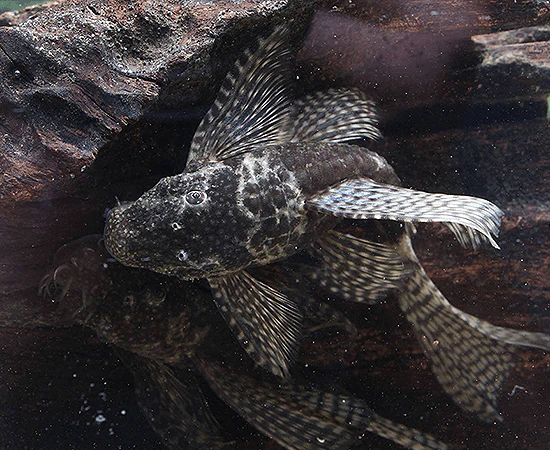
Remarks: The humpback banjo catfish (Bunocephalus verrucosus) is an uncommon relative of the more well-known Bunocephalus coracoideus. These fascinating little catfish are also known as warty or craggy banjo catfish because unlike their more common relative that has a flatter body, humpback banjo catfish have a series of humps and valleys on their backs. This irregular shape is suspected to aid them in camouflaging better with pieces of bark and leaf litter. With such a unique shape, it is safe to say humpback banjo catfish make for an eye-catching addition to the home aquarium.
The native range of the humpback banjo catfish encompasses a number of countries that the Amazon River basin flows through. This includes Suriname, Brazil, Ecuador, Guyana, and Peru. The humpback banjo catfish prefers areas with shallow, warm, soft, acidic water and tons of leaf litter to hide amongst. This can be easily replicated within the home aquarium to allow this species to thrive with the use of botanicals such as Indian almond leaves, a heater, and RO water. Unlike their close relatives, humpback banjo catfish are not known to bury in the sand very much and instead prefer to hide amongst leaves and other botanicals. This makes it where the type of substrate used is rather inconsequential so long as it isn’t rough or jagged enough to damage their delicate bellies.
Humpback banjo catfish are peaceful so long as their tankmates aren’t small enough to fit in their mouths. In fact, these nocturnal bottom-dwellers are timid enough that they can be easily outcompeted for food and bullied by more aggressive tankmates. This is especially true if they are not given enough hiding spaces or are kept under too bright of lights. So, when keeping the humpback banjo catfish, they should be fed their diet consisting of worms and high protein prepared foods closer to when the tank lights go off for the evening.
If it looks like your banjo catfish is peeling almost like a reptile shedding, do not be alarmed. Banjo catfish are known to shed their outermost layer of skin occasionally like a snake or lizard. If they are shedding very frequently, have visibly irritated skin or welts, or have damaged barbels, this can be a sign of poor water quality and/or bullying from other tankmates and should be addressed immediately. It is also common for these catfish to develop very rounded bellies, especially the females, so always take a second look if you suspect bloat.
Original: $24.99
-65%$24.99
$8.75Product Information
Product Information
Shipping & Returns
Shipping & Returns
Description
Remarks: The humpback banjo catfish (Bunocephalus verrucosus) is an uncommon relative of the more well-known Bunocephalus coracoideus. These fascinating little catfish are also known as warty or craggy banjo catfish because unlike their more common relative that has a flatter body, humpback banjo catfish have a series of humps and valleys on their backs. This irregular shape is suspected to aid them in camouflaging better with pieces of bark and leaf litter. With such a unique shape, it is safe to say humpback banjo catfish make for an eye-catching addition to the home aquarium.
The native range of the humpback banjo catfish encompasses a number of countries that the Amazon River basin flows through. This includes Suriname, Brazil, Ecuador, Guyana, and Peru. The humpback banjo catfish prefers areas with shallow, warm, soft, acidic water and tons of leaf litter to hide amongst. This can be easily replicated within the home aquarium to allow this species to thrive with the use of botanicals such as Indian almond leaves, a heater, and RO water. Unlike their close relatives, humpback banjo catfish are not known to bury in the sand very much and instead prefer to hide amongst leaves and other botanicals. This makes it where the type of substrate used is rather inconsequential so long as it isn’t rough or jagged enough to damage their delicate bellies.
Humpback banjo catfish are peaceful so long as their tankmates aren’t small enough to fit in their mouths. In fact, these nocturnal bottom-dwellers are timid enough that they can be easily outcompeted for food and bullied by more aggressive tankmates. This is especially true if they are not given enough hiding spaces or are kept under too bright of lights. So, when keeping the humpback banjo catfish, they should be fed their diet consisting of worms and high protein prepared foods closer to when the tank lights go off for the evening.
If it looks like your banjo catfish is peeling almost like a reptile shedding, do not be alarmed. Banjo catfish are known to shed their outermost layer of skin occasionally like a snake or lizard. If they are shedding very frequently, have visibly irritated skin or welts, or have damaged barbels, this can be a sign of poor water quality and/or bullying from other tankmates and should be addressed immediately. It is also common for these catfish to develop very rounded bellies, especially the females, so always take a second look if you suspect bloat.