High Fin Brick Swordtail
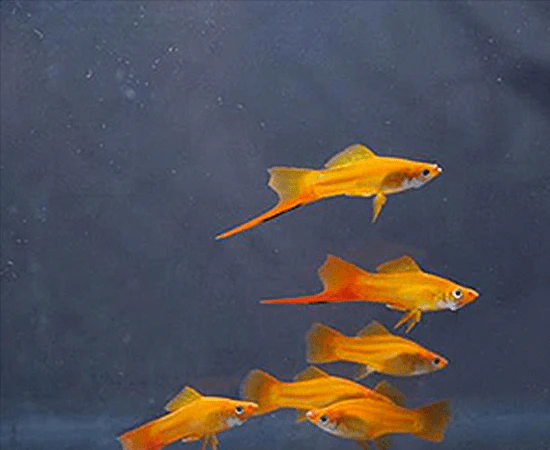
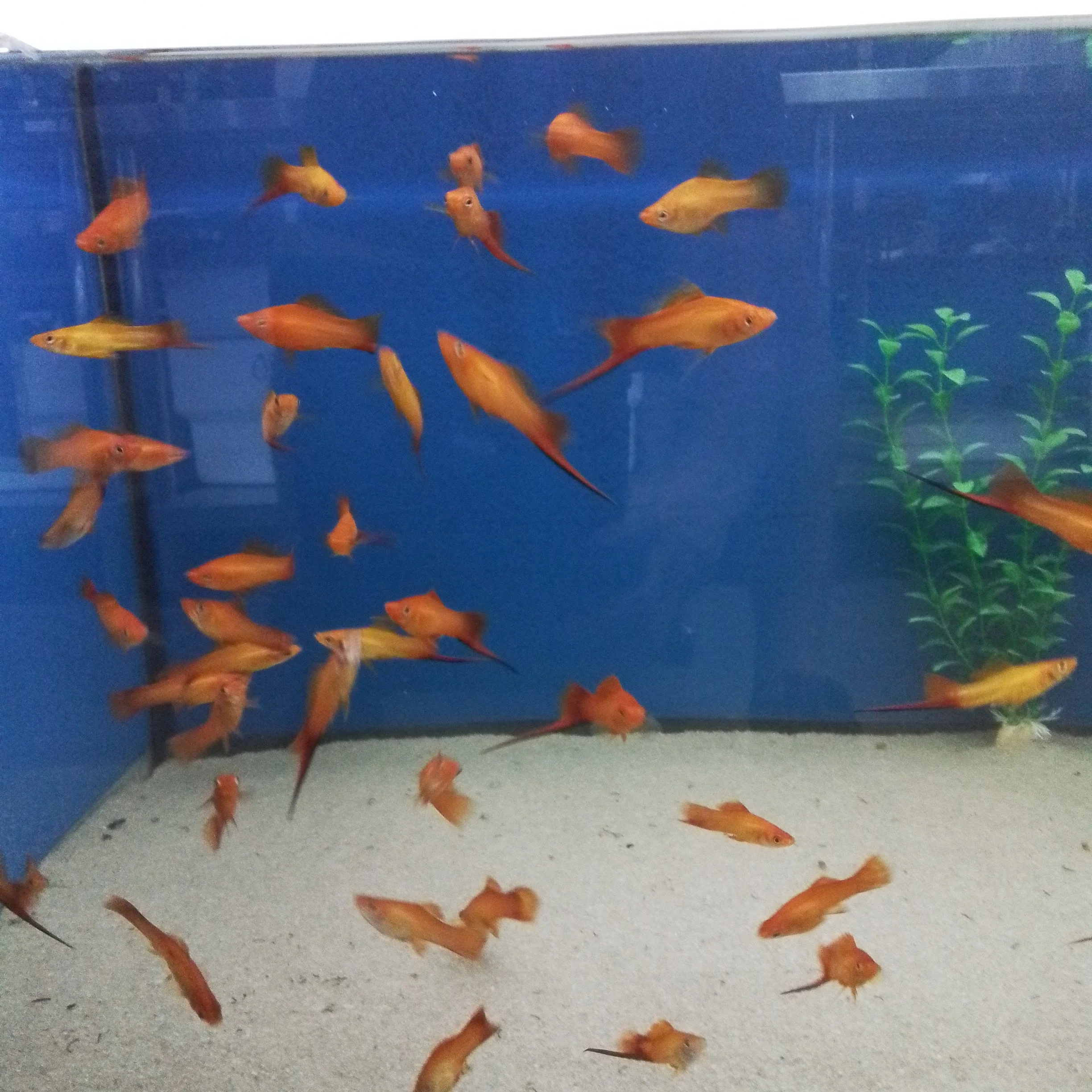
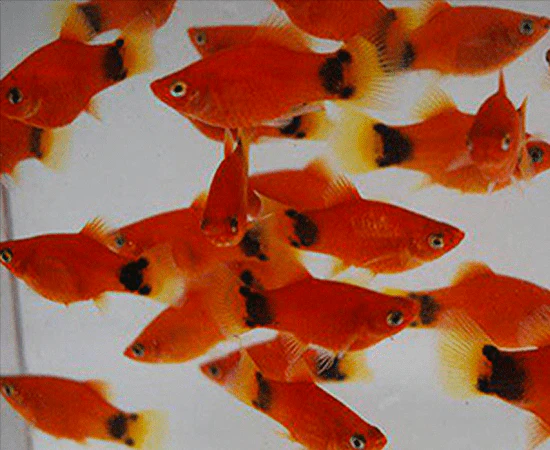
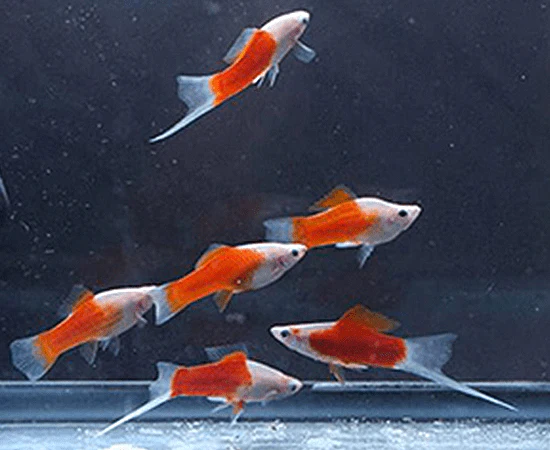
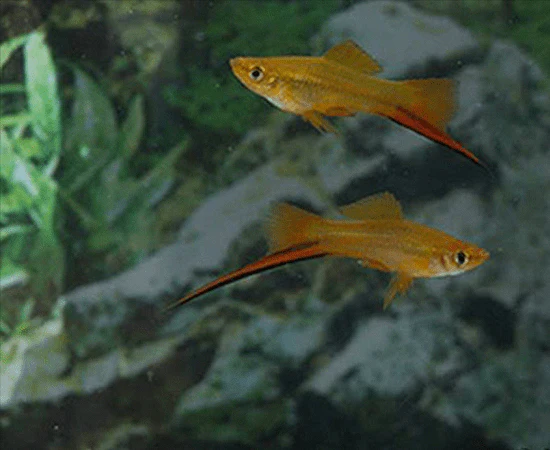
Remarks: High fin brick swordtails (Xiphophorus hellerii) are a breathtaking breed of swordtail that gets a tall, flowing dorsal fin. Combined with their rich, reddish-orange color they make for a stunning fish that stands out nicely among green plants.
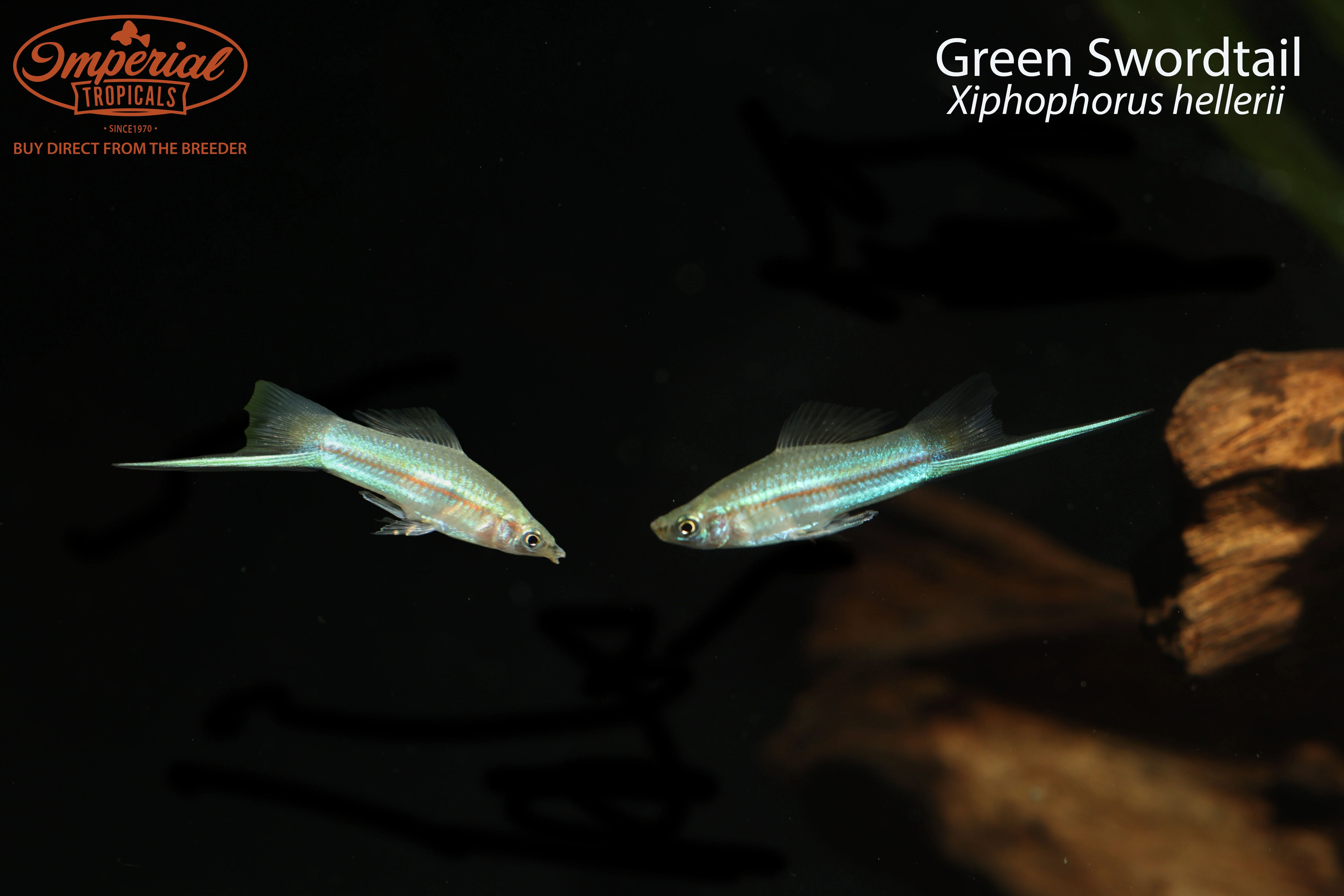
Swordtails are peaceful community fish that reproduce with ease. They are livebearers, meaning the females release live fry rather than laying eggs. It is recommended to keep more females than males, as males can easily harass females with relentless attempts to reproduce, leading to stress in the females. Dominant males will begin developing swords and a modified anal fin, called a gonopodium, around 1-1.5" in length. However, it is not uncommon for less dominant males to maintain the physical appearance of a female until much later in life (even as large as 4"!) Some have also reported the strange phenomenon of these fish occasionally changing gender with it typically occurring with older, large females becoming male with mixed results in regards to them remaining fertile.
Original: $7.99
-65%$7.99
$2.80Product Information
Product Information
Shipping & Returns
Shipping & Returns
Description
Remarks: High fin brick swordtails (Xiphophorus hellerii) are a breathtaking breed of swordtail that gets a tall, flowing dorsal fin. Combined with their rich, reddish-orange color they make for a stunning fish that stands out nicely among green plants.
Swordtails are peaceful community fish that reproduce with ease. They are livebearers, meaning the females release live fry rather than laying eggs. It is recommended to keep more females than males, as males can easily harass females with relentless attempts to reproduce, leading to stress in the females. Dominant males will begin developing swords and a modified anal fin, called a gonopodium, around 1-1.5" in length. However, it is not uncommon for less dominant males to maintain the physical appearance of a female until much later in life (even as large as 4"!) Some have also reported the strange phenomenon of these fish occasionally changing gender with it typically occurring with older, large females becoming male with mixed results in regards to them remaining fertile.