Millennium Rainbowfish
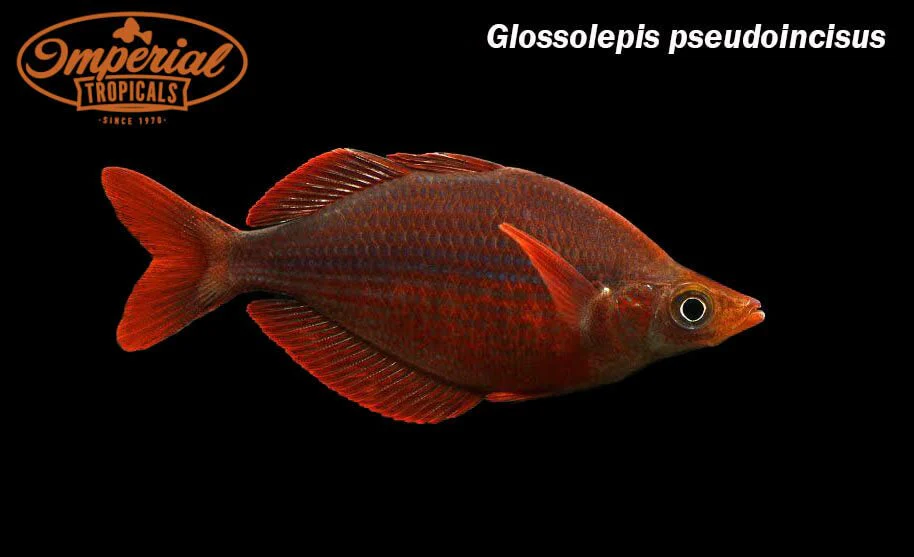
Remarks: The millennium rainbow's scientific name, Glossolepis pseudoincisus, references it's similarity to the Irian red rainbow, G. incisus. Males are deep red with a gold base under the scales, while females are yellow-gold with zig-zagging red lines along the lower half of the body.
These fish are omnivorous and should be fed a quality flake food with supplemental proteins such as baby brine shrimp. They require clean water but tolerate a wide variety of water parameters. By providing frequent water changes, you will be rewarded with nearly continuous spawning attempts. Glossolepis species deposit eggs in weedy areas (often mimicked by a yarn mop) and the eggs hatch 7-10 days later. Eggs can be harvested for hatching in separate tanks to avoid predation. Most Rainbows show their best colors at sunrise, when the males display their bright fins for potential mates. Having more females than males will allow for proper color displays and avoid any unwanted aggression towards lone females.
Original: $14.99
-65%$14.99
$5.25Product Information
Product Information
Shipping & Returns
Shipping & Returns
Description
Remarks: The millennium rainbow's scientific name, Glossolepis pseudoincisus, references it's similarity to the Irian red rainbow, G. incisus. Males are deep red with a gold base under the scales, while females are yellow-gold with zig-zagging red lines along the lower half of the body.
These fish are omnivorous and should be fed a quality flake food with supplemental proteins such as baby brine shrimp. They require clean water but tolerate a wide variety of water parameters. By providing frequent water changes, you will be rewarded with nearly continuous spawning attempts. Glossolepis species deposit eggs in weedy areas (often mimicked by a yarn mop) and the eggs hatch 7-10 days later. Eggs can be harvested for hatching in separate tanks to avoid predation. Most Rainbows show their best colors at sunrise, when the males display their bright fins for potential mates. Having more females than males will allow for proper color displays and avoid any unwanted aggression towards lone females.