Fossorochromis rostratus
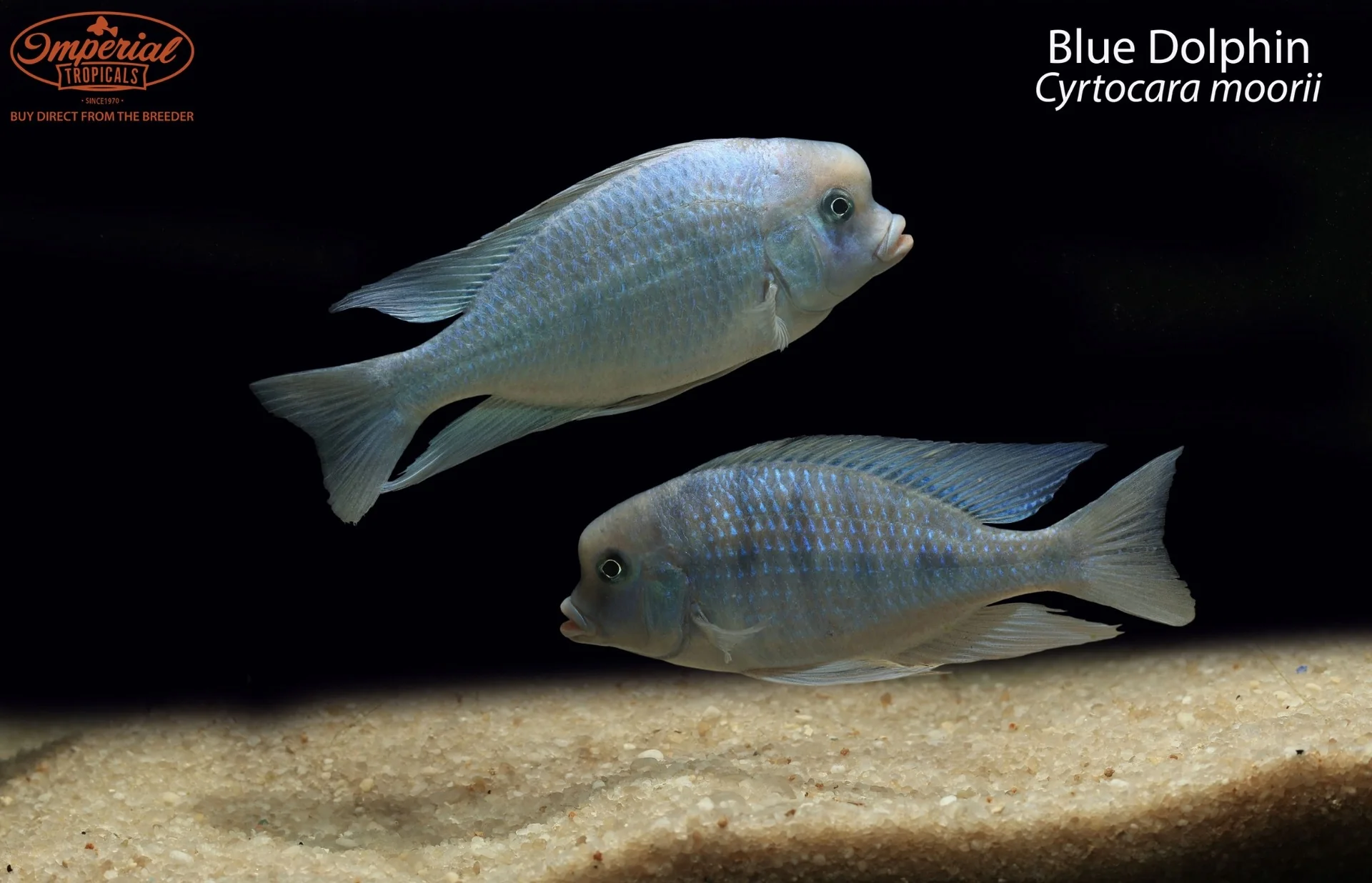
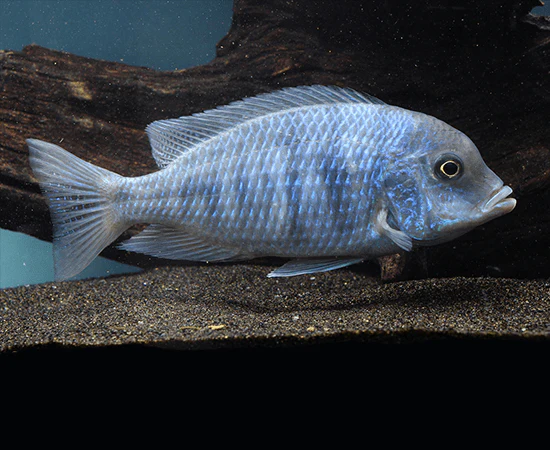
Remarks: Fossorochromis rostratus is a large Haplochromine from Lake Malawi, and it requires a tank that exceeds 100 gallons to accommodate its large size and high activity level. In the wild, many would expect them to be voracious predators due to their size (some males even exceeding 16" in length!), but they prove to be a mostly peaceful hap so long as other fish do not fit in their mouths. They actually feed by sifting the sand in search of worms and micro-organisms to feed on similar to Geophagus. An interesting thing to note is that in the wild, blue dolphin cichlids frequently follow this species around to feed on any morsels of food they stir up while sifting. The Fossorochromis rostratus makes further use of the sand by diving into it when they feel threatened as well as the dominant making massive spawning pits in the soft substrate. As it is necessary for their natural feeding and spawning behaviors, a substrate of soft sand is required for these fish to thrive. Any other substrate can results in choking, abrasions, and an unwillingness to feed.
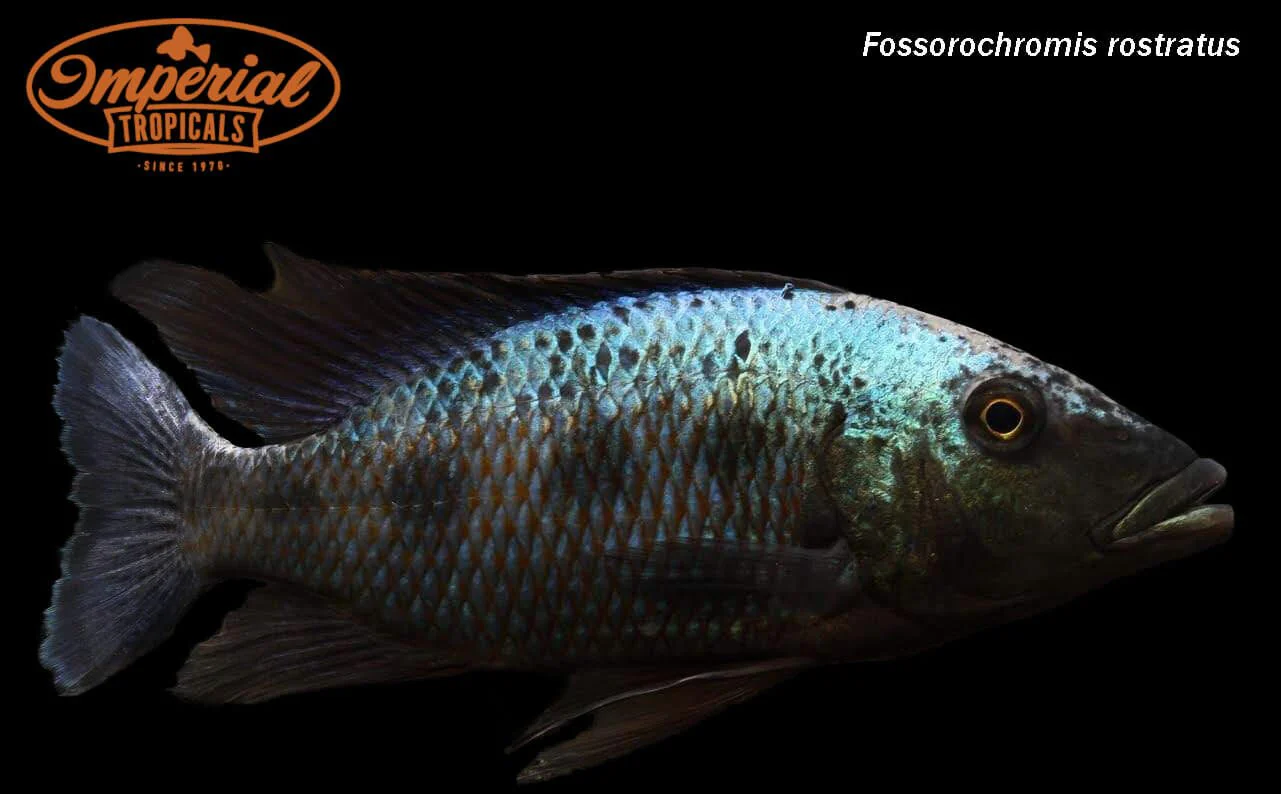
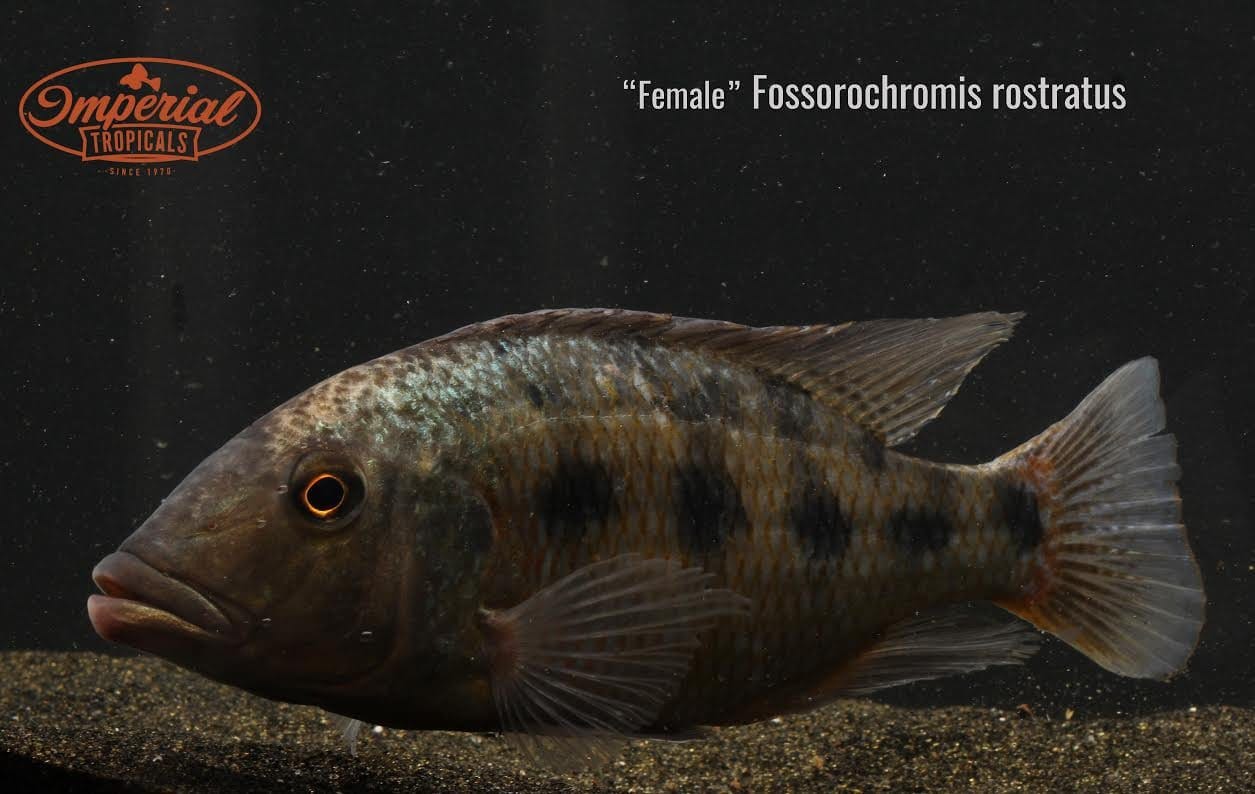
While being fairly peaceful for a hap, Fossorochromis rostratus males can show quite a bit of aggression toward one another so if one wants to have more than one, they will need to provide ample space and many females to allow them to establish separate territories. Some note having a lesser dominant male with a more dominant male and many females will result in the brightest colors from the most dominant male through this of course comes at the risk of increased aggression. Adult, dominant males show some truly striking color with iridescent blue-green fins and bodies with nicely contrasting orange accents. Some also keep the 3 large spots along their lateral line that is present in juveniles, females, and stressed fish but they are usually very faded. Lesser dominant males, females, and juveniles are usually tan or gray with the aforementioned three prominent black spots on their sides that can be used to identify this species.
Original: $9.99
-65%$9.99
$3.50Product Information
Product Information
Shipping & Returns
Shipping & Returns
Description
Remarks: Fossorochromis rostratus is a large Haplochromine from Lake Malawi, and it requires a tank that exceeds 100 gallons to accommodate its large size and high activity level. In the wild, many would expect them to be voracious predators due to their size (some males even exceeding 16" in length!), but they prove to be a mostly peaceful hap so long as other fish do not fit in their mouths. They actually feed by sifting the sand in search of worms and micro-organisms to feed on similar to Geophagus. An interesting thing to note is that in the wild, blue dolphin cichlids frequently follow this species around to feed on any morsels of food they stir up while sifting. The Fossorochromis rostratus makes further use of the sand by diving into it when they feel threatened as well as the dominant making massive spawning pits in the soft substrate. As it is necessary for their natural feeding and spawning behaviors, a substrate of soft sand is required for these fish to thrive. Any other substrate can results in choking, abrasions, and an unwillingness to feed.
While being fairly peaceful for a hap, Fossorochromis rostratus males can show quite a bit of aggression toward one another so if one wants to have more than one, they will need to provide ample space and many females to allow them to establish separate territories. Some note having a lesser dominant male with a more dominant male and many females will result in the brightest colors from the most dominant male through this of course comes at the risk of increased aggression. Adult, dominant males show some truly striking color with iridescent blue-green fins and bodies with nicely contrasting orange accents. Some also keep the 3 large spots along their lateral line that is present in juveniles, females, and stressed fish but they are usually very faded. Lesser dominant males, females, and juveniles are usually tan or gray with the aforementioned three prominent black spots on their sides that can be used to identify this species.