Chameleon Whiptail "Colombia"
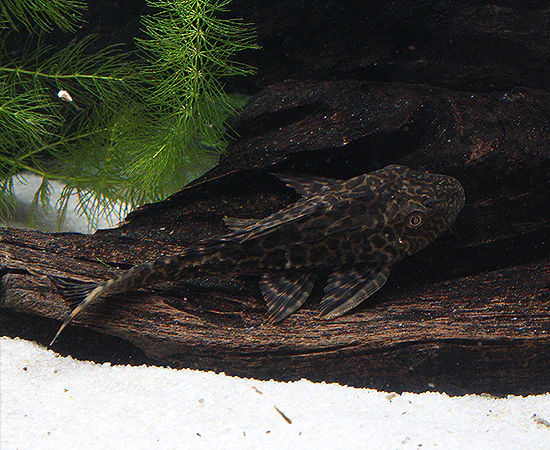
Remarks: The chameleon whiptail is perhaps the most sought after whiptail available today. Due to their unique ability to rapidly change colors when disturbed or placed over different substrate, they are the most striking of whiptail catfish. Long filaments extend from the tips of the caudal fin creating a very elegant look. They have many whiskers around the mouth, which are used to locate food in the sand. Males have larger whiskers which helps them also hold onto egg clusters. Due to their sand-sifting feeding style, this species should only be kept on a substrate of soft sand to avoid stress and injuries to their mouths.
In the wild, the chameleon whiptail is mostly found in white water sections of the Rio Caqueta in Columbia. Their flat bodies allow them to better resist the strong currents as they hide in the sand amongst sparse leaf litter. As a defense mechanism, if a potential threat is detected, they will quickly bury themselves under the sand, leaving only their eyes visible. This behavior can be seen in captivity as well and is very interesting thing to observe. To make this species even better, it isn't territorial unlike many other larger Loricariids. Even multiple males can live peacefully together. This docile nature makes them best suited for larger, peaceful South American community tanks or a species only tank.
Original: $59.99
-65%$59.99
$21.00Product Information
Product Information
Shipping & Returns
Shipping & Returns
Description
Remarks: The chameleon whiptail is perhaps the most sought after whiptail available today. Due to their unique ability to rapidly change colors when disturbed or placed over different substrate, they are the most striking of whiptail catfish. Long filaments extend from the tips of the caudal fin creating a very elegant look. They have many whiskers around the mouth, which are used to locate food in the sand. Males have larger whiskers which helps them also hold onto egg clusters. Due to their sand-sifting feeding style, this species should only be kept on a substrate of soft sand to avoid stress and injuries to their mouths.
In the wild, the chameleon whiptail is mostly found in white water sections of the Rio Caqueta in Columbia. Their flat bodies allow them to better resist the strong currents as they hide in the sand amongst sparse leaf litter. As a defense mechanism, if a potential threat is detected, they will quickly bury themselves under the sand, leaving only their eyes visible. This behavior can be seen in captivity as well and is very interesting thing to observe. To make this species even better, it isn't territorial unlike many other larger Loricariids. Even multiple males can live peacefully together. This docile nature makes them best suited for larger, peaceful South American community tanks or a species only tank.