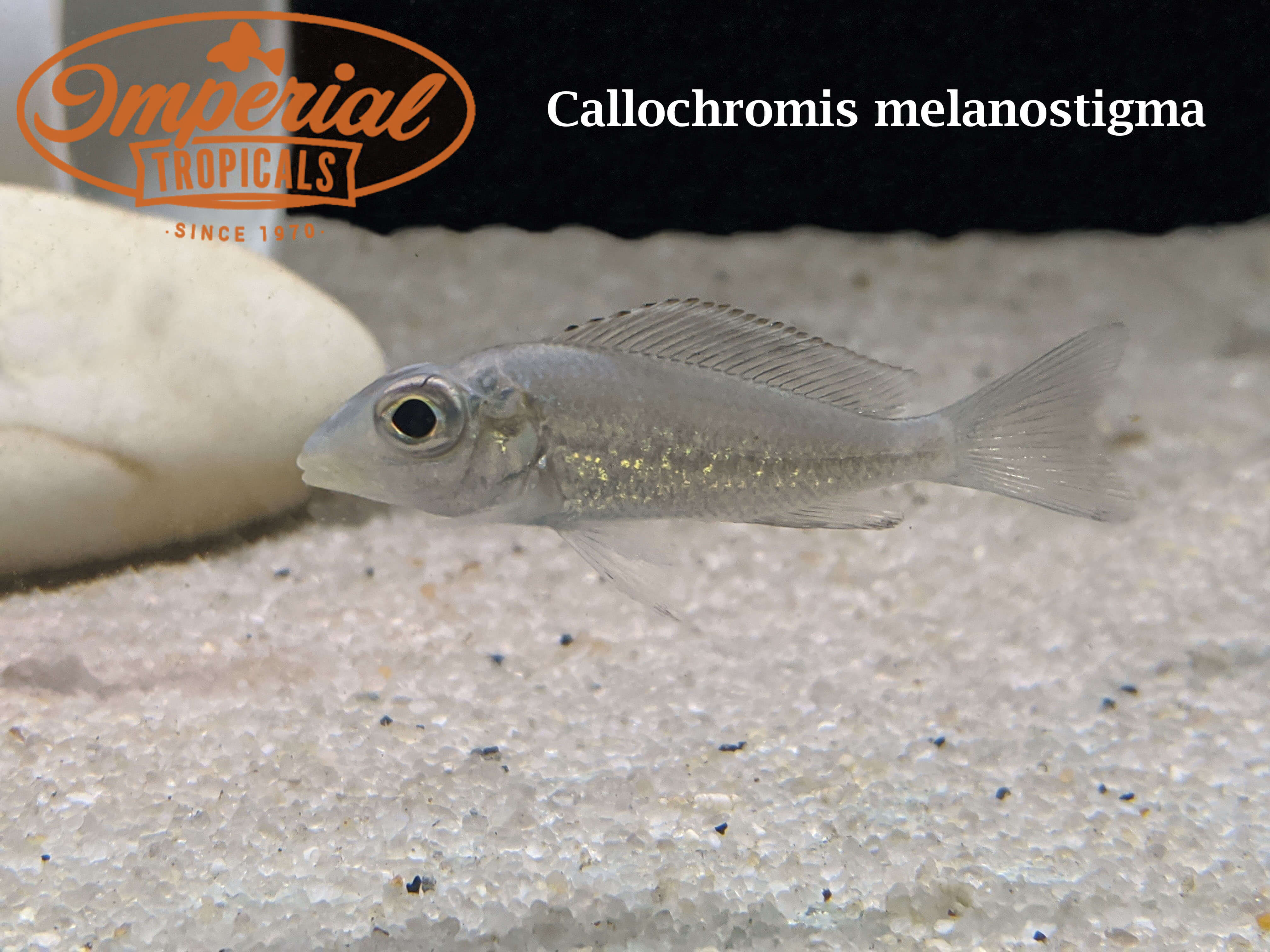
Callochromis melanostigma
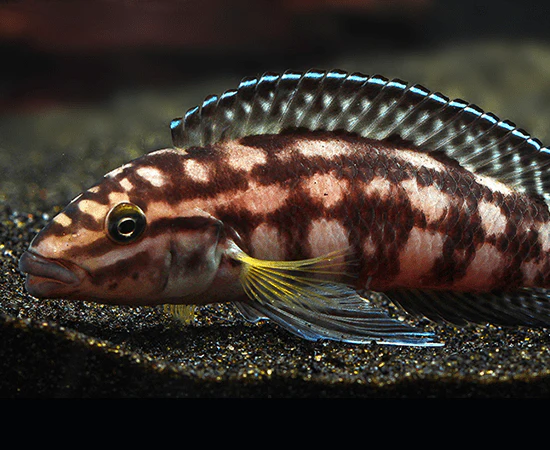
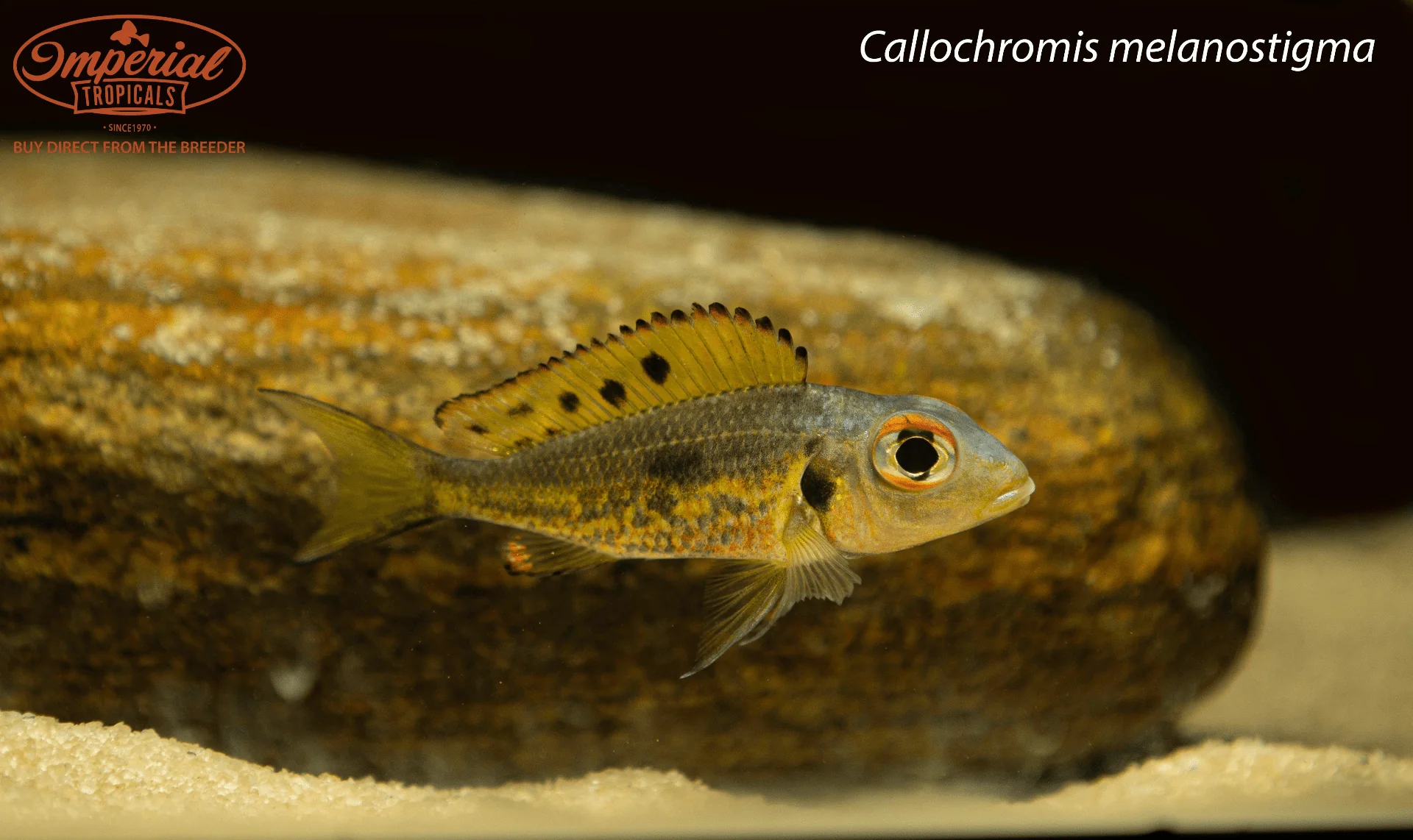
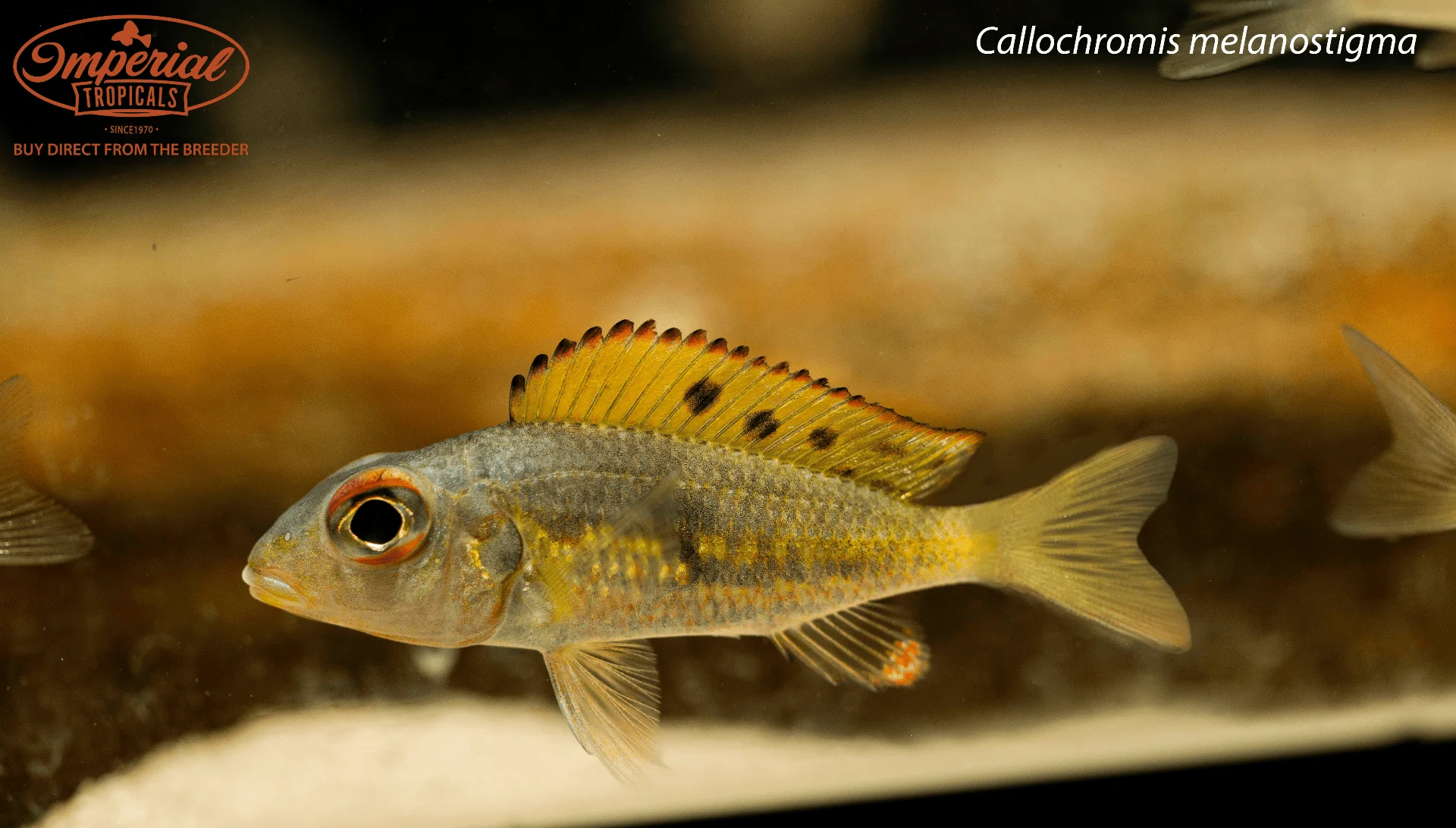
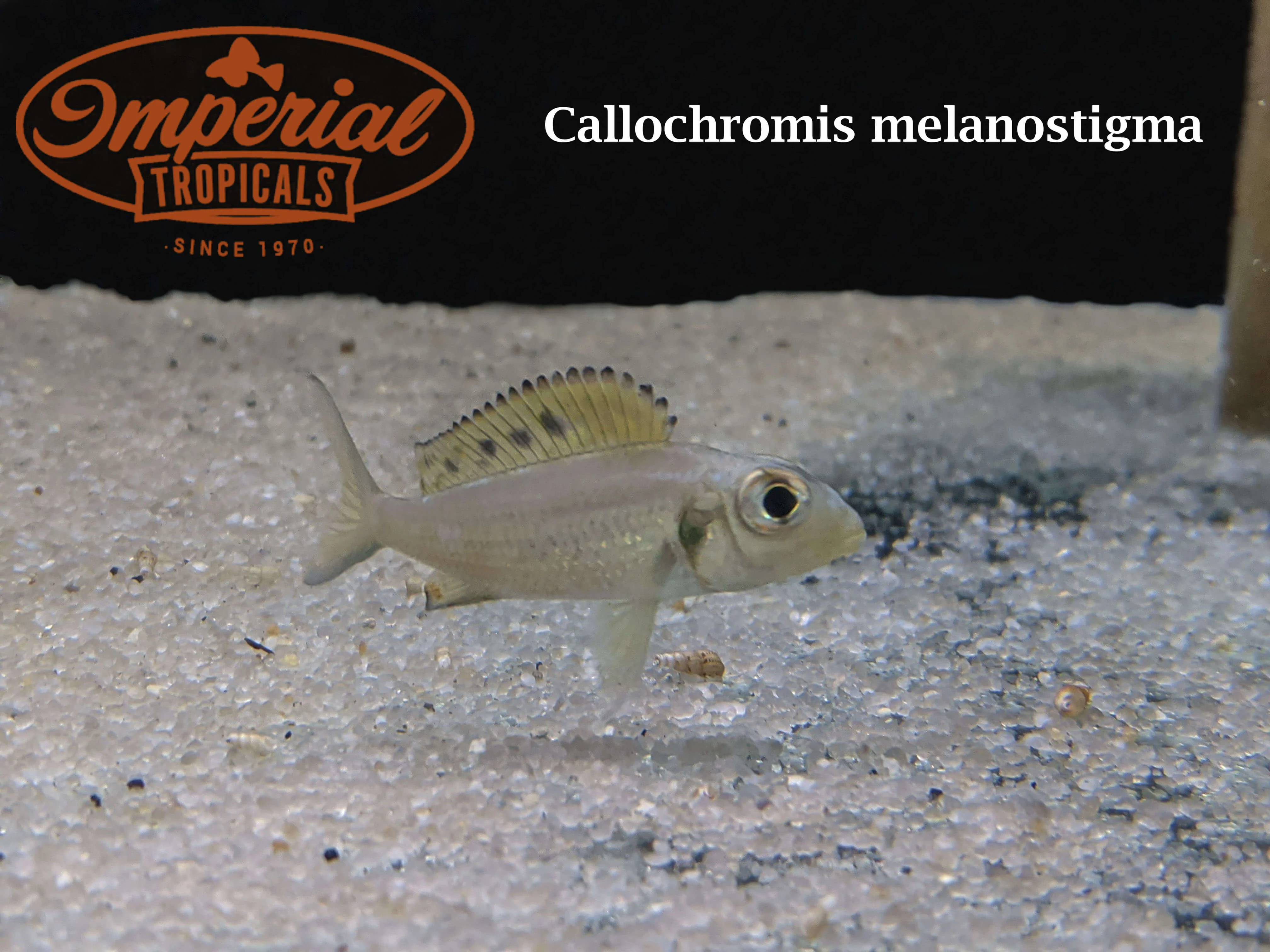
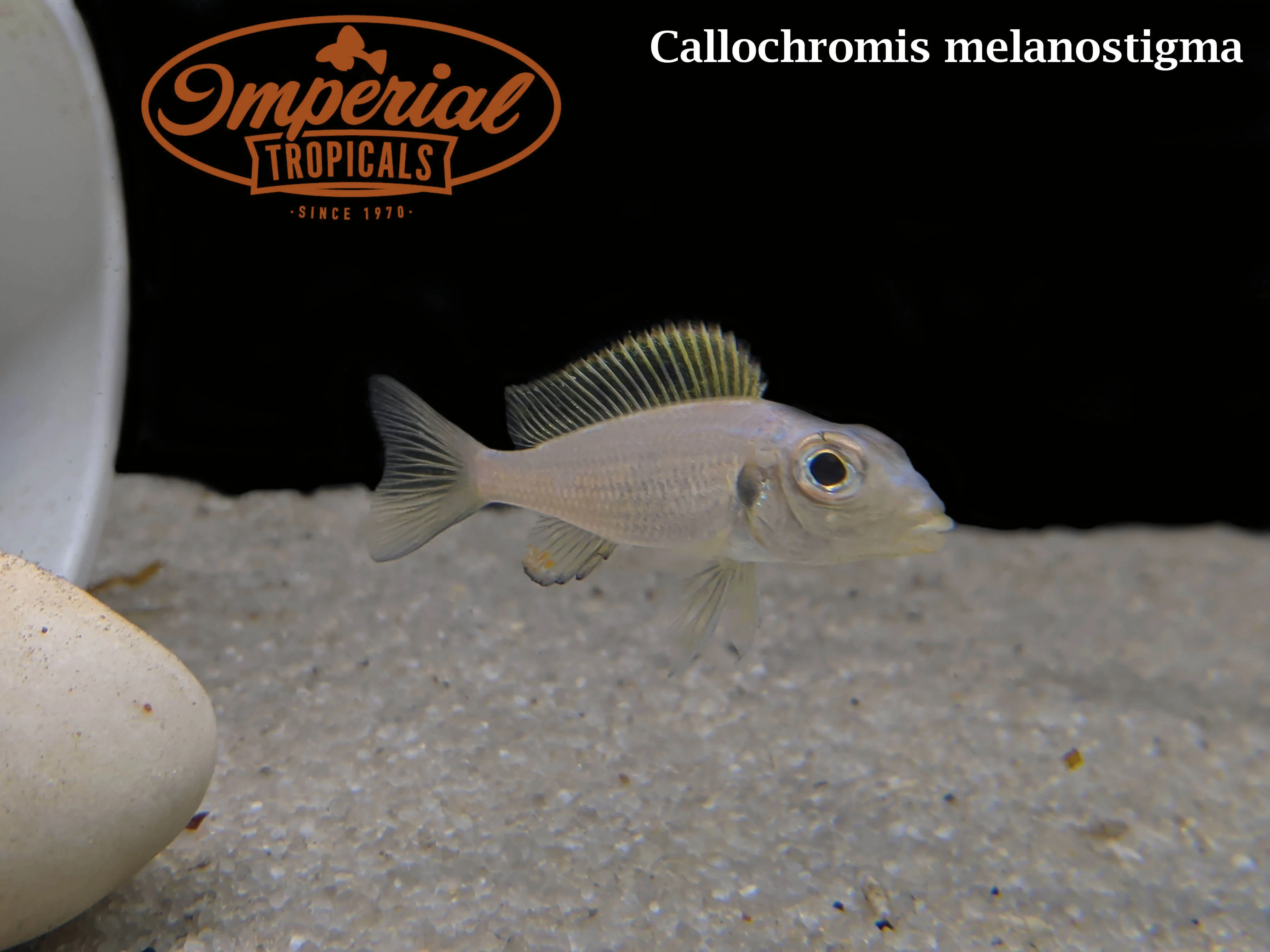
Remarks: Callochromis melanostigma are fascinating medium-sized Tanganyikan cichlids found in the southern end of the lake. They have a unique shape with their large eyes and tall dorsal fin that seems to end abruptly above where the ventral fins are located. The rounded front of the dorsal fin along with the small, darker colored spikes atop it gives an almost buzzsaw appearance. While females and juveniles are mostly gray, mature males display metallic gold colors on their bodies and fins that seem to shimmer in the light occasionally with a green sheen. Their dorsal fins also contain 4-5 black spots and their anal fins display yellow egg spots. The eyes of males can range anywhere from gold to orange. All these aspects come together to form a truly stunning fish for which pictures cannot do it justice.
In the wild, Callochromis melanostigma can be found in shallow, sandy areas that sometimes will have patches of aquatic vegetation such as Vallisneria spiralis. They will use the sparse rock piles also found in these areas as shelter when young or when predators are present, otherwise they patrol the sandy expanses. Males build crater-nests in the open sand to attract mates which is a very fascinating behavior to witness within the aquarium. Spawning occurs in the crater, where females take the eggs into their mouths and mouthbrood for several weeks. To facilitate this behavior in captivity and allow for spawning, a large, open, sandy space is needed that is free of obstructions such as rocks or décor. Not providing enough territory space can result in heightened aggression toward both their own kind and other species. Sand is necessary, as they spend a considerable amount of time sifting it through their gills to feed. Being mostly carnivorous, foods high in protein such as bloodworms should be a staple, but foods containing vegetable matter and algae should also be offered to aid in digestion.
Males will act aggressively towards each other, and sexing is difficult when young. Starting with a group of five or more individuals will ensure the best chances at having one male and several females. Extra males will seek refuge in rocky caves. When given enough space, Callochromis melanostigma are not terribly aggressive for a Tanganyikan species, but this can change when they are spawning. They are fairly confident for their size and can defend themselves rather well so they can usually hold their own against more aggressive species such as Neolamprologus tretocephalus. All of these factors combined with their stunning looks makes the Callochromis melanostigma a great choice for many Tanganyikan aquariums.
Original: $14.99
-65%$14.99
$5.25Product Information
Product Information
Shipping & Returns
Shipping & Returns
Description
Remarks: Callochromis melanostigma are fascinating medium-sized Tanganyikan cichlids found in the southern end of the lake. They have a unique shape with their large eyes and tall dorsal fin that seems to end abruptly above where the ventral fins are located. The rounded front of the dorsal fin along with the small, darker colored spikes atop it gives an almost buzzsaw appearance. While females and juveniles are mostly gray, mature males display metallic gold colors on their bodies and fins that seem to shimmer in the light occasionally with a green sheen. Their dorsal fins also contain 4-5 black spots and their anal fins display yellow egg spots. The eyes of males can range anywhere from gold to orange. All these aspects come together to form a truly stunning fish for which pictures cannot do it justice.
In the wild, Callochromis melanostigma can be found in shallow, sandy areas that sometimes will have patches of aquatic vegetation such as Vallisneria spiralis. They will use the sparse rock piles also found in these areas as shelter when young or when predators are present, otherwise they patrol the sandy expanses. Males build crater-nests in the open sand to attract mates which is a very fascinating behavior to witness within the aquarium. Spawning occurs in the crater, where females take the eggs into their mouths and mouthbrood for several weeks. To facilitate this behavior in captivity and allow for spawning, a large, open, sandy space is needed that is free of obstructions such as rocks or décor. Not providing enough territory space can result in heightened aggression toward both their own kind and other species. Sand is necessary, as they spend a considerable amount of time sifting it through their gills to feed. Being mostly carnivorous, foods high in protein such as bloodworms should be a staple, but foods containing vegetable matter and algae should also be offered to aid in digestion.
Males will act aggressively towards each other, and sexing is difficult when young. Starting with a group of five or more individuals will ensure the best chances at having one male and several females. Extra males will seek refuge in rocky caves. When given enough space, Callochromis melanostigma are not terribly aggressive for a Tanganyikan species, but this can change when they are spawning. They are fairly confident for their size and can defend themselves rather well so they can usually hold their own against more aggressive species such as Neolamprologus tretocephalus. All of these factors combined with their stunning looks makes the Callochromis melanostigma a great choice for many Tanganyikan aquariums.