Blackthroat Cichlid (Astatheros macracanthus)
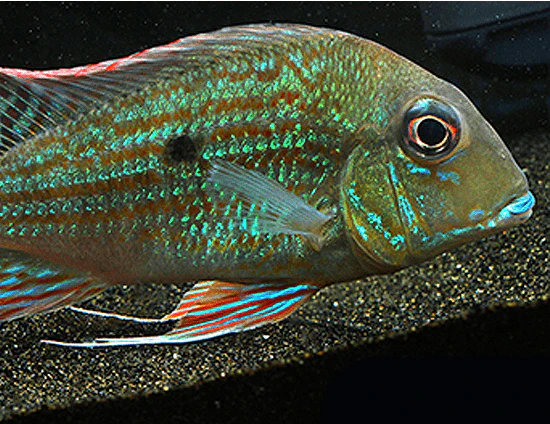
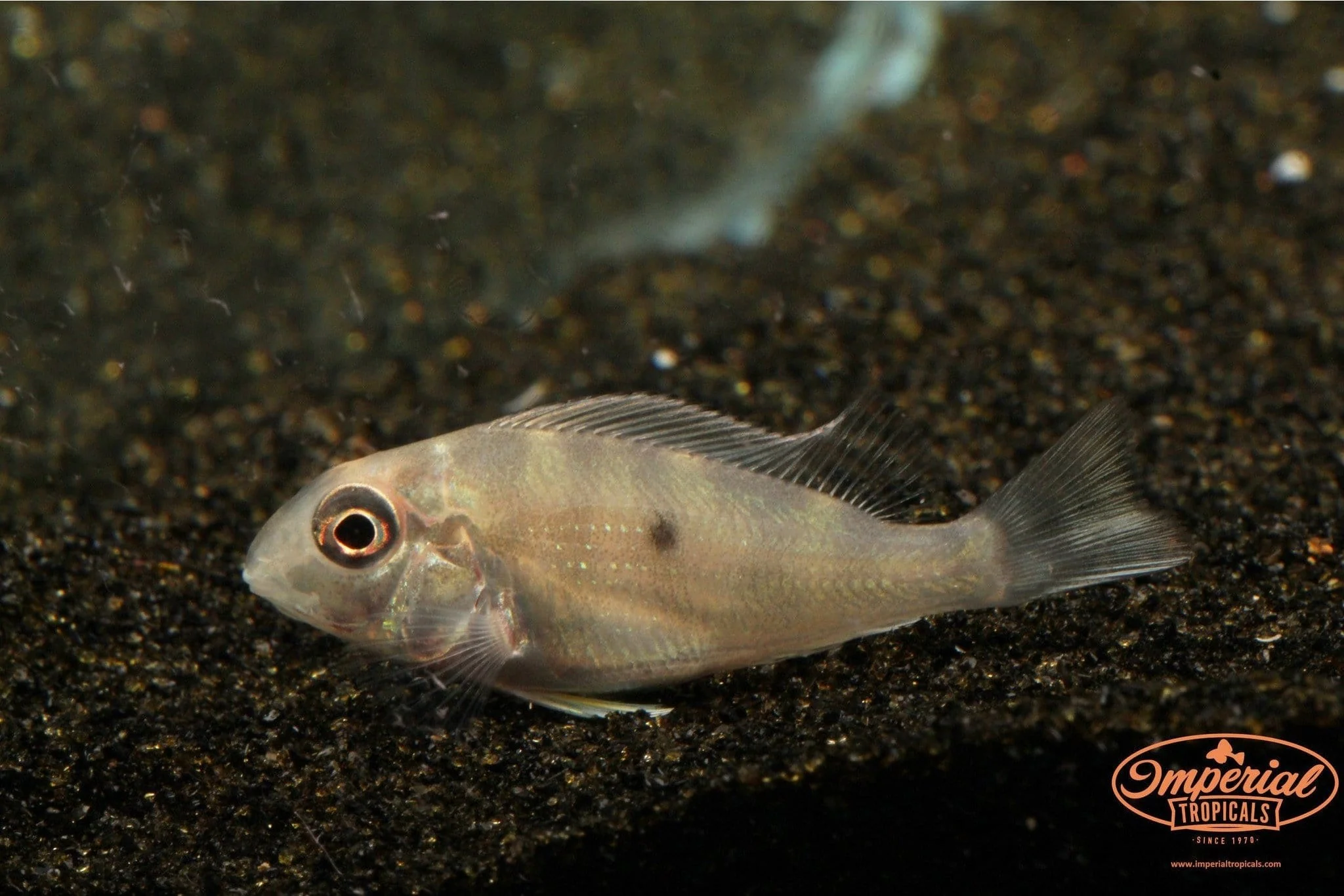
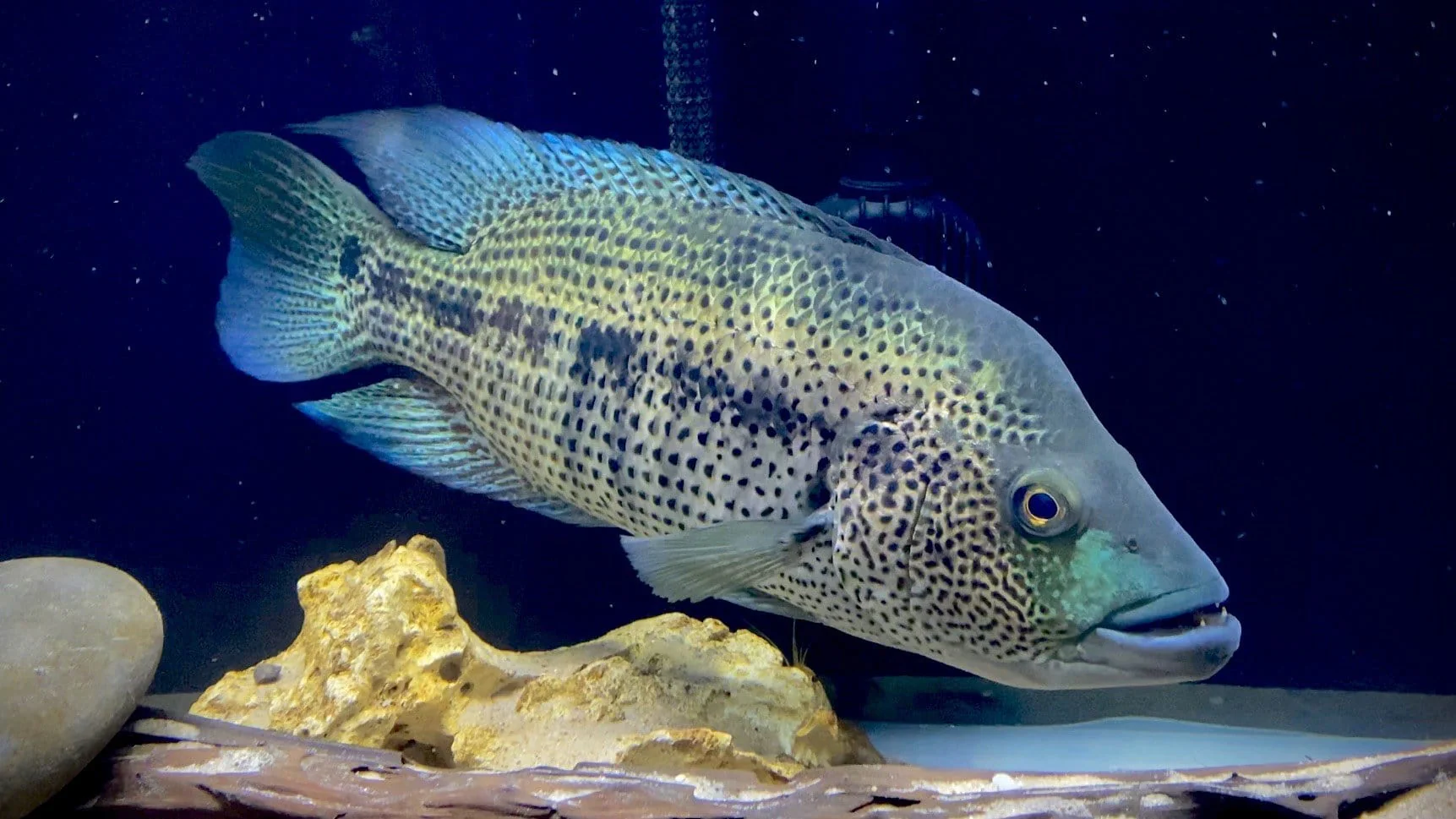
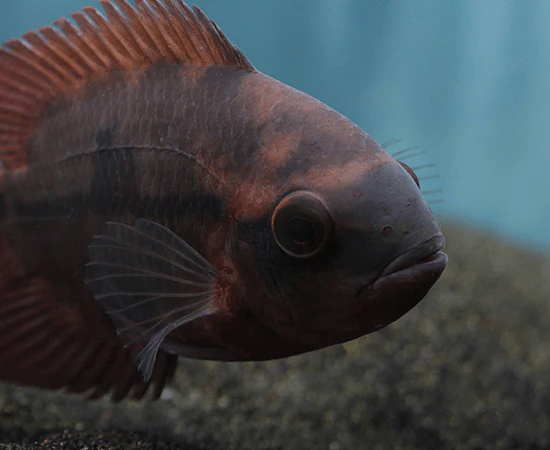
Remarks: Blackthroat cichlids (Astatheros macracanthus) are one of the most coveted species amongst Central American cichlid enthusiasts. This is mostly due in part to their rarity and the spectacular coloration both males and females show when spawning. Breeding fish will turn a striking platinum white with jet black lips, throats, and vertical bars on the body. Outside of breeding, their beauty is much more muted with orange eyes, flecks of gold and blue iridescence, tan or gray bodies, and their stripes usually being barely visible. This makes blackthroat cichlids a species that requires patience and time with the pay off being a show-stopper of a fish.
In the past, blackthroat cichlids had been placed in several different genuses as their exact taxonomy was revised. In 2008, they were removed from the Amphilophus genus and were instead placed in the Astatheros genus of which they are the only currently recognized species. While being taxonomically and visually unique, they share a lot of behavioral similarities to other large, Central American cichlids. Blackthroat cichlids usually top out at about 10 inches in length, but some specimens can reach 12 inches. Their large size combined with a heavily territorial and aggressive nature means that these cichlids will need to be provided with a very large tank. A 75 gallon can be sufficient for a single fish or breeding pair, but a 150 gallon or larger is recommended if keeping them with other fish. If housing tankmates with blackthroat cichlids, they are best kept with other Central American cichlids with similar size and temperament or with robust dither fish too large to be swallowed.
Aggression in blackthroat cichlids can be lessened and more natural behaviors can be encouraged if their natural habitat is mimicked in the aquarium. Blackthroat cichlids can be found in several waterways from southern Mexico down into northern Central America. These waterways have sandy bottoms and tons of rocks, roots, and fallen branches. In captivity, you can witness the blackthroat cichlids digging in the sand and using any rocks and driftwood for cover if these environments are mimicked. Since their natural habitats have neutral water parameters, this aspect of their care will be rather easy for most keepers. Feeding them also is very simple as these omnivores are known to go for just about any foods fed to them. If well cared for and provided plenty of space, the blackthroat cichlid is a very rewarding species that we recommend any cichlid enthusiast keep at least once.
Original: $19.99
-65%$19.99
$7.00Product Information
Product Information
Shipping & Returns
Shipping & Returns
Description
Remarks: Blackthroat cichlids (Astatheros macracanthus) are one of the most coveted species amongst Central American cichlid enthusiasts. This is mostly due in part to their rarity and the spectacular coloration both males and females show when spawning. Breeding fish will turn a striking platinum white with jet black lips, throats, and vertical bars on the body. Outside of breeding, their beauty is much more muted with orange eyes, flecks of gold and blue iridescence, tan or gray bodies, and their stripes usually being barely visible. This makes blackthroat cichlids a species that requires patience and time with the pay off being a show-stopper of a fish.
In the past, blackthroat cichlids had been placed in several different genuses as their exact taxonomy was revised. In 2008, they were removed from the Amphilophus genus and were instead placed in the Astatheros genus of which they are the only currently recognized species. While being taxonomically and visually unique, they share a lot of behavioral similarities to other large, Central American cichlids. Blackthroat cichlids usually top out at about 10 inches in length, but some specimens can reach 12 inches. Their large size combined with a heavily territorial and aggressive nature means that these cichlids will need to be provided with a very large tank. A 75 gallon can be sufficient for a single fish or breeding pair, but a 150 gallon or larger is recommended if keeping them with other fish. If housing tankmates with blackthroat cichlids, they are best kept with other Central American cichlids with similar size and temperament or with robust dither fish too large to be swallowed.
Aggression in blackthroat cichlids can be lessened and more natural behaviors can be encouraged if their natural habitat is mimicked in the aquarium. Blackthroat cichlids can be found in several waterways from southern Mexico down into northern Central America. These waterways have sandy bottoms and tons of rocks, roots, and fallen branches. In captivity, you can witness the blackthroat cichlids digging in the sand and using any rocks and driftwood for cover if these environments are mimicked. Since their natural habitats have neutral water parameters, this aspect of their care will be rather easy for most keepers. Feeding them also is very simple as these omnivores are known to go for just about any foods fed to them. If well cared for and provided plenty of space, the blackthroat cichlid is a very rewarding species that we recommend any cichlid enthusiast keep at least once.