Black Phantom Tetra (Megalamphodus megalopterus)
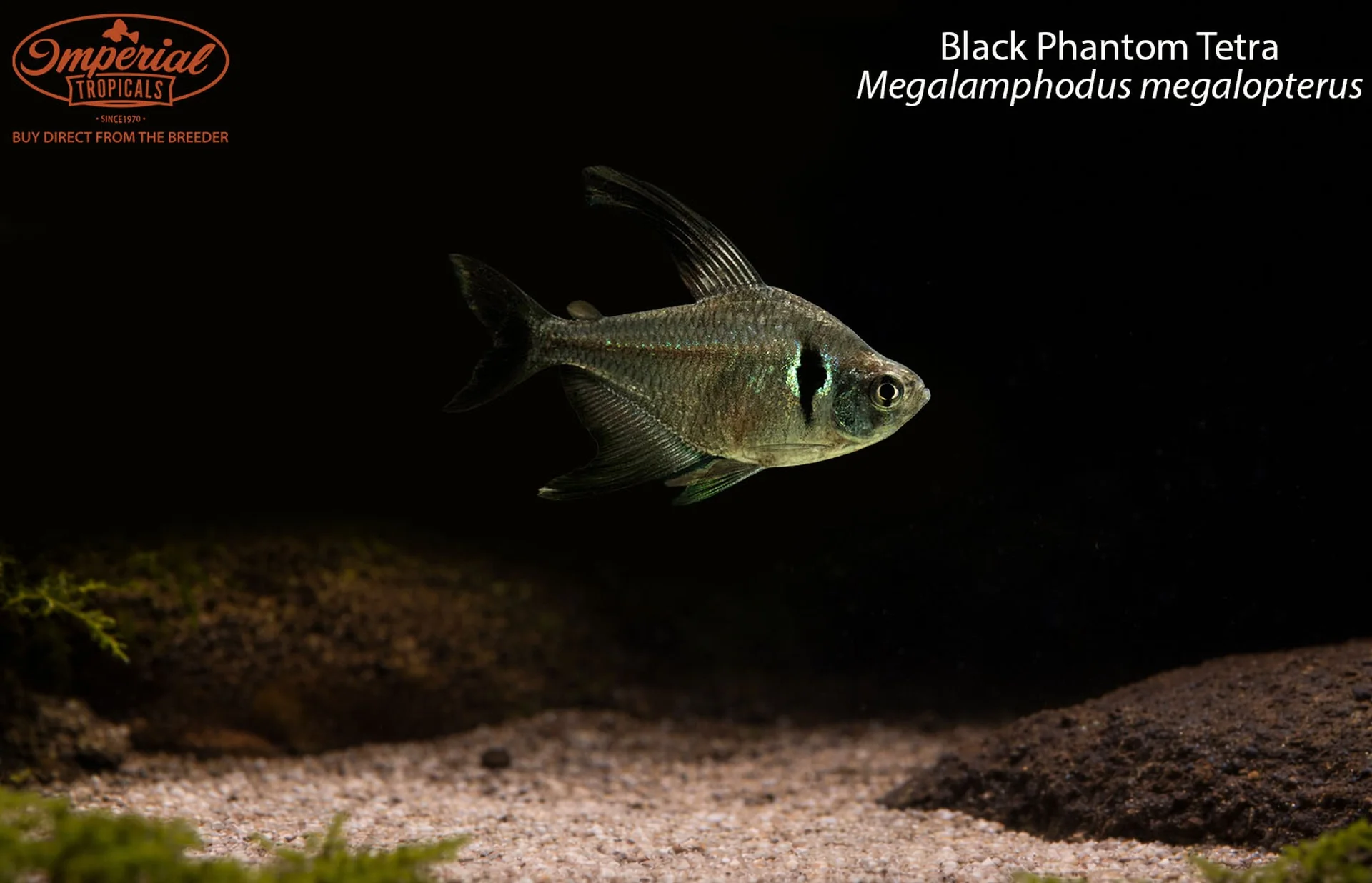
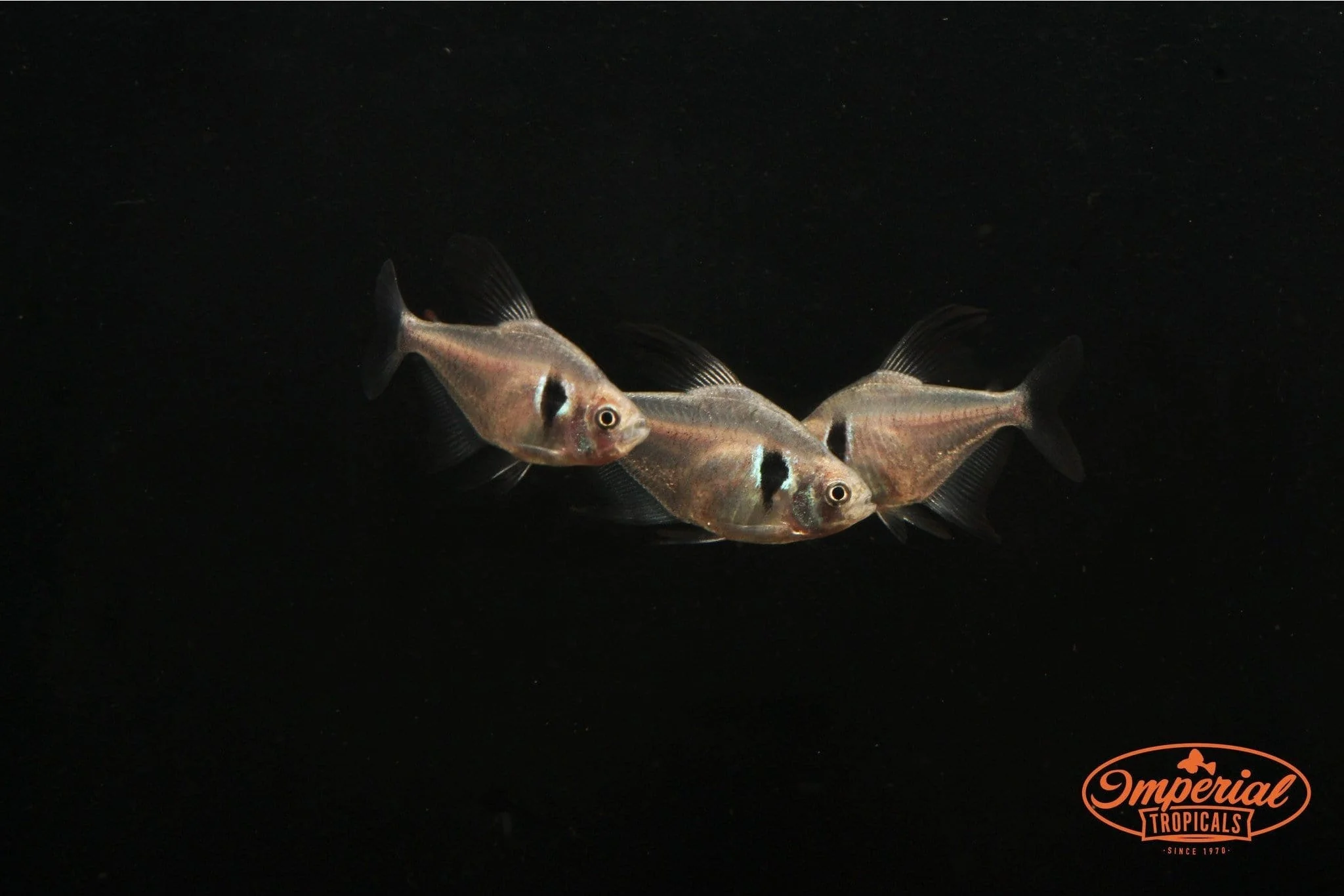
Remarks: The black phantom tetra (Megalamphodus megalopterus) has been a classic mainstay within the hobby for quite some time. After being described for the first time and established as the type species for their genus by Eigenmann in 1915, it was quickly exported to Europe where it began to be cultivated by breeders. These fish gained popularity not for a rainbow of colors, but rather for the rich, inky-black color shown by males that gives them an elegant look. Pair this with the bright, iridescent, blue scales surrounding the black spot behind the gill plate, their manageable size, and docile personality and why these fish are so popular will become obvious.
Something interesting to note is that if one looks for black phantom tetras in the wild, you are very unlikely to find any dark-colored individuals. Instead, wild fish are very similar in appearance to Megalamphodus eques, a species they often will mix shoals with. Wild black phantom tetras are almost always red in color with any dark coloration being a mutation. So, this can lead to the question as to why captive bred black phantom tetras are mostly black with red coloration usually only present in the fins of juveniles and females. It is suspected that when this species was first being collected, a few with the mutation causing black coloration instead of red were selected by breeders to help differentiate them further from M. eques and make them more marketable. Decades later of selective breeding and we have the modern day black phantom tetra with rich, black colors and only minor hints of their wild forms being leftover.
While almost all black phantom tetras within the hobby are captive bred, it still is good to consider their natural habitat if you want them to thrive within your aquarium. Their native range spans the upper Paraguay and Madeira river basins in Brazil and Bolivia which includes the famous Pantanal wetlands. While the rest of the habitats the black phantom tetra is found in consist of calm, tannin-stained, tributaries and backwaters where they hide amongst submerged roots and branches with little to no aquatic vegetation in sight, the Pantanal differs. The Pantanal wetland is famous not only for its uniquely crystal clear, shallow waters and the fact it is the largest wetland in the world, but also because it is home to over 280 species of plants making it the most diverse aquatic plant ecosystem in the world.
With such great variation in habitats along with these habitats having drastic changes between the wet and dry seasons, the black phantom tetra is naturally adaptable with captive breeding only strengthening this characteristic. Even a more neutral pH and moderately hard water can be tolerated. They can be at home in all kinds of South American aquariums whether they are tannin stained blackwater setups or those filled with live plants and crystal-clear water. Despite this, the black phantom tetra will still thrive best in warm, calm, soft, and acidic aquariums with plenty of hiding spots. Being a social species, they should be kept in groups of at least 6-8 with their confidence and occurrence of natural behaviors increasing with the size of their school. Due to their small size and docile personalities, black phantom tetras also should not be kept with overly aggressive species or those that are large enough to eat them. Abide by these conditions and they can be an excellent addition to almost any South American community tank.
The scientific name for the black phantom tetra used to be Hyphessobrycon megalopterus. However, it was reclassified as Megalamphodus megalopterus after the completion of an intensive phylogenic study on species in the family Characidae. Many other species were reclassified as well as a result of this study which can be read here: https://academic.oup.com/zoolinnean/article-abstract/202/1/zlae101/7748269
The following article also provides a good breakdown of the results of the study and does not have a paywall: https://aquainfo.org/the-end-of-the-characidae-family-as-we-know-it/
Original: $11.99
-65%$11.99
$4.20Product Information
Product Information
Shipping & Returns
Shipping & Returns
Description
Remarks: The black phantom tetra (Megalamphodus megalopterus) has been a classic mainstay within the hobby for quite some time. After being described for the first time and established as the type species for their genus by Eigenmann in 1915, it was quickly exported to Europe where it began to be cultivated by breeders. These fish gained popularity not for a rainbow of colors, but rather for the rich, inky-black color shown by males that gives them an elegant look. Pair this with the bright, iridescent, blue scales surrounding the black spot behind the gill plate, their manageable size, and docile personality and why these fish are so popular will become obvious.
Something interesting to note is that if one looks for black phantom tetras in the wild, you are very unlikely to find any dark-colored individuals. Instead, wild fish are very similar in appearance to Megalamphodus eques, a species they often will mix shoals with. Wild black phantom tetras are almost always red in color with any dark coloration being a mutation. So, this can lead to the question as to why captive bred black phantom tetras are mostly black with red coloration usually only present in the fins of juveniles and females. It is suspected that when this species was first being collected, a few with the mutation causing black coloration instead of red were selected by breeders to help differentiate them further from M. eques and make them more marketable. Decades later of selective breeding and we have the modern day black phantom tetra with rich, black colors and only minor hints of their wild forms being leftover.
While almost all black phantom tetras within the hobby are captive bred, it still is good to consider their natural habitat if you want them to thrive within your aquarium. Their native range spans the upper Paraguay and Madeira river basins in Brazil and Bolivia which includes the famous Pantanal wetlands. While the rest of the habitats the black phantom tetra is found in consist of calm, tannin-stained, tributaries and backwaters where they hide amongst submerged roots and branches with little to no aquatic vegetation in sight, the Pantanal differs. The Pantanal wetland is famous not only for its uniquely crystal clear, shallow waters and the fact it is the largest wetland in the world, but also because it is home to over 280 species of plants making it the most diverse aquatic plant ecosystem in the world.
With such great variation in habitats along with these habitats having drastic changes between the wet and dry seasons, the black phantom tetra is naturally adaptable with captive breeding only strengthening this characteristic. Even a more neutral pH and moderately hard water can be tolerated. They can be at home in all kinds of South American aquariums whether they are tannin stained blackwater setups or those filled with live plants and crystal-clear water. Despite this, the black phantom tetra will still thrive best in warm, calm, soft, and acidic aquariums with plenty of hiding spots. Being a social species, they should be kept in groups of at least 6-8 with their confidence and occurrence of natural behaviors increasing with the size of their school. Due to their small size and docile personalities, black phantom tetras also should not be kept with overly aggressive species or those that are large enough to eat them. Abide by these conditions and they can be an excellent addition to almost any South American community tank.
The scientific name for the black phantom tetra used to be Hyphessobrycon megalopterus. However, it was reclassified as Megalamphodus megalopterus after the completion of an intensive phylogenic study on species in the family Characidae. Many other species were reclassified as well as a result of this study which can be read here: https://academic.oup.com/zoolinnean/article-abstract/202/1/zlae101/7748269
The following article also provides a good breakdown of the results of the study and does not have a paywall: https://aquainfo.org/the-end-of-the-characidae-family-as-we-know-it/