Banjo Catfish
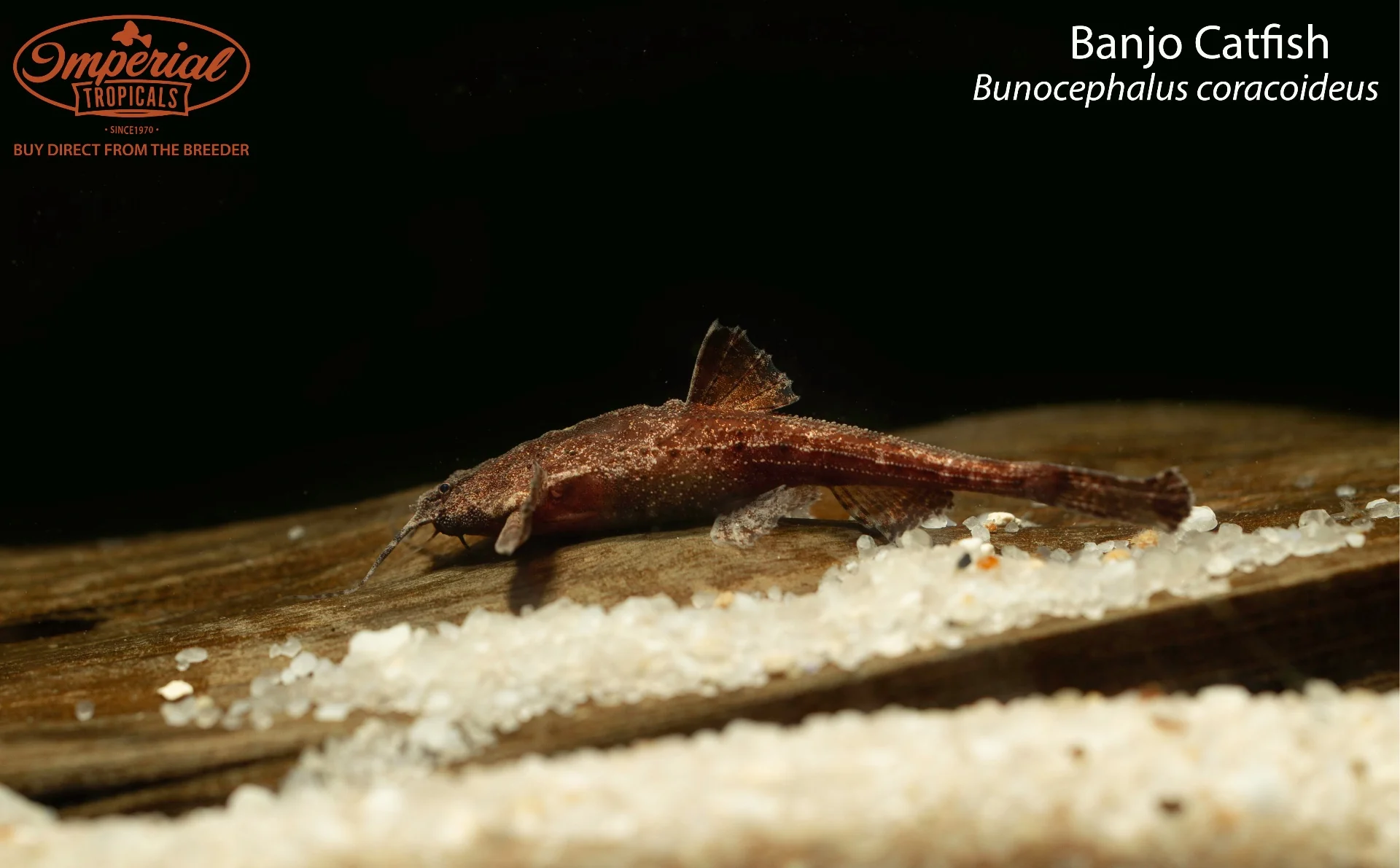
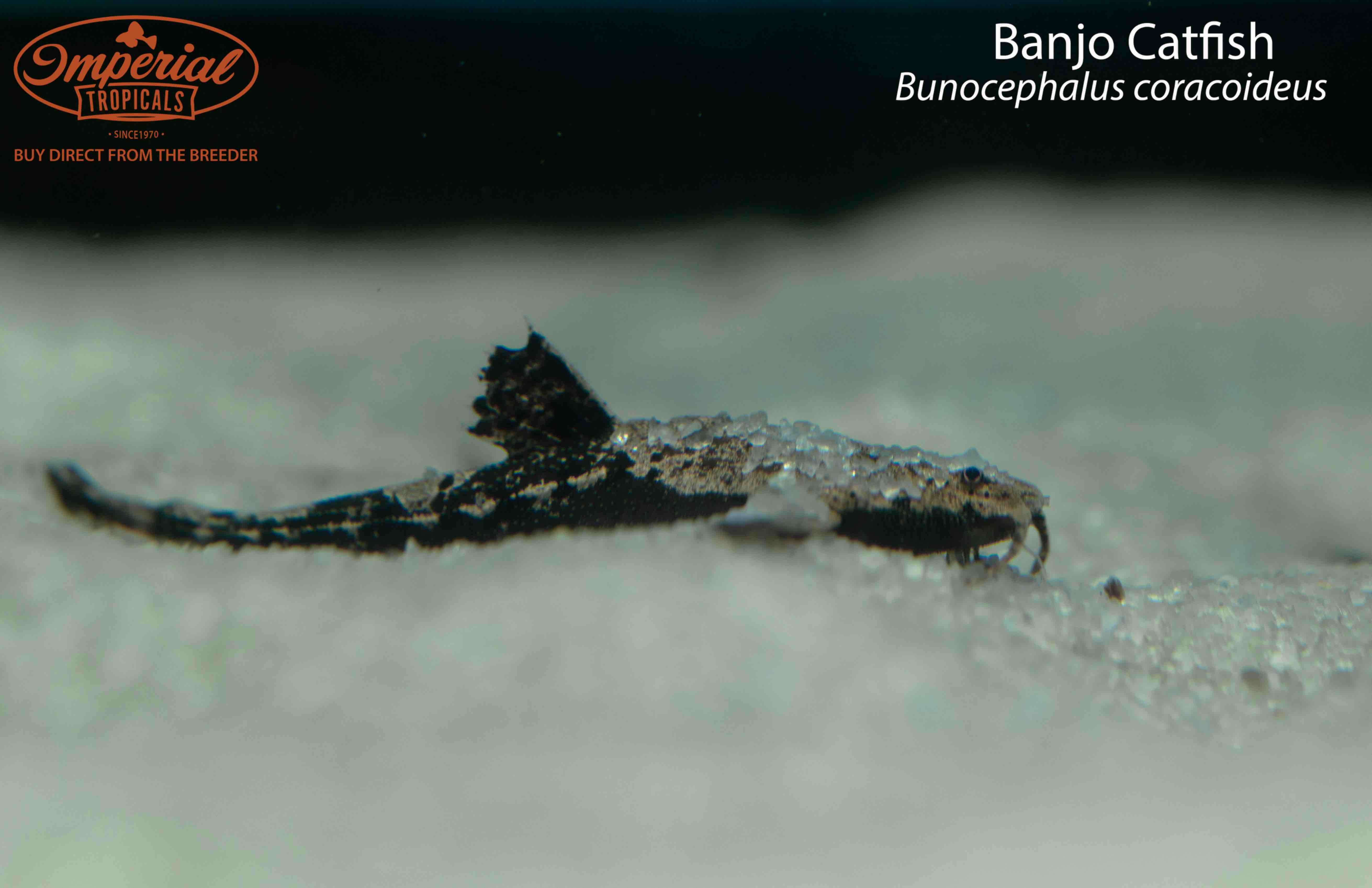
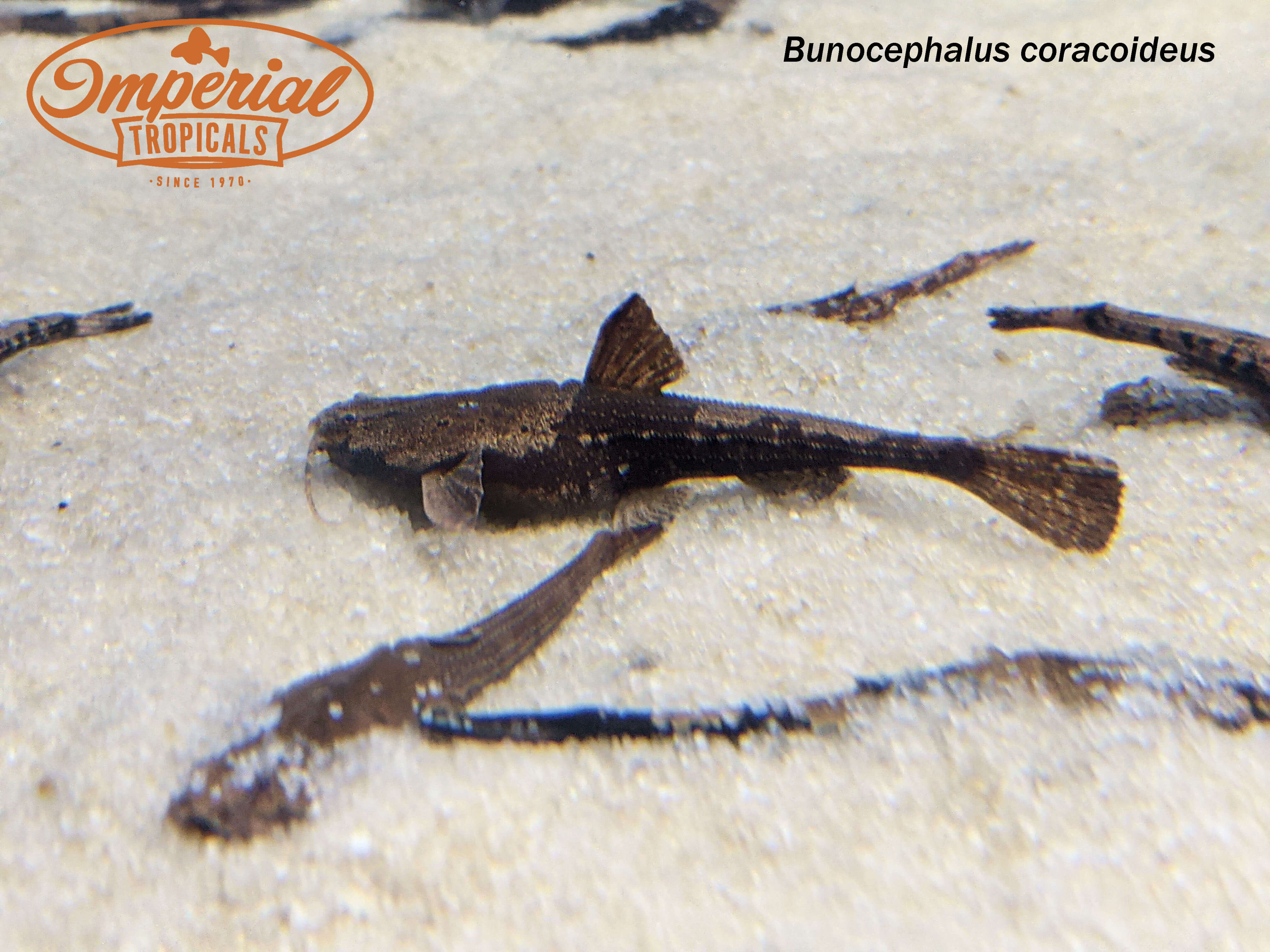
Remarks: Banjo Cats (Bunocephalus coracoideus) are small catfish with long tails. They inhabit slow-moving streams in the Amazon, blending in with fallen leaf litter to avoid detection. They typically remain hidden during daylight hours, coming out at night to forage for food. They appreciate bloodworms and sinking pellets. A sandy substrate is highly recommended, as they burrow to hide and may scratch themselves on sharper or larger substrates.
If it looks like your banjo catfish is peeling almost like a reptile shedding, do not be alarmed. Banjo catfish are known to shed their outermost layer of skin occasionally like a snake or lizard. If they are shedding very frequently, have visibly irritated skin or welts, or have damaged barbels, this can be a sign of poor water quality and/or bullying from other tankmates and should be addressed immediately. It is also common for these catfish to develop very rounded bellies, especially the females, so always take a second look if you suspect bloat.
Scientific Name: Bunocephalus coracoideus
Common Name: Banjo Catfish
Max Size: 6"
pH: 5.0-7.5
Hardness: Soft
Temperature: 70-82°
Aggressiveness: Peaceful
Region of Origin: South America
Captive Bred or Wild: Wild Caught
Diet: Flake or pellet
Original: $7.99
-65%$7.99
$2.80Product Information
Product Information
Shipping & Returns
Shipping & Returns
Description
Remarks: Banjo Cats (Bunocephalus coracoideus) are small catfish with long tails. They inhabit slow-moving streams in the Amazon, blending in with fallen leaf litter to avoid detection. They typically remain hidden during daylight hours, coming out at night to forage for food. They appreciate bloodworms and sinking pellets. A sandy substrate is highly recommended, as they burrow to hide and may scratch themselves on sharper or larger substrates.
If it looks like your banjo catfish is peeling almost like a reptile shedding, do not be alarmed. Banjo catfish are known to shed their outermost layer of skin occasionally like a snake or lizard. If they are shedding very frequently, have visibly irritated skin or welts, or have damaged barbels, this can be a sign of poor water quality and/or bullying from other tankmates and should be addressed immediately. It is also common for these catfish to develop very rounded bellies, especially the females, so always take a second look if you suspect bloat.
Scientific Name: Bunocephalus coracoideus
Common Name: Banjo Catfish
Max Size: 6"
pH: 5.0-7.5
Hardness: Soft
Temperature: 70-82°
Aggressiveness: Peaceful
Region of Origin: South America
Captive Bred or Wild: Wild Caught
Diet: Flake or pellet